“My Armenia” 2nd Pan-Armenian Festival Kicks Off In Yerevan

«Իմ Հայաստան» համահայկական երկրորդ փառատոնIn the company of Armenia’s First Lady Rita Sargsyan, National Assembly President Galust Sahakyan and Minister of Diaspora Hranush Hakobyan, Prime Minister Hovik Abrahamyan attended today the opening of “My Armenia” 2nd pan-Armenian festival at the National Academic Opera and Ballet Theater after Al. Spendiaryan.

On behalf of the Government of the Republic of Armenia and himself, the Prime Minister welcomed all festival participants, wishing them successful proceedings:“It is my pleasure to see that as the forerunners of the Armenian culture, you have gathered in Armenia to add relish and warmth to this beautiful event. In the era of globalization, culture seems to be the best way for any nation to self-expression, strengthened ties of friendship and worldwide recognition. I am grateful to you that in spite of living abroad you have a great mission to perform by preserving our national identity through artistic means and enrich the cultural mosaic of your country of residence. This splendid hall has brought together art communities from Armenia, Artsakh and the Diaspora. This trinity is the key to success. It would have been impossible for our nation to defy the problems and challenges ahead without unity,” the head of government said.

Emphasizing that the festival is a vivid manifestation of our collective identity and national spirit, Hovik Abrahamyan urged the participants to continue with their noble effort aimed at promoting and disseminating the Armenian culture.

“On the eve of the 100th anniversary of the Armenian Genocide, Armenians worldwide are endeavoring toward the restoration of historical justice. You can bring your own contribution to this process by upholding the dignity of the Armenian people and participating in all-national events, spreading our rich cultural traditions,” the Premier pointed out.

The Prime Minister thanked the organizers and participants for building on Armenia-Artsakh-Diaspora relationship, safeguarding and developing our nation’s cultural identity.

“My Armenia” pan-Armenian festival aims to deepen cooperation between Armenia, Artsakh and the Diaspora, strengthen cultural ties between young Armenian artists, develop and disseminate modern Armenian art. The festival features performances by Armenian dancers and singers, duduk players and journalists from different countries of the world.

President received the world famous conductor and violinist Vladimir Spivakov

սարգսյան-սպիվակով

 President Serzh Sargsyan received today the world famous conductor and violin player, artistic director and chief conductor of Russia’s National Philharmonic Orchestra Vladimir Spivakov. On November 10, the renowned conductor and his orchestra gave a concert in the framework of the A. Khatchatrian international festival. Today, the orchestra will perform in Gyumri thus concluding the series of the “Gyumri 2013 – Cultural Capital of CIS” events. The concerts are organized through the assistance of the RA and RF Ministries of Culture and CIS Interstate Fund on Humanitarian Cooperation.

At the meeting, the President of Armenia thanked the renowned musician for the marvelous concert in Yerevan which, according to the President, received numerous rave notices. Serzh Sargsyan underscored that V. Spivakov for a long time now is not received as a guest in Armenia but as a dear and considerate person who stood by our nation in our direst moments and through his regular visits continues to inspire us with spiritual impulses and optimistic mood. With this regard, the President stressed the importance of the concert in Gyumri. Serzh Sargsyan noted with appreciation the high mission of V. Spivakov Fund in assisting young and talented Armenian children.

V. Spivakov underlined that he is always happy to visit Armenia and is touched by the warm reception extended to him which he feels not only in the concert halls but also by conversing with the people on the streets. The maestro expressed readiness to conduct in the coming years among other countries of the world a festival of music in Armenia as well.

2 wonderful classical music concerts with Vladimir Spivakov and Hasmik Papian

1 (12)Within the framework of Aram Khachaturian International Festival, dedicated to the 110th anniversary of the great composer, on November 10-11 National Philharmonic Orchestra of Russia under the artistic director and principal conductor Vladimir Spivakov will perform in Armenia.

On November 10 at 19.00 the concert will be held in Aram Khachaturian concert hall. The Yerevan concert is dedicated to the 80th anniversary of violist and conductor Zareh Sahakyanc, the founder of Chamber Orchestra of Armenia.

And on November 11 National Philharmonic Orchestra of Russia headed by V.Spivakov will perform in Gyumri. The Gyumri concert will be held in the frames of “Gyumri CIS Cultural Capital 2013”.

The soloists will be Alexander Romanovsky (piano, Italy), Vasily Ladyuk (baritone, Russia), Juliette Galstian (mezzo-soprano, Switzerland), Hasmik Papian (soprano, Armenia).

The concerts of National Philharmonic Orchestra of Russia in Armenia will be held with the assistance of Ministry of Culture of RA, Ministry of Culture of RF and Interstate Fund for Humanitarian Cooperation of CIS member states.

Aram Khachaturian International Festival is organized by the State Youth Orchestra of Armenia.


ANCA RALLIES AGAINST WHITE HOUSE DECISION TO BLOCK SMITHSONIAN DISPLAY OF ARMENIAN GENOCIDE ORPHAN RUG

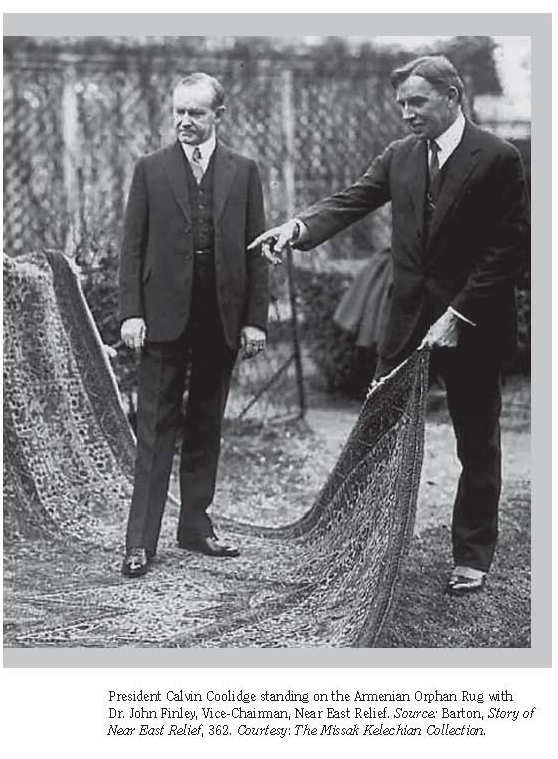
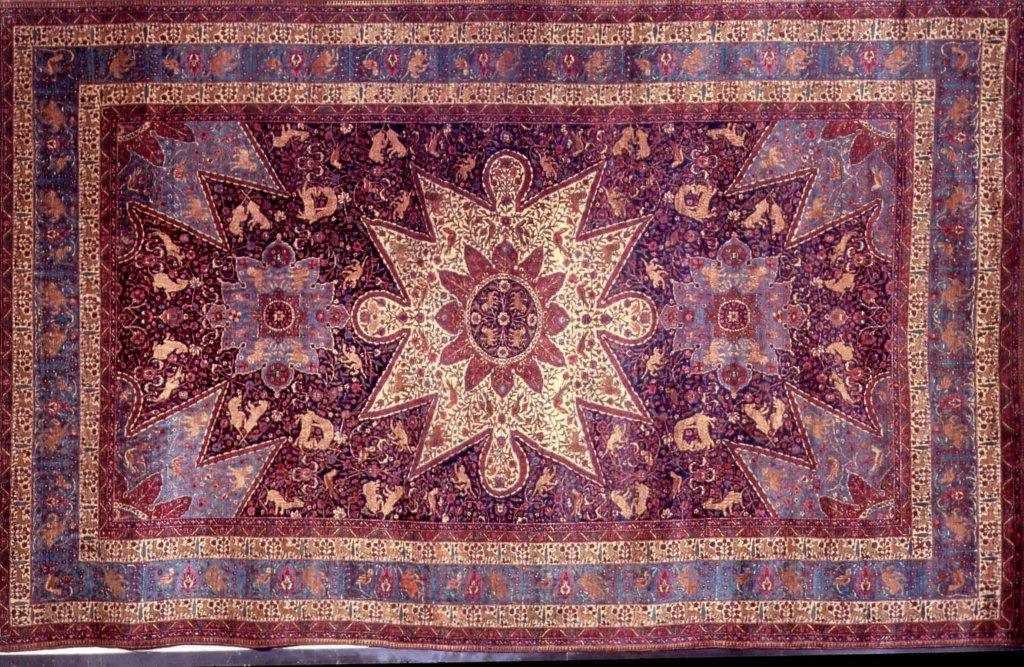
Coolidge_Armenian_Orphan_RugWASHINGTON, DC — Armenian Americans across the U.S. are calling upon the White House and Congress to secure a prominent and permanent public display of a historic rug woven by Armenian Genocide orphans and presented to President Calvin Coolidge in 1925, in appreciation for U.S. humanitarian assistance in the aftermath of Turkey’s murder of over 1.5 million Armenians from 1915-1923, reported the Armenian National Committee of America (ANCA).
The ANCA campaign was initiated after The Washington Post reported, earlier this week, that a planned December 16th Smithsonian Institution exhibit featuring the rug, organized in conjunction with the Armenian Cultural Foundation and the Armenian Rug Society, was abruptly cancelled when the White House, reversing an earlier affirmative decision, refused to lend the iconic symbol of American and Armenian shared heritage to the museum.
Armenian Americans can take action by visiting:
Armenian_Orphan_RugWashington Post staff writer and Pulitzer Prize winning journalist Philip Kennicott, reported, “There was hope that the carpet, which has been in storage for almost 20 years, might be displayed December 16th as part of a Smithsonian event that would include a book launch for Hagop Martin Deranian’s ‘President Calvin Coolidge and the Armenian Orphan Rug.’ But on September 12th, the Smithsonian scholar who helped organize the event canceled it, citing the White House’s decision not to loan the carpet. In a letter to two Armenian American organizations, Paul Michael Taylor, director of the institution’s Asian cultural history program, had no explanation for the White House’s refusal to allow the rug to be seen and said that efforts by the U.S. ambassador to Armenia, John A. Heffern, to intervene had also been unavailing.”
Kennicott described the controversy as “a sign of the Obama administration’s dismal reputation in the Armenian American community that everyone assumes… must be yet another slap in the face for Armenians seeking to promote understanding of one of the darkest chapters in 20th-century history.”
The complete Washington Post article is available online at:
The White House response thus far has been vague – with National Security Staff Assistant Press Secretary Laura Magnuson offering the following comment to the Asbarez Armenian Newspaper: “The Ghazir rug is a reminder of the close relationship between the peoples of Armenia and the United States.  We regret that it is not possible to loan it out at this time.”  A statement with the same exact wording was released by the White House last week and included in Kennicott’s article.
“The White House should simply come clean,” said ANCA Executive Director Aram Hamparian.  “It’s time for the White House to open up about Turkey’s role, and lay out all the facts about its decision to block the Smithsonian’s exhibit of the Armenian Orphan Rug – a historic, Armenian Genocide-era work of art that speaks powerfully to the common values and shared experiences of the American and Armenian peoples.”
In a letter sent earlier today to President Obama’s Chief of Staff, Denis McDonough, ANCA Chairman Ken Hachikian reminded the White House that “upon receiving the rug, President Coolidge wrote, ‘The rug has a place of honor in the White House where it will be a daily symbol of goodwill on earth.’ I ask you, in this spirit, to remove any obstacles to the Smithsonian’s display of this historic artwork and to secure a prominent and permanent public home for this powerful symbol of America’s humanitarian values and friendship with the Armenian people,” continued Hachikian.
Placing this latest controversy in context, Hachikian noted that: “since taking office, President Obama has not only failed to recognize the Armenian Genocide, but has actively blocked Congressional legislation (H.Res.252, 111th Congress) to commemorate this atrocity and, through his Solicitor General, officially opposed efforts in the U.S. courts (Arzoumanian v. Munchener Ruckversicherungs-Gesellschaft Aktiengesellschaft AG) to allow American citizens to pursue Genocide-era property claims.  In addition, the Administration has regularly sent senior officials to speak at events organized by Armenian Genocide deniers, while refusing repeated invitations to simply attend Congressional observances of this atrocity.  In these areas, and, sadly, many more, the President has not simply failed to honor his pledge, but rather – in both letter and spirit – worked to fundamentally undermine and reverse the very policies he pledged to pursue.”
According to Dr. Hagop Deranian, the Armenian orphan rug measures 11’7″ x 18’5″ and is comprised of 4,404,206 individual knots.  It took the Armenian girls in the Ghazir Orphanage of the Near East Relief Society 10 months to weave.  A label on the back of the rug, in large hand-written letters, reads “IN GOLDEN RULE GRATITUDE TO PRESIDENT COOLIDGE.”
Additional information about the history of the Armenian Orphan Rug is available in Dr. Hagop Martin Deranian’s book, “President Coolidge and the Armenian Orphan Rug,” published on October 20, 2013, by the Armenian Cultural Foundation and soon to be available on Amazon.com

Honored for 35 Years of Service to Journalism

SamoniantzBy Harut Sassounian

Publisher, The California Courier


This column is devoted to Serge Samoniantz, former English editor of Asbarez newspaper for 10 years, and current editor of The California Courier for the last 25 years.


Serge is a modest person who has worked quietly most of his life, shunning any attention to himself. When I told him last Sunday night that he was about to be honored by Asbarez, Serge whimsically replied in his typical self-deprecating style: “Did they run out of people to honor?”


The occasion for honoring Serge was the banquet celebrating the 105th anniversary of Asbarez, one of the world’s oldest Armenian newspapers. Asbarez began publication in 1908 in Fresno, California, and moved to Los Angeles in the 1970’s.


While my weekly columns receive considerable attention by being published in dozens of newspapers worldwide and posted hundreds websites in half dozen languages, Serge quietly prepares The California Courier for publication each week. He is in charge of everything from news gathering to editing, layout, and advertising.


The management of Asbarez should be commended for honoring Serge. Even though he hasn’t worked for Asbarez since 1988, the newspaper’s current Armenian and English editors, Apo Boghigian and Ara Khachatourian, had not forgotten their former colleague and wished to express their appreciation for his good work a quarter century later. It is not very often that Armenian organizations remember their employees and organize banquets in their honor.


While it is proper to recognize those who donate considerable sums to Armenian institutions, since not much can be accomplished without their generous contributions, it is just as important to honor humble servants of the nation, who have devoted their entire lives to the community, such as teachers, journalists, and clergymen.


Making the celebration truly memorable was the surprise announcement that His Holiness Aram I, Catholicos of the Great House of Cilicia, had bestowed upon Mr. Samoniantz the Mesrob Mashdots Medal. His Eminence Archbishop Moushegh Mardirossian, Prelate of the Western Prelacy of the ArmenianApostolicChurch, read the special encyclical prepared by the Catholicosate, as he pinned the Medal of Honor on Mr. Samoniantz.


I was asked to introduce Serge at the October 20th banquet, held at the Baghramian Hall in Montebello. Here are my introductory remarks which include a short biography of Mr. Samoniantz:


Serge was born in 1943 in Marseilles, France, where he lived until age 9. His family moved to San Paolo, Brazil, in 1952 and then to Massachusetts in 1961. He joined the Armenian Youth Federation and then the ARF Keri Gomideh in 1966, after moving to Montebello, California.


In 1964, Serge enlisted in the U.S. Marine Corps and was honorably discharged as sergeant in 1970. After completing his military service, Serge attended CaliforniaStateUniversity at Los Angeles, graduating with a degree in History. He later received a Certificate from UCLA in Public Relations.


Starting in 1973, Serge assumed the editorship of the English edition of Asbarez for seven years. He then served as Executive Director of the Armenian National Committee, Western U.S., from 1983 to 1984. He then resumed his previous post as the English editor of Asbarez from 1985 to 1988.


In 1985, Serge and I were part of the ANC delegation in Geneva, Switzerland, successfully lobbying for the recognition of the Armenian Genocide by the United Nations.


In 1988, Serge joined the California Courier as editor where he has been employed for 25 years. He is a consummate journalist and a top notch professional. It has been a great honor and pleasure for me to work with him both as a close friend and colleague for a quarter century!


Serge is a quiet man and tireless worker. He has been a life-long activist in various social and political issues and a staunch defender of the Armenian Cause.


Sharing the joy of Serge’s honor was his family, including his wife Mariam, sister-in-law Laura Manukian, his son Raffi and wife Nano, and their two children, Emilly and Sebouh.


Congratulations to Serge Samoniantz for his unwavering dedication to Armenian journalism for the past 35 years and congratulations to the staff of Asbarez for their hard work and commitment to continue the legacy of those who founded the newspaper 105 years ago!


President Sargsyan met with the honorary guests and film industry professionals participating at the Golden Apricot Film Festival

3469

 Tonight, the President of Armenia Serzh Sargsyan met with the honorary guests and film industry professionals from Armenia and different countries of the world who are participating at the 10th International Film Festival in Yerevan.

The participants of the meeting spoke with the President of Armenia about the Golden Apricot’s ten year existence, success, as well as about the nominations of this year’s Festival. They noted with satisfaction that the repute of the Festival is growing by year, the geography of the participants is expanding, and the number of the movies is increasing too.

Welcoming address of President Serzh Sargsyan to the Golden Apricot International Film Festival

սերժ սարգսյանI send my warm salutations to the organizers, participants and guests of the Golden Apricot International Film Festival. On the occasion of the tenth anniversary of the Festival, I cordially congratulate its initiators and implementers.

We still have much to do to strengthen our position on the world movie map and with this regard the Golden Apricot’s repute as the leading regional film festival is of special importance. In the last ten years, many of the outstanding figures of the cinema world have discovered Armenia anew and have become our country’s dear and dedicated friends. Undoubtedly, such a festival is a great honor for any country and is an excellent opportunity for establishing new cultural ties. It is proved by the extensive geographical representation of the participants of the Festival as well as by the interest of a number of the world’s leading mass media outlets toward the Golden Apricot and our country.

The Festival’s mission of promoting the development of the national cinema and creation of the Golden Apricot international film school is critical. Today, movies created through the assistance of the Festival are representing Armenia on numerous international film festivals. Golden Apricot’s rich ten-year history is a commendable and laudable reality which has been enriching Armenia’s cultural life.

Dear Friends,

I once again welcome the participants and guests of the Tenth Festival. I urge you to remain faithful to its motto – the Crossroad of Civilizations and Cultures – to preserve and deepen momentous achievements of the Festival and its high repute. I wish the organizers diligence and enthusiasm to continue with the same vigor their noble work launched ten years ago.


Museum mystery: Spinning statue turns heads

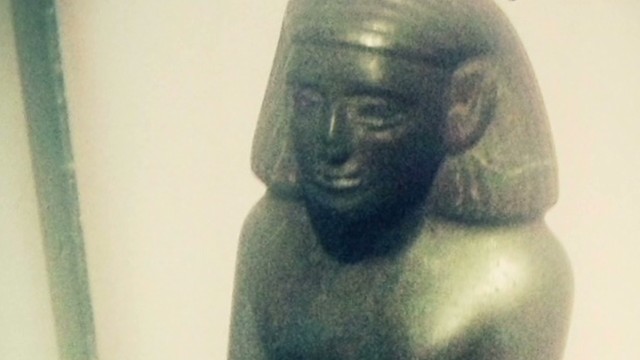
130625083346-newday-pkg-cursed-egyptian-statue-00012219-story-topThe museum officials were stumped. A statue is supposed to stand still, not rotate all by itself.

But this one at the Manchester Museum seemed to have done just that. Turned around 180 degrees — revealing an inscription on its back asking for beer.

No other figure in the display had moved — nor had any other in the museum.

For the staff, it was a bona fide mystery. One that called for some serious sleuthing.

A simple statue

Spinning statue stumps museum officials

Statuette no. 9325 doesn’t appear to go by any proper name. It’s a prefabricated figure — an off-the-shelf product — that was placed into a small tomb around 1800 B.C.

A private collector in Britain donated it to the museum in 1933. The inscription on the back, requesting a sacrifice of beer, bread and animals, was a standard prayer for the deceased.

For decades, the figurine stood perfectly still — until museum workers moved its case a few feet from its original position.

Turn, turn, turn

In February, curator Campbell Price noticed something curious was afoot.

The statue seemed to have slightly turned.

When he looked next, it was facing another direction. A day later, another.

The turns were subtle. But at the end of each day, you could tell the statue was angled differently.

Caught in the act

In April, museum officials installed a time-lapse camera that snapped an image of the statue every minute of every day for a week.

When they ran the images in fast motion, they came across a surprising revelation: the statue only moved during the day, when visitors were walking past.

It seemed, Price wrote, that vibrations caused by foot traffic in room was the culprit.

Mysterious structure found at bottom of ancient lake

Mystery solved?

Though officials now have a logical explanation, it still seems a bit mysterious.

“What is very strange is that the statue has spun in a perfect circle,” Price said. “It hasn’t wobbled off in any particular direction.”

Some are in awe of the spirit nature of the figurine, and don’t quite accept Price’s explanation.

One of the blog’s readers left his own theory for no. 9325’s movements in the comments section: “The statue is cursed,” wrote benabrahamse.

A museum guide has suggested saying a prayer for the statue.

But Price is unmoved.

“Most Egyptologists are not superstitious people,” he said.

No one has bought the statue a beer.

After all, they don’t want it wobbling.


The winner of the 9th Aram Khachaturian International Competition is Andrei Ionita

arm137123075650On July 14, the closing ceremony of the 9th Aram Khachaturian International Competition took place. The jury chairman Aram Talalyan announced the names of the winners. So, the winner of the 9th Aram Khachaturian International Competition is the cellist Andrei Ionita. The second prize was awarded to Anna Morozova (Russia). And the third prize was awarded to Aleksandra Perlova (Russia) and Gayane Khachatryan (Armenia).

The jury also gave a number of special prizes.

The honorary guest of the competition artistic director and principal conductor of the Moscow State Symphony Orchestra Pavel Kogan mentioned in his speech, that the main aim of the competition is to help the young musicians find their professional path. He said that the winner, Andrei Ionita, will be given a chance to perform with Moscow State Symphony Orchestra.

The MIDEM classical and jazz worldwide director Cornelia Much awarded a special prize to Andrei Ionita, inviting him to take part in the festival in 2014. She also invited pianist Armen Babakhanian and cellist Gayane Khachatryan. Cornelia Much noted the high level of the competition, especially highlighting the impartial and professional work of the jury.

The official orchestra of the competition State Youth Orchestra of Armenia gave a special prize “Audience Award”. It was awarded to Levon Arakelyan from Armenia.

Yerevan State Conservatory after Komitas gave a special prize for the best pianist of the 9th Aram Khachaturian International Competition. The jury awarded the prize to Armen Babakhanian and Arthur Avanesov.

Interstate Humanitarian Cooperation Fund awarded a special prize to two participants from Armenia, Hakob Atyan and Michael Navasardian, who will have a number of concerts in CIS countries in 2013-2014.

According to tradition Aram Khachaturian House-Museum awarded the prize to the best solo performance. The prize was awarded to Andrei Ionita (Romania).

Head of Planning of the Dresden Philharmonic Concert Orchestra Caron Kopp compared Aram Khachaturian International Competition to European competitions. According to Caron Kopp, it is important that the competition not only identifies talented musicians, but also introduces the music of Aram Khachaturian to the world.

International Competition named after the great composer was launched on the 110th anniversary of Aram Khachaturian, on June 6, and consisted of 3 rounds.

During the closing ceremony Andrei Ionita performed with the official orchestra of the competition, the State Youth Orchestra of Armenia (Artistic Director and Principal Conductor Sergey Smbatyan), while during the opening ceremony of the competition the Youth Orchestra performed with the world-renowned cellist Gautier Capuçon from France, who played cello concerto by Aram Khachaturian.

The project was implemented thanks to joint efforts of RA Ministry of Culture, “Aram Khachaturian-competition” Cultural Foundation and Yerevan Komitas State Conservatory. It is held under the high patronage of the First Lady of RA Mrs. Rita Sargsyan, who is honorary president of the board of trustees of the competition. Since 2010 the main partner of the competition has been the Interstate Fund for Humanitarian Cooperation.

It is noteworthy, that Aram Khachaturian International Competition now has a different status: since May it has become a member of the World Federation of International Music Competitions.

“Aram Khachaturian-competition” Cultural Foundation

Researchers: Jamestown settlers resorted to cannibalism By Elizabeth Landau, CNN

130501233137_girl_304x304_reuters_nocredit(CNN) — The winter of 1609 to 1610 was treacherous for early American settlers. Some 240 of the 300 colonists at Jamestown, in Virginia, died during this period, called the “Starving Time,” when they were under siege and had no way to get food.

Desperate times led to desperate measures. New evidence suggests that includes eating the flesh of fellow colonists who had already died.

Archaeologists revealed Wednesday their analysis of 17th century skeletal remains suggesting that settlers practiced cannibalism to survive.

Researchers unearthed an incomplete human skull and tibia (shin bone) in 2012 that contain several features suggesting that this particular person had been cannibalized. The remains come from a 14-year-old girl of English origin, whom historians are calling “Jane.”

Scholar: Settlers ate each other

There are about half a dozen accounts that mention cannibalistic behaviors at that time, although the record is limited, said Douglas Owsley, division head of physical anthropology at the Smithsonian National Museum of National History.

The newly analyzed remains support these accounts, providing the first forensic evidence of cannibalism in the American colonies.

What we know from the bones

Jane’s remains were found in a 17th-century trash deposit at the former site of James Fort. William Kelso, chief archaeologist at the Jamestown Rediscovery Project said at a briefing Wednesday that the fort was built in 1607, but has been washed away. Kelso and colleagues began digging in 1994 and have been excavating the site on Jamestown Island ever since.

Owsley and colleagues can tell quite a bit about what happened to Jane when at least one starving settler in the fort apparently tried to feed off of her.
If it’s any consolation, it appears that she was already dead at the time.

Researchers say it looks like someone had tried, but failed to open the skull with four shallow chops to the forehead.

The back of the skull contains markings that could have been made by a small hatchet or cleaver striking it. The cranium cracked open from the last hit. Forensic experts say it appears the person striking the skull was right-handed.

The skull’s mandible contains cuts all over it and inside, which experts say reflect an attempt to take tissue off of the face and throat with a tool such as a knife. The cheek area reflects a “sawing action” of a tool going back and forth, Owsley said. There are also sharp passages of a knife.

At some point in the process, the head was removed, Owsley said.

The damage done to these remains indicates that whoever inflicted it was not a skilled butcher, he said.

“Instead, what we see is hesitancy, trial, tentativeness and an absolute total lack of experience.”

The shin bone that archaeologists recovered also appeared to have been chopped, but in a way that more resembles classic butchering techniques, Owsley said.

“The person doing this was clearly interested in, based on what would have been accepted cuisine in the 17th century, in cheek meat, muscles of the face — that area — and tongue, and also in terms of 17th century traditional cuts, would also include the brain,” he said.

It is possible that more than one person was involved in this, given the disparity in butchering practices seen in the head compared to the shin bone.

What we know about the colonists

In the summer of 1609, the settlers experienced two significant setbacks, said James Horn, vice president of research and historical interpretation at Colonial Williamsburg.

The first was that a large fleet bringing supplies and settlers to Virginia was scattered. It had been carrying 500 settlers from Plymouth along with provisions.

“The fleet represented a new beginning for Jamestown, which had struggled over the previous two years,” Horn said.

A hurricane scattered the ships a week before they were supposed to arrive. The flagship with the leaders of this pack ended up in Bermuda. Shakespeare’s play “The Tempest” takes its inspiration from this event.

Six ships reached Jamestown in August 1609, with spoiled or depleted food, and many settlers in poor health. “On one of those ships was Jane,” Horn said.

At the same time, the relationship between the Jamestown colonists and the native Powhatan Indians had broken down. The existing settlers were already experiencing disease and a shortage of food, and the demands they made on the Powhatans strained their relations.

That was the environment into which 300 additional settlers arrived at the James Fort.

One of the leaders of the group, Captain John Smith — the same one who was famously friends with Pocahontas — returned to England in October 1609 because he was injured, Owsley said, leaving a leadership vacuum.

In the fall, the Powhatans waged war against these colonists, and launched a siege against the fort.

With no way to get food from the outside, the colonists resorted to eating horses, dogs, cats, rats, mice and snakes, Horn said, according to the accounts of George Percy, who was the president of Jamestown during this time. There are even accounts of people eating their shoes and any other leather that could be found. Anyone who left to try to scrounge for roots in the woods was killed by the Powhatans.

Percy wrote, according to the Smithsonian, “thatt notheinge was Spared to mainteyne Lyfe and to doe those things which seame incredible, as to digge upp deade corpes outt of graves and to eate them. And some have Licked upp the Bloode which hathe fallen from their weake fellowes.” In other words, cannibalism.

It’s not clear how many deceased colonists were cannibalized. Only 60 of 300 of the original colonists survived, described as “looking like skeletons,” Horn said.

In May of 1610, the settlers finally arrived who had been shipwrecked in Bermuda, effectively saving the colony. Lord Delaware brought even more colonists and enough provisions to last a year.

There are still more pits at the fort to be excavated, and only 10% of Jane’s body has been recovered, Owsley said.

“I think there’s going to be other examples,” Owsley said. “Whether that will be found — with archeology you never know what’s going to be under the next shovel.”

A special exhibition will begin at the Smithsonian about Jamestown and Jane’s story on Friday.


Winehouse documentary to feature unseen footage of singer

3Ուայնհաուսի մասին ֆիլմը ցույց կտա մինչ այդ դեռևս չցուցադրված կադրերÕA documentary on the life of tragic British singer Amy Winehouse will feature unseen footage of the late star, the company handling its sale at the Cannes film festival said on Thursday.
Focus Features International, a division of US entertainment giant NBCUniversal, said it would be taking the as yet untitled film to next month’s Riviera movie extravaganza.
The five-time Grammy award-winning singer died in July 2011 aged 27 from accidental alcohol poisoning. She had suffered years of drug and alcohol addiction.
“Using unseen archive footage, the film will show through her own words the genius in Amy’s art and the moving and tragic story of this young woman from London,” Focus Features said in a statement, adding that it would “introduce the project to buyers in Cannes”.
The film is a collaboration between British director Asif Kapadia and producer James Gay-Rees, whose acclaimed documentary on the late Formula One driver Ayrton Senna won them two BAFTAs.
Kapadia and Gay-Rees described Winehouse as a “once-in-a-generation talent who captured everyone’s attention”.


On French language day, UN stresses value of linguistic diversity for peace

03-20-2013irinabokova20 March 2013 – Celebrating the International Day of Francophonie, or French language, top United Nations officials today pointed to the power of that language to bring peoples together and stressed the importance of linguistic diversity for understanding and respect between cultures.

“French draws its strength from the diversity of the peoples and cultures that share it and contribute daily to its enrichment and vibrancy,” Irina Bokova, Director-General of the UN Educational, Scientific and Cultural Organization (UNESCO), said in Paris.

“Today, International Francophonie Day, UNESCO celebrates the power of the French language in bringing peoples and cultures together, as a tool for mutual understanding and peace,” she added.

She said that UNESCO underlined the importance of linguistic diversity as a condition for sincere and authentic international cooperation, whereby each person’s thoughts can be expressed directly and accurately, without borrowing others’ words.

“This is an issue of equality and respect; it is also a matter of efficiency and clarity,” she said.

This evening in New York, Secretary-General Ban Ki-moon will participate in a celebration during which he will receive the Leopold Sear Senghor Medal, “le Grand Prix de la Francophonie,” awarded to the UN for its contribution to the development of the French language.

Mr. Ban is expected to pay tribute to the place of French in international cooperation, including the need for more French-speaking staff in UN peacekeeping operations for crucial dialogue with local populations.

International language days were introduced in the UN system in 2010 to celebrate multilingualism and cultural diversity in the six official languages of the Organization. Chinese is celebrated on 20 April, English on 23 April, Russian on 6 June, Spanish on 12 October, and Arabic on 18 December.

Gwyneth Paltrow: My Family Makes Me Feel Beautiful

bb_horizontal_bigger19168526After starring as Brad Pitt’s wife in Se7en, Paltrow and Pitt started an off-screen romance that thrust the comely couple into the spotlight. They became engaged, but the high-profile relationship ended in 1997 and she moved onto a two-year relationship withBen Affleck.

Although her star-studded romances made her a star, it wasShakespeare in Love that earned her a Best Actress Oscar. After years of eclectic film choices, Paltrow entered a more selective phase in her career upon marrying Coldplay frontman Chris Martin and having their two children. In 2008, the actress jumped back into the spotlight with the Iron Man franchise and her lifestyle and cooking Web site, GOOP. With the release of Iron Man 3 around the corner, Paltrow landed the cover of PEOPLE’s Most Beautiful issue at age 40 in 2013.