UN Team Could Submit Syria Report Next Week

UN teamA German newspaper is reporting that a team of United Nations chemical weapons inspectors could submit initial findings from its tests of samples collected in Syria by the end of next week.

The respected weekly Frankfurter Allgemeine Sonntagszeitung says the interim report to U.N. chief Ban Ki-moon will likely contain details on the gas, ammunition and delivery systems used in the attack that killed hundreds of people in a suburb of Damscus on Aug. 21.

The newspaper said Saturday its report was based on information provided by two unnamed persons close to the inspection team.

The paper reported that the inspectors collected almost 100 samples from the site of the attack, including pieces of rubble and ammunitions remains, as well as hair, tissue, blood and urine samples from humans and animals.

Clerodendrum

Clerodendrum_bungei800The Clerodendrum genus is a large group of plants that contains many interesting specimens which are suitable for indoor growth. The exact number of plants in the Clerodendrum genus is a matter of some confusion—some references list only 200 species, while others go up to 400 or 500. Originally, Clerodendrum were native to tropical Asia and the Eastern hemisphere, although they have since been acclimated throughout the world. Although there is wide variation in the genus, these are typically fast-growing, semi-woody shrubs of between two feet and eight feet in height. They often have large, very beautiful foliage and spectacular clumps of flowers that rise above the leaves in a showy display. In very warm, almost tropical conditions, the plants will bloom year-round, but it’s more likely in temperate growing conditions they will only bloom in the summer growing season. Some species of Clerodendrum produce suckers at the base of the mother plant that can be used for propagation.

klirodendronGrowing Conditions:

Light: Light requirements vary by species. Some require full sun to bloom and perform well; some prefer dappled sunlight. The most common varieties generally prefer slightly strong light.
Water: Ample and regular water during the growing season. If your winters are warm enough, continue watering well throughout the winter. If the winters are cooler, reduce watering in the winter.
Soil: A rich, peat-based potting soil with excellent drainage is beneficial.
Fertilizer: Feed with a weak liquid fertilizer throughout the growing season. Cut fertilizer back to once a month or so in the winter.

Propagation:

Clerodendrum can be propagated by seed, stem-tip cuttings, and removing suckers on more mature plants. To take a stem-tip cutting, remove a portion of the stem several inches long, dip into rooting hormone and place into a fresh pot with potting soil. To root a sucker, it’s best to remove the stem during repotting and include some of the roots with it, then pot it up into a fresh pot.

Repotting:

Клеродендрум-душистый-Repot in the early spring for perennials. Many people grow Clerodendrum as annuals, especially indoors, where they are fast growing enough to provide a lovely display, including their magnificent flowers, but can be tricky to get through a long winter. When you repot, keep in mind that your plant might naturally want to be seven feet tall, so step up the pot size slowly to reduce its growth rate.

Varieties:

There are many, many species of Clerodendrum available to the trade, mostly sold as outdoor annuals or perennials, depending on your climate. Some of the most common ones include:

  • C. paniculatum. Commonly known as the pagoda flower, a flowering shrub that grows to 8 feet tall and has been planted for decades throughout the American South. Features orange-red tubular flowers.
  • C. japonicum. A 5- to 6-foot shrub with large, felt-covered leaves and red flowers. Does best in dappled sunlight.
  • C. bungei. Commonly known as the pink glower bower, a shrub of about 4 feet in height that blooms in the winter and early spring.

Grower’s Tips:

The ideal situation for a Clerodendrum is probably to keep the plant outside on your patio or balcony throughout the summer, then move it inside during the winter months to coax it through cold weather. When you move inside, watch out for pests such as mealybugs, aphids, and mites. Signs of infestation include tiny webs on plants, clumps of white “powdery” residue, or visible insects on the plant. Treat infestations as soon as possible to prevent them from spreading to the rest of your collection. As always, start with the least toxic treatment option first, only progressing to more serious chemicals if your initial efforts fail.

Papaver

papaver_rhoeas-2largePapaver /pəˈpeɪvər/ is a genus of 70–100 species of frost-tolerant annuals, biennials, and perennials native to temperate and cold regions of Eurasia, Africa and North America. It is the type genus of the poppy family, Papaveraceae.

Description

The flowers have two sepals that fall off as the bud opens, and four (or up to six) petals in red, pink, orange, yellow, or lilac. There are many stamens in several whorls around a compound pistil, which results from the fusion of carpels. The stigmas are visible on top of the capsule, and the number of stigmas corresponds to the number of fused carpels.

The ovary later develops in a dehiscing capsule, capped by the dried stigmas. The numerous, tiny seeds escape with the slightest breeze through the pores of the capsule.

The typical Papaver gynoecium is hypogenous with a globular ovary. The style is characteristically absent for the type species Opium Poppy, and several others, although those with a style do exist.The sessile plate-like stigmata lies on top of the ovary. Pollen-receptive surfaces. The characteristic fruit type of Papaver is the unilocular capsule. The stigmatic disc rests on top of the capsule, and beneath it are dehiscent pores or valves.[4]

History and uses

Poppies have been grown as ornamental plants since 5000 BC in Mesopotamia. They were found in Egyptian tombs. In Greek mythology, the poppy was associated with Demeter, goddess of fertility and agriculture. The origin of the cultural symbol was probably Minoan Crete, because a figurine known as the “poppy goddess” was found at a Minoan sanctuary in Crete. People believed they would get a bountiful crop if poppies grew in their fields, hence the name ‘corn poppy’.

The seed-heads of Papaver somniferum are slit to release the latex, which contains various narcotics.

In the course of history, poppies have always been attributed important medicinal properties. The stems contain a milky latex that may cause skin irritation, and the latex in the opium poppy (Papaver somniferum) contains several narcotic alkaloids, including morphine and codeine. The alkaloid rhoeadine, derived from the flowers of the corn poppy (Papaver rhoeas), is used as a mild sedative. Poppy seeds are used in baking and cooking, and poppyseed oil is used in cooking and pharmaceuticals, and as aradiocontrast agent.

The ancient Greeks portrayed Hypnos, Nyx and Thanatos, the gods of sleep, night and death, with the symbol of the poppy. The earliest written record appeared in the eighth century BC. Early Greek accounts seem to indicate the plant was used for euthanasia; on some Greek islands, women used it in old age to shorten the time left until natural death. Hippocrates (460–377 BC) was one of the first to emphasize the medicinal uses of the poppy and outline several methods of preparation. He described poppy juice as narcotic, hypnotic, and cathartic. He also recognized the plant’s uses as food, particularly the seeds.By the first century AD, Dioskorides wrote down the first poppy taxonomy. He distinguished between several different kinds, the first of which was the “cultivated” or “garden” poppies. He further distinguished two types within this category, ones with black and others with white seeds. Both had elongated capsules and the black-seeded variety was involuted. Historians speculate this variety was Papaver somniferum. Other species were in use, as well. Dioskorides named the “flowering” poppy as a type with strong hypnotic properties. This is believed to be Papaver hybridum. Finally, the “wild” poppy he described is believed to be Papaver orientale. Pliny the Elder, a Roman historian, later mentioned an “intermediate” type between the wild and cultivated poppy, likely Papaver rhoeas. He wrote about medical applications of the plant; the leaves and capsules were boiled in water to create juice, pressed and rubbed to create tablets, and the dried latex was used to form opium. These products were used in much the same way they are in many cultures today, to promote sleep and to relieve indigestion and respiratory problems.

A century later, Galen wrote even more extensively about the diverse applications of various poppy products. He wrote that opium was the strongest known drug for dulling the senses and for inducing sleep. He wrote about its use to treat a variety of ailments, including eye and lung inflammation.

The “opium wars” between China and Great Britain that occurred in 1839–1842 and 1856–1860 were the result of the Chinese Emperor’s attempt to suppress the increasing opium imports of British East India Company into China.In the first half of the 19th century, poppy seed oil was an important food crop, but large-scale production did not begin until Europe began to manufacture morphine in the mid-19th century. While 800–1000 tons of Indian opium are processed legally each year, this represents only an estimated 5% of total opium production worldwide; the majority is produced illegally. The first factory specializing in dry capsule processing was built in 1928.

Today, morphine and codeine are common alkaloids found in several poppy varieties, and are important drugs for much of the world. Australia, Turkey and India are the most important producers of poppy for medicinal use, while the USA, the UK, France, Australia and Hungary are the largest processors. In the United States, opium is illegal, as is possession or cultivation of the flower itself. However, the law is seldom enforced when poppies are grown for culinary or ornamental use. The Opium Poppy Control Act Of 1942 led to the “Poppy Rebellion”, and a battle between California farmers and the federal government. Today, the law and its enforcement remain vague and controversial, even inciting episodes between gardeners and “the poppy police”.

They are also sold as cut flowers in flower arrangements, especially the Iceland poppy.

Taxonomy

Divided into a number of sections by Kiger (1973, 1985), the following are lectotypified with their lectotype species. Subsequent cladistic classification by Carolan et al. (2006) suggested Papaver was notmonophyletic.

  • Clade 1. P. sect. Meconella, Meconopsis
  • Clade 2. P. sect. Carinatae, P. sect. Meconidium, P. sect. Oxytona, P. sect. Papaver, P. sect. Pilosa, P. sect. Pseudopilosa, Meconopsis cambrica, P. sect. Californicum, P. sect. Horrida and P. sect.Rhoeadium
  • Clade 3. P. sect. Argemonidium, Roemeria refracta

The following are lectotypified with their lectotype species:

  • P. sect. Carinatae (P. macrostomum Boiss. & Huet)
  • P. sect. Oxytona (P. orientale L.)
  • P. sect. Macrantha (P. orientale L.) – superfluous
  • P. sect. Calomecon (Calomecon orientale)

Phylogeny of Papaver and related genera

Illustration of Papaver argemone

Papaver sect. Argemonidium includes four annual, half-rosette species, P. argemone, P. pavonium, P. apulum, and P. hybridum (Kadereit 1986a). Papaver apulum, P. argemone and P. pavonium occur allopatrically from the Adriatic Sea to the Himalayan range. P. hybridum is distributed widely from the Himalayas to Macaronesian Islands.[11] These species are easily distinguished in petal and capsule characters,[11] but are clearly closely related according to molecular analysis. Argemonidium is a sister group to all other Papaver sections, with characteristic indels. Morphological characters also support this distinction, including the presence of an apical plug in the capsules, long internodes above the basal leaf rosette, bristly capsules and polyporate pollen grains. Carolan et al. (2006) supported Kadereit et al. (1997)’s suggestions that Argemonidium and Roemeria are in fact sister taxa.They share some morphological characters that distinguish them from Papaver, including polyporate pollen grains, and long internodes superior the basal leaf rosette.Previous taxonomies of the Old World clade did include the close relationship between Argemonidium andRoemeria, nor Argemonidium’s distinctness from Papaver s.s. Carolan suggest Argemonidium be elevated to genus status, with Roemeria a sub-genus.

Papaver sect. Meconella is widely distributed, with populations spanning central, inner and eastern Asia, Siberia, Scandinavia, northern Greenland, Canada, the Rocky Mountains, and regions of Europe.[14] It has been distinguished from other Papaver sections morphologically by its bristly, valvate capsules, pinnatisect leaves, pale stamen, and white, orange or yellow corolla.[14] Older taxonomies divided Meconella into two groups based on degree of leaf dissection (finely dissected leaves vs. broad leaf lobes). Kadereit (1990) and Kadereit and Sytsma (1992) regarded finely dissected leaves as a derived character, and suggested that Meconella formed a group with Argemonidium as sister to other Papaver sects. Bittkau and Kadereit (2002) demonstrated that for P. alpinum s.l. broad leaf lobes were ancestral. Carolan et al. (2006) resolved Meconopsis as sister to sect. Meconella, forming a sister clade to the rest of Papaver, excluding Argemonidium.[13] Meconella possesses a sessile stigmatic disc, similar to the typical discs of Papaver sect. Papaver., yet differences in the disc and other morphological characters have led to suggestions that this feature may not be homologous.[13] The results of the Carolan et al. (2006) analysis present a major problem to previous taxonomy of the genera Meconopsis, and Papaver. As several species of Meconopsis(excluding M. cambrica) and P. Meconella resolved as a monophyletic group, sister to other Papaver sects., either Meconella must be elevated to genus status, or combined with the Asian species of Meconopsis, as a subgenus of Papaver.

The California poppy, Papaver californicum, is placed in a section on its own.

Papaver sects. Californicum and Horrida have unique geographic distributions in relation to the rest of the genus. Horrida is represented by a single species Papaver aculeatum of, an annual flower native to South Africa. The capsule is glabrous narrow, long and poricidal. The vegetative parts are covered with setae, and the growth form is a rosette with rarely branching axes, and narrowly elliptical incised leaves. P. sect. californicum, is also represented by a single annual species, of the same name. As the name implies, it is native to western North America, and is characterized by a slender, ribbed, glabrous capsule, a racemose inforescence, yellow anthers and filaments, and valvate capsule dehiscece. Previous morphological-based taxonomies of these species have led to unreliable groupings. Horrida and Pilosa have recemose inforescences, pale filiform filaments and long capsules with flat stigmatic discs, while P. californicum and sect. Meconidium share valvate capsule dehiscence and pale filaments, but geographically these species are distinct, and do not follow molecular evidence. Commonality among these features is therefor hypothesized to be a result of convergence. In Carolan et al.’s (2006) combined ITS, trnL-F trees, both Horrida and Californicum attach to basal nodes within the main clade Papaver. Kadereitet al. (1997) postulated that Stylomecon heterophylla arose from within Papaver and should not be relegated as a separate genus. S. heterophylla and P. californicum are both native to southwestern North America, and share habitats. They are also morphologically similar, sharing glabrous buds, bright orange corollas, and yellow anthers.[16] Their capsules are different, with S. heterophylla possessing a distinct style that is reminiscent of those in many Meconopsis species. However, Carolan et al.’s (2006) analysis strongly supports a monophyletic group for S. heterophylla and P. californicum, sister to the core Papaver sects, with Horrida, basal to that grouping. They recommended that both sects. Californicum and Horrida be elevated to “subgenera” within Papaver. The authors reject the genus status of Stylomecon.

The Welsh poppy, Meconopsis cambrica, may belong in the genus Papaver.

Meconopsis is composed of mostly Asian dwelling species, and a single European representative, M. cambrica. Kadereit et al. (1997) first provided evidence that this relationship is not monophyletic. Carolan et al. (2006) confirmed the separation of M. cambrica from the rest of Meconopsis. In fact, it forms a well-supported sister-group to the core sections of Papaver, excluding Argemonidium, Californicum, Horridaand Meconella.

The core sections of Papaver s.s. form a well-supported clade, consisting of Pseudopilosa, Pilosa, Papaver, Carinatae, Meconidium, Oxytona, and Rhoeadium.[3][13]Pseudopilosa spp. have a subscapose growth habit, and their distribution includes south-western Asia, northern Africa and southern Spain.[4] There are some leaves on the lower part of the flower axis carrying a single flower. Carolan et al.’s (2006) analysis placed Pseudopilosa as sister to the remaining Papaver s.s. sections.Pilosa is a single species, P. pilosum, found mostly in western Turkey Sects. Pilosa and Pseudopilosa are separated based on morphological and chemical differences.[4][17]

Papaver rhoeas, a common poppy across Europe

The monophyly of Carinatae, Papaver and Rhoeadium is questionable based on current molecular evidence. Papaver sect.Rhoeadium comprises seventeen annual species.[18] Carolan et al. (2006) use three representative species, P. commutatum, P. dubium, and P. rhoeas for their genetic analysis. The geographic center of Rhoeadium’s diversity is in south-western Asia and the Aegean area. They have porocidal capsules and usually dark filaments. This section is morphologically diverse however, leading Kadereit (1989) to recognize three distinct groups. The first comprises species with tetraploid and hexaploid genomes, with long capsules. The second group contains diploid species and diverse morphologies. The third group consists of diploid species and uniform morphologies. Carolan et al. (2006) showed some incongruences between their trnL-F and ITS maximum parsimony trees, showing weak support for Kadereit’s (1989) groupings. Further analyses with more species and more samples will be necessary to resolve the phylogeny at this level.

Papaver has traditionally been characterized by the absence of a stigma, and the presence of a sessile stigmatic disc. Carolan et al. (2006) demonstrated that several species with this trait however are closely related to taxa possessing a style e.g. S. heterophylla and P. californicum, and P. sect. Meconella and Asian Meconopsis. This evidence, in combination with morphological differences among the discs suggests convergent evolutionary pathways. Papaver has long been considered the most derived clade within Papaveroideae, due to the belief that the stigmatic disc was an apomorphous characteristic. Sections Meconella and Californicum exhibit valvate dehiscence, and their basal position within Papaver suggest this may be an ancestral form. Its presence in Meconidium, however, suggests it is also a synapomorphy within that group.

Note: Meconella (not to be confused with the genus Meconella) has an alpine and circumpolar arctic distribution and includes some of the most northerly-growing vascularland plants.

Syringa

Syringa_meyeri__Palibin_1Syringa vulgaris (lilac or common lilac) is a species of flowering plant in the olive family Oleaceae, native to the Balkan Peninsula, where it grows on rocky hills.[1][2][3]

The specific epithet vulgaris means “common” – not a pejorative reference, but merely indicating that this is the most widespread lilac species.[4]

Syringa reticulataDescription

It is a large deciduous shrub or multi-stemmed small tree, growing to 6–7 m (20–23 ft) high, producing secondary shoots (“suckers”) from the base or roots, with stem diameters of up to 20 cm (8 in), which in the course of decades may produce a small clonal thicket.The bark is grey to grey-brown, smooth on young stems, longitudinally furrowed and flaking on older stems. The leaves are simple, 4–12 cm (2–5 in) and 3–8 cm broad, light green to glaucous, oval to cordate, with pinnate leaf venation, a mucronate apex and an entire margin. They are arranged in opposite pairs or occasionally in whorls of three. The flowers have a tubular base to thecorolla 6–10 mm long with an open four-lobed apex 5–8 mm across, usually lilac to mauve, occasionally white. They are arranged in dense, terminal panicles 8–18 cm (3–7 in) long. The fruit is a dry, smooth brown capsule, 1–2 cm long, splitting in two to release the two winged seeds.[1][6]

Garden history

Lilacs — both Syringa vulgaris and S. × persica, the finer, smaller “Persian lilac”, now considered a natural hybrid — were introduced into European gardens at the end of the sixteenth century, from Ottoman gardens, not through botanists exploring the Balkan habitats of S. vulgaris.[7] The Holy Roman Emperor’s ambassador,Ogier Ghiselin de Busbecq, is generally credited with supplying lilac slips to Carolus Clusius, about 1562. Well-connected botanists, like the great herbalist John Gerard, soon had the rarity in their gardens: Gerard notes that he had lilacs growing “in very great plenty” in 1597, but lilacs were not mentioned by Shakespeare,[8] and John Loudon was of the opinion that the Persian lilac had been introduced into English gardens by John Tradescant the elder.[9] Tradescant’s Continental source for information on the lilac, and perhaps ultimately for the plants, was Pietro Andrea Mattioli, as one can tell from a unique copy of Tradescant’s plant list in his Lambeth garden, an adjunct of his Musaeum Tradescantianum; it was printed, though probably not published, in 1634: it lists Lilac Matthioli. That Tradescant’s “lilac of Mattioli’s” was a white one is shown by Elias Ashmole’s manuscript list, Trees found in Mrs Tredescants Ground when it came into my possession (1662):[10] “Syringa alba”.

In the American colonies lilacs were introduced in the eighteenth century. Peter Collinson, F.R.S., wrote to the Pennsylvania gardener and botanist John Bartram, proposing to send him some, and remarked that John Custis of Virginia had a fine “collection”, which Ann Leighton interpreted as signifying common and Persian lilacs, in both purple and white, “the entire range of lilacs possible” at the time.

Cultivation

The lilac is a very popular ornamental plant in gardens and parks, because of its attractive, sweet-smelling flowers, which appear in early summer just before many of the the roses and other summer flowers come into bloom.

In late summer, lilacs can be attacked by powdery mildew, specifically Erysiphe syringae, one of the Erysiphaceae.There is no fall color and the seed clusters have no aesthetic appeal.

Common lilac tends to flower profusely in alternate years, a habit that can be improved by deadheading the flower clusters after the color has faded and before seeds, few of which are fertile, form. At the same time twiggy growth on shoots that have flowered more than once or twice can be cut to a strong, outward-growing side shoot.

It is widely naturalised in western and northern Europe. In a sign of its complete naturalization in North America, it has been selected as the state flower of the state of New Hampshire, because it “is symbolic of that hardy character of the men and women of the Granite State”.[14] Additional hardiness, for Canadian gardens, was bred for in a series of S. vulgaris hybrids by Isabella Preston, who introduced many of the later-blooming varieties, whose later-developing flower-buds are better protected from late spring frosts; the Syringa x prestoniae hybrids range primarily in the pink and lavender shades.[15]

Cultivars

Most garden plants of S. vulgaris are cultivars, the majority of which do not exceed 4–5 m (13–16 ft) tall. Between 1876 and 1927, the nurseryman Victor Lemoine of Nancy introduced over 153 named cultivars, many of which are considered classics and still in commerce today. Lemoine’s “French lilacs” extended the limited color range to include deeper, more saturated hues, and they also introduced double-flowered “sports”, with the stamens replaced by extra petals.

A Nobel prize-winning scientist Tuesday played down “shock-horror scenarios” that a newvirus strain will emerge with the potential to kill millions of people.

A Nobel prize-winningPeter Doherty, who jointly won the Nobel prize in 1996 for his work on how the immune system combats virus-infected cells, said the worst-case scenario was a new virus with a high mortality rate that was also highly infectious.
The Australian said the world experienced such a pandemic in 1918, when an influenza variant killed an estimated 50 million people, more than twice the number who died in World War I.
Doherty said it was possible such an outbreak could occur again but it was unlikely to have such devastating consequences.
“A lot of the (1918) deaths were undoubtedly due to secondary bacterial infection and, of course, we have antibiotics to treat secondary bacterial infection now,” he said at a lecture at Otago University’s Wellington campus.
“In the pandemic world we all look to these shock-horror scenarios — it makes good television, there’s a lot of books about these terrible infections that are going to kill us all off.

Pyrethrum

երիցուկPyrethrum refers to several Old World plants of the genus Chrysanthemum (e.g., C. coccineum) which are cultivated as ornamentals for their showy flower heads. Pyrethrum is also the name of a naturalinsecticide made from the dried flower heads of Chrysanthemum cinerariifolium and Chrysanthemum coccineum.

Some members of the Chrysanthemum genus, such as the following two, are placed in the Tanacetum genus instead by some botanists. Both genera are members of the daisy (or aster) family, Asteraceae. They are all perennial plants with a daisy-like appearance and white petals.

  • երիցուկ1Tanacetum cinerariifolium

    T. cinerariifolium is called the Dalmatian chrysanthemum, denoting its origin in that region of the Balkans (Dalmatia). It looks more like the common daisy than other pyrethrums. Its flowers, typically white with a yellow center, grow from numerous fairly rigid stems. Plants have blue-green leaves and grow to 45 to 100 cm in height. The plant is economically important as a natural source of insecticide. The flowers are pulverized and the active components, called pyrethrins, contained in the seed cases, are extracted and sold in the form of an oleoresin. This is applied as a suspension in water or oil, or as a powder. Pyrethrins attack the nervous systems of all insects, and inhibit female mosquitoes from biting. When present in amounts less than those fatal to insects, they still appear to have an insect repellent effect. They are harmful to fish, but are far less toxic to mammals and birds than many synthetic insecticides and are not persistent, beingbiodegradable and also decompose easily on exposure to light. They are considered to be amongst the safest insecticides for use around food. Kenya produced 90% (over 6,000 tonnes) of the world’s pyrethrum in 1998, called py for short. Production in Tanzania and Ecuador is also significant. Currently the worlds major producer is Tasmania, Australia.

  • Tanacetum coccineum

    C. coccineum, the Persian chrysanthemum, is a perennial plant native to Caucasus and looks somewhat like a daisy. It produces large white, pink or red flowers. The leaves resemble those of ferns, and the plant grows to between 30 and 60 cm in height. The flowering period is June to July in temperate climates (Northern Hemisphere). C. coccineum also contains insecticidal pyrethrum substances, but it is a poor source compared to C. cinerariifolium.

  • Other species, such as C. balsamita and C. marshalli, also contain insecticidal substances, but are less effective than the two species mentioned above.

Tanacetum cinerariifolium

Insecticides

Sprays

Pyrethrum was used for centuries as an insecticide,and as a lice remedy in the Middle East (Persian powder, also known as “Persian pellitory”). It was sold worldwide under the brand Zacherlin by Austrian industrialist J. Zacherl.

The flowers should be dried and then crushed and mixed with water. Pyrethrum can be harmful to humans.

  • Pyrethroids are synthetic insecticides based on natural pyrethrum (pyrethrins); one common example is permethrin. A common formulation of pyrethrin is in preparations containing the synthetic chemical piperonyl butoxide: this has the effect of enhancing the toxicity to insects and speeding the effects when compared with pyrethrins used alone. These formulations are known as synergized pyrethrins.

Companion planting

Because Chrysanthemums contain pyrethrums, they are used as companion plants, to repel pest insects from nearby crops and ornamental plants.[4] They are thought to repel aphids, bed bugs (Cimex lectularius), leafhoppers, spider mites, harlequin bugs, ticks, pickleworms and imported cabbage worms, among others that are in gardens and farms. For example, they are planted among broccoli plants for protection from several common insect pests.

jasminum

Pink-Jasminum-FlowersJasminum  commonly known as jasmines, is a genus of shrubs and vines in the olive family (Oleaceae). It contains around 200 species native to tropical and warm temperate regions of the Old World. Jasmines are widely cultivated for the characteristic fragrance of their flowers.

Jasminum polyanthumDescription

Jasmines can be either deciduous (leaves falling in autumn) or evergreen (green all year round), and can be erect, spreading, or climbing shrubs and vines. Their leaves are borne opposite or alternate. They can be simple, trifoliate, or pinnate. The flowers are typically around 2.5 cm (0.98 in) in diameter. They are white or yellow in color, although in rare instances they can be slightly reddish. The flowers are borne in cymose clusters with a minimum of three flowers, though they can also be solitary on the ends of branchlets. Each flower has about four to nine petals, two locules, and one to four ovules. They have two stamens with very short filaments. The bracts are linear or ovate. The calyx is bell-shaped. They are usually very fragrant. The fruits of jasmines are berries that turn black when ripe.

The basic chromosome number of the genus is 13, and most species are diploid However, natural polyploidy exists, particularly in Jasminum sambac, Jasminum flexile , Jasminum primulinum , and Jasminum angustifolium

Distribution and habitat

Jasmines are native to tropical and subtropical regions of Asia, Africa, and Australasia.Of the 200 species, only one is native to Europe. Their center of diversityis in South Asia and Southeast Asia.

Although not native to Europe, a number of jasmine species have become naturalized in Mediterranean Europe. For example, the so-called Spanish jasmine or Catalonian jasmine (Jasminum grandiflorum) was originally from Iran and western South Asia, and is now naturalized in the Iberian peninsula.[6]

Jasminum fluminense (which is sometimes known by the inaccurate name “Brazilian Jasmine”) and Jasminum dichotomum (Gold Coast Jasmine) are invasive species in Hawaii and Florida.[10][11] Jasminum polyanthum, also known as White Jasmine, is an invasive weed in Australia.[12]

Taxonomy

Species belonging to genus Jasminum are classified under the tribe Jasmineae of the olive family (Oleaceae). Jasminum is divided into five sections—Alternifolia,Jasminum, Primulina, Trifoliolata, and Unifoliolata.

The genus name is derived from the Persian Yasameen (“gift from God”) through Arabic and Latin.

New bird flu strain: 5 things to know

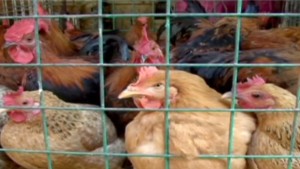
130426151758-02-bird-flu-0426-horizontal-gallery(CNN) — The H7N9 strain responsible for the bird flu outbreak in China is unlike any that has previously been seen in this type of virus.

So far, 110 cases have been reported, including one in Taiwan, and 23 people have died. Here are some things to know about this virus:

No evidence of human-to-human transmission to date

So far, authorities said, there is no evidence that this virus can pass from person to person. That doesn’t mean it can’t happen later.

“If limited person-to-person transmission is demonstrated in the future, this really will not be surprising,” Keiji Fukuda, the World Health Organization’s assistant director-general for health, security and the environment, told a news conference Wednesday in Beijing.

Virologist: Bird flu ’cause for concern’
WHO: Bird flu outbreak especially lethal

Poultry markets closed over bird flu

New bird flu spreads outside China

WHO: H7N9 virus ‘one of the most lethal so far’

It’s dangerous and deadly to humans

The virus appears to be transmitted more easily from poultry to humans than H5N1, Fukuda said, referring to the strain responsible for the outbreak between 2004 and 2007, which claimed 332 lives.

“This is definitely one of the most lethal influenza viruses that we have seen so far,” he said.

The H7N9 strain was never known to infect people until March. Before then, it was only found in birds.

If the virus does start to spread easily between people, it could trigger a pandemic.

“This is a serious public health situation and it’s possible that a pandemic could start if this virus were to change to spread easily between people,” the U.S. Centers for Disease Control and Prevention said on its website. “CDC is preparing for that possibility.”

New bird flu well-adapted to infect people

There’s still a lot of unknowns

It’s not clear why this virus strain is infecting humans now, and the source of the infection is unknown.

Scientists have analyzed the genes of the H7N9 viruses and found that they show signs indicating they can adapt to grow in mammals. It appears they can bind to mammalian cells and grow at temperatures near mammals’ normal body temperatures, which is lower than that of birds, WHO said.

There is no vaccine available, but WHO said efforts are underway in other countries after Chinese officials said international help would be needed. The CDC said researchers there are working on a vaccine candidate virus.

Cooking poultry can kill the virus before you eat it

In normal cooking temperatures — so all parts of the meat reach at least 158 degrees Fahrenheit (70 degrees Celsius) with no “pink” — the virus would be inactivated, including in poultry and game birds.

Generally, eating raw meat is discouraged anyway, as doing so can lead to a variety of foodborne illnesses.

You should not, however, eat diseased animals or animals known to have died from diseases.

No travel restrictions; low U.S. risk

The CDC is not advising against traveling to China, but travelers who go there should refrain from touching birds and other animals and wash their hands often.

There is currently no incidence of the virus in the United States, but the most likely scenario for it to get there would be through a person traveling from China.

The risk to persons in the United States is low, the CDC said.

There are no tests available at pharmacies or doctors’ offices to distinguish this flu quickly from any other flu virus, the CDC said. However, there is a sophisticated test to detect the H7N9 virus in particular, which takes at least four hours.

“Anyone with fever, coughing or shortness of breath within 10 days of traveling to China should see a doctor and tell the doctor about the recent travel to China,” the CDC said on its website.