Death toll jumps in landslide in southwest China

China-LandslideA landslide the size of a small town has killed at least 18 people and toppled 11 buildings in southwest China, state-run media said, citing local authorities.

The disaster occurred in Sichuan province’s Dujiangyan city on Wednesday, the Xinhua state news agency reported.

By Thursday afternoon, the number of people reported missing had climbed to 107, from 21 the previous day. Rescuers continue to dig through 53 million cubic feet of dirt in search of them.

Flooding that triggered the landslide has affected 1.5 million people and inundated tens of thousands of acres of crops. The torrents have plagued the mountainous region since Monday, smashing bridges and knocking out power to thousands.

They have washed away property worth more than $40 million, provincial officials said.

Xinhua also reported that more than 400 stranded people have been securely moved out of Dujiangyan.


About 150 Inmates Escape From Indonesian Prison

prisonAbout 150 prisoners escaped Thursday from an overcrowded prison in western Indonesia, and others held officers hostage, following a riot triggered by a blackout.

Prison directorate spokesman Akbar Hadi said the inmates forced their way out from Tanjung Gusta Prison in Medan, the capital of North Sumatra province, while others set the prison’s offices on fire.

National Police Spokesman Maj. Gen. Ronny Frengky Sompie, saying police were investigating media reports that 12 terrorist inmates were among those who escaped.

Hadi said about 15 officers were being held captive inside the prison. It holds about 2,400 prisoners but media reports say its normal capacity is 400.

BeritaSatu TV station reported that the prisoners seized guns from the officers. Its reporter said gunshots were heard from inside the prison.

Thousands of policemen are deployed around the prison and the Indonesia’s third largest town to blockade roads linking Medan and other provinces while fire brigades are battling the fires.

MetroTV station reported that at least 10 prisoners including a terrorist convict had been recaptured.


Want to go into space for just £25,000? Try the balloon that will fly twice as high as Concorde and take you from Paris to Rome

Space BalloonA Spanish company plans on offering the ultimate day trip to near-space in two years time – just enough time to start saving for the £95,000 ticket.

During the flight, passengers will be able to stand up and enjoy fantastic panoramic views of Earth, experience weightlessness and even eat a meal if they desire.

The ëblooní is the brainchild of Spanish entrepreneur Jose Mariano Lopez-Urdiales, boss of Barcelona-based Zero2Infinity.

Space tourists will journey to earth’s outer limits in a capsule that can hold six people – four passenger and two pilots.

Annelie Schoenmaker of Zero2Infinity, said: ‘The ride will be very gentle and peaceful as well as environmentally friendly.

‘Passengers will be able to see the sun and the stars at the same time, while looking down on the curvature of the earth.’

Russian adventurer Artemy Lebedev who is one of the few people on the planet to have visited every country, has already signed up for a trip to near-space.

Commercial operations will begin in 2015 but a trip for four people will cost around £95,000.

Ms Schoenmaker said: ‘The experience will be very much like that in an aeroplane although there will be a period of about 30 seconds when passengers will experience weightlessness and will be able to float around the cabin.

Zero2Infinity’s largest pod, which carries six people, has 15 square metres of windows for amazing views of the Earth and space.

The company is currently doing test flights and raising more investment for its new venture.


Russia to use first FLOATING nuclear power plant in just three years to provide energy for hard-to-reach regions

floating nuclear power plant1Russia will begin to operate the world’s first floating nuclear power plant in just three years time.

The specially-made ship with a nuclear power plant on-board will provide energy, heat and drinking water to relatively inaccessible areas of the vast country.

The director of Russia’s largest shipbuilders, the Baltic Plant, announced that the unique ship should be operational by 2016 at the 6th International Naval Show in St Petersburg.

The first ship will be called Akademik Lomonosov and is intended to be the first of small fleet of floating nuclear plants in Russia.

The Akademik Lomonosov will weigh 21,500 tons and have a crew of 69 people. But it will not have a propulsion system so will have to be towed to the location where it is needed, according to global news service, RT.

It will have two modified KLT-40 reactors that will be able to provide enough energy for a city with 200,000 people.

The floating power plants will be able to be modified and be used as a desalination plant. This means that the ship could produce a staggering 240,000 cubic metres of fresh water every day.

The ship builder insists that the process of fuel enrichment on the floating power station complies with the International Atomic Energy Agency’s regulations.

The firm claims that its floating power station is safe for the environment as it does not release any hazardous substances while it is operating.


Powerful car bomb rips through southern Beirut

130709055104-jamjoom-bpr-lebanon-blast-00002716-story-top(CNN) — A powerful car bomb rocked southern Beirut on Tuesday, unleashing an inferno in the Bir El Abed neighborhood, Lebanon’s National News Agency reported.

At least 18 people were wounded, according to NNA.

Video from the scene aired on Al Manar TV showed multiple vehicles on fire, with black smoke billowing into the air.

Crews doused the flames with fire hoses as authorities kept the crowds back.

The explosion was powerful enough to damage surrounding buildings several stories up, blowing out windows and damaging balconies.

Syria’s conflict stirs up old rivalries in Lebanon

Tensions have been on the rise in Lebanon as thousands of refugees have poured into the country since the conflict in Syria began in March 2011.

Sectarian violence has been a growing concern as many Lebanese support the embattled regime of Syrian President Bashar al-Assad, while others do not.

And there is evidence rebel groups are receiving small arms smuggled across both the Lebanese and Turkish borders.

In April the Lebanese army announced it had intercepted a cargo ship bound for Tripoli — the northern epicenter of support for Syrian rebels in Lebanon — that was filled with weapons it believes were meant to be delivered to rebel forces in Syria.

CNN’s Mohammed Jamjoom says the big worry is that Syria’s troubles will reopen the wounds of Lebanon’s long civil war with theSunni community, which tends to back the rebels, pitted against Hezbollah, the powerful pro-Assad Shiite militia.

Asiana flight attendants hailed as heroes

130708235908-ac-asiana-crash-latest-simon-pkg-00015126-story-topHong Kong (CNN) — Veteran flight attendant Lee Yoon Hye sensed something was awry as Flight 214 neared the San Francisco International Airport runway.

As the plane was supposed to land, it rose briefly as if it was trying to lift off again.

Lee had worked 18 years with Asiana Airlines and on Saturday, her skills were tested.

The plane slammed down with “great impact,” said Lee, who sat in the front.

Plane crash investigation

China mourns air crash victims

Survivor: I thought ‘I’m dying’

Then boom — the plane hit again.

“It was even more than a hard landing,” Lee, 40, said. The plane teetered left and right.

After striking the edge of the runway at San Francisco International Airport, the Boeing 777 tumbled into the ground, igniting flames and a trail of smoke. Its tail splintered off and parts of the plane peeled off as it skidded into the earth.

When the aircraft finally stopped, she noticed that the emergency inflatable slide located at the right side of the front door had deployed inside the plane. Witnesses say the overhead bins dropped open.

Hailed as a hero who ushered passengers out of the Asiana plane, Lee was one of the 12 flight attendants on Flight 214.

She calmly described the chaotic minutes of the Asiana plane crash. Dressed in her airline uniform, her name tag pinned to her jacket and her hair in the airline’s trademark bun, she addressed Korean journalists gathered in San Francisco earlier this week.

According to the airline, flight attendants helped passengers get off the plane safely. They opened doors, deployed slides and helped passengers escape, according to JoongAng Daily, a South Korean newspaper.

As soon as the plane stopped, Lee knocked on the cockpit door to make sure the pilots were OK.

The captain opened the door.

“Are you OK, Captain?” she asked.

“Yes, I am OK,” he replied.

Asiana crash: Rescuing the survivors

Plane crash victim may have been run over

Hager: Inevitable it was going to stall

“Should I perform the evacuation?” she asked. He told her to wait, she recalled.

Lee made an announcement to assure increasingly agitated passengers, telling them that the plane had come to a complete stop.

Once evacuation began, Lee said she had a plan.

“I was not thinking, but acting,” she said. “As soon as I heard ’emergency escape,’ I conducted the evacuation.”

“When there was a fire, I was just thinking to extinguish it, not thinking that it’s too dangerous or ‘What am I going to do?'”

Asiana flight attendants undergo three months of training including emergencies and terrorist training before their first flight.

Lee said she saw her colleagues jump into action to help passengers and injured crew even as a fire burned in the back of the airplane. They popped the first emergency slide that had deployed inside with an ax to free a crew member who was struggling to breathe underneath its weight. Another emergency slide in the back trapped another crew member and was deflated with a kitchen knife, Lee said according to South Korean news station YTN.

One shaken elementary school-aged boy was afraid to go down the emergency slide, but one of the flight attendants lifted him on her back and escaped with him, Lee said.

Earlier this week, Eugene Rah, who was flying his 173rd flight on Asiana Air, told CNN that he saw a 100-pound flight attendant carrying the injured on her back.

Lee said she was the last to leave the plane. And she glanced back.

“The ceiling was coming down and I felt like something was dragging the plane. Behind me I couldn’t see, because it looked like there was a wall.”

She had no idea the tail had snapped off or how the plane would be nearly engulfed in flames moments after they had escaped.

Two teenagers, both 16, died in the crash. The rest who were on board escaped: 305 of them.

Report: Osama bin Laden — doting grandpa, paranoid terrorist

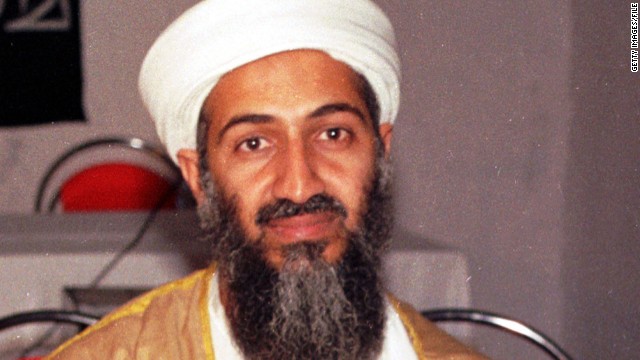
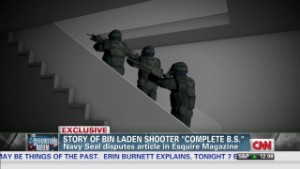
120523040531-osama-bin-laden-horizontal-galleryIslamabad (CNN) — Osama bin Laden typically wore a cowboy hat while tending his garden.

Its broad brim obscured his features from the view of pesky eyes or satellite cameras that might blow his cover while he was hiding out in Pakistan, according to a report published widely in Pakistani media.

The 337-page leaked report details the domestic life of one of the world’s most wanted men as a grandfather in his final days of life.

It also scathes Pakistani authorities for failing to keep him out of the country, and for failing to prevent the U.S. raid by Navy SEALs that killed bin Laden in May 2011.

CNN is working to confirm the authenticity of the report, which bears the names of a former top diplomat, a supreme court justice and former officers of the military and police.

Photos: The death of Osama bin LadenPhotos: The death of Osama bin Laden

2011: Obama announces bin Laden’s death

Documentary examines hunt for bin Laden

Bin Laden Raid – SEALs’ Accounts

Veggie growing contest

The famous terrorist’s life was speckled with quirky measures designed to keep him under the radar, the report said.

Al Qaeda’s No. 1 spent lots of time doting on his some dozen children and grandchildren in the six years he spent in his walled compound in the city of Abbottabad, said terror expert Peter Bergen, commenting on the report.

They could not pass time watching TV or surfing online, because bin Laden had no Internet connection and no satellite television hook-up. He also didn’t have a phone line, all measures to avoid detection.

For the same reason, the children were not allowed to play with other kids in the neighborhood. They spent the bulk of their lives within the compound’s walls.

When bin Laden was not personally giving them religious instruction, he took them out into the yard.

He would award them prizes if they grew particularly good vegetables in the garden.

Faking deafness

Bin Laden fled to Pakistan a month after the September 11, 2001, attacks on the United States, moving from the south to the north then hopping from town to town before landing in Abbottabad in 2005.

While he was on the run, one of his wives gave birth four times and had to be taken to local hospitals, but it was obvious that she was not from the region. She spoke Arabic instead of Urdu, Pakistan’s official language.

Bin Laden’s family feared this might raise suspicions. So, they told doctors she was deaf and mute.

While on the run in the restive tribal region of the Swat Valley, bin Laden shaved off his recognizable beard, according to the report. Men helping him told others not to ask any questions about the tall stranger, who spoke Arabic.

Who really killed bin Laden?

How man came face-to-face with bin Laden

Pervez Musharraf on Osama bin Laden


While in Swat, police once pulled bin Laden’s driver over, but he quickly settled the matter, before the officer had a chance to get a closer look at the clean-shaven man riding with him.

After arriving in Abottabad, a woman living in the same building with bin Laden recognized him from his image shown on cable TV. Her husband, who was helping bin Laden, went into a panic, the report said.

He told her to mind her own business and forbade her and all other women in the house from watching TV anymore.

The assassination raid

The measures kept bin Laden from being recognized for years in a city known for being the home to one of Pakistan’s largest military complexes.

The CIA eventually suspected he was there and recruited a Pakistani doctor to run a vaccination program in Abbottabad in an attempt to find bin Laden by locating his children through their DNA.

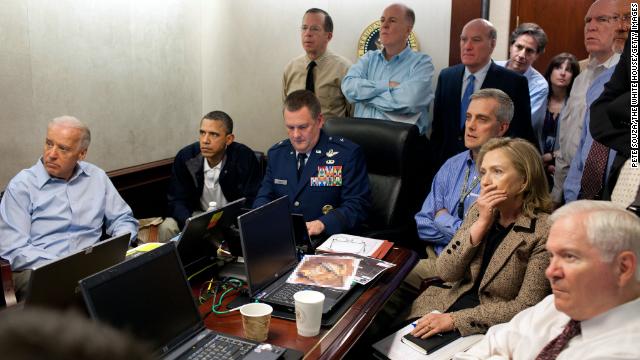
Eventually the United States did find bin Laden and assassinated him during a special forces raid on his compound. He was later buried at sea, the U.S. military said.

Although the SEALs were within Pakistan’s borders for three hours, its military did not detect them.

“The radar systems were not looking for that kind of intrusion from the Afghan side of the border,” terror expert Peter Bergen said. He feels sure that will change now.

The report also dedicated 22 pages to fighting terrorism and keeping people like bin Laden from taking refuge in the country again.

The report’s authors blast Pakistani authorities at every level of government, intelligence and the military for not stopping the U.S. mission, calling it “a story of complacency, ignorance, negligence, incompetence, irresponsibility, and possibly worse at various levels inside and outside the government.”

Pakistan’s government considers the assassination operation a violation of its sovereignty, basically an act of war.

President Serzh Sargsyan met with the members of the Public Council

3444 (1)

 President Serzh Sargsyan met today with the members of the Public Council.

Discussed was a wide framework of issues pertinent to the internal as well as foreign policy, ranging from the problems of the state policy on culture, risks related to the water resources of Ararat valley up to the problems associated with the preservation of the historical and cultural heritage in Yerevan and proposals aimed at the modernization of the telecommunication system.

Considering that the extensive agenda involves different areas and each of them independently, according to the President, could become a topic for consultations, President Serzh Sargsyan expressed hope that the presented issues and corresponding documentation have already been discussed at the Public Council and the Council will continue to work them over with the relevant agencies, trying to be useful to these agencies in finding efficient solutions for the raised issues.

Serzh Sargsyan noted that the highlighting of the problems which interest our society during such meetings and consultations with the President doesn’t necessarily mean that the Public Council has finished its job and from now on these issues have become the President’s problem. “If an issue relates to our foreign policy or national security, I may accept that, however in all other cases, it is assumed that you continue to push these issues forward with the same vigor and make efforts, along with the state structures, to find solutions acceptable for the society and the state,” President Sargsyan said at the beginning of the meeting.

Before turning to the agenda items, the Chairman of the Public Council Vazgen Manukian spoke about the activities of this four-year old structure; a skeptical attitude toward the Public Council which was present right after its creation and voiced criticism. He said that now, after certain work has been done there is a positive attitude of the public toward the Council and its achievements. V. Manukian also spoke about current problems of the Council and ideas regarding its future. “In fall, concluding our work, we will present to our society and the President results of our activities of four years and, hopefully, also in fall, we will have a law on the Public Council. At any rate, the draft law will be introduced in the National Assembly in early fall,” the Chairman of the Public Council said.

For the structure under his leadership, Vazgen Manukian stressed the importance of authority which any such structure should have and underscored three important factors to achieve that: personal repute of each member of the Public Council, the degree of independence and unrestraint of the Public Council in raising different issues, and at the same time, its impartial and non-populist stance.

President Serzh Sargsyan concurred that the Public Council has traveled a difficult road since its creation and has gone through some harsh criticism. “As the saying goes, any good deed is reprehensible. We have to learn to work in these conditions. I believe that we have left behind the part of the road which had to be traveled together and in fall I will be ready to discuss the draft of the law you’ve mentioned,” President Serzh Sargsyan said.


Venezuela and Nicaragua offer NSA whistle blower Edward Snowden asylum

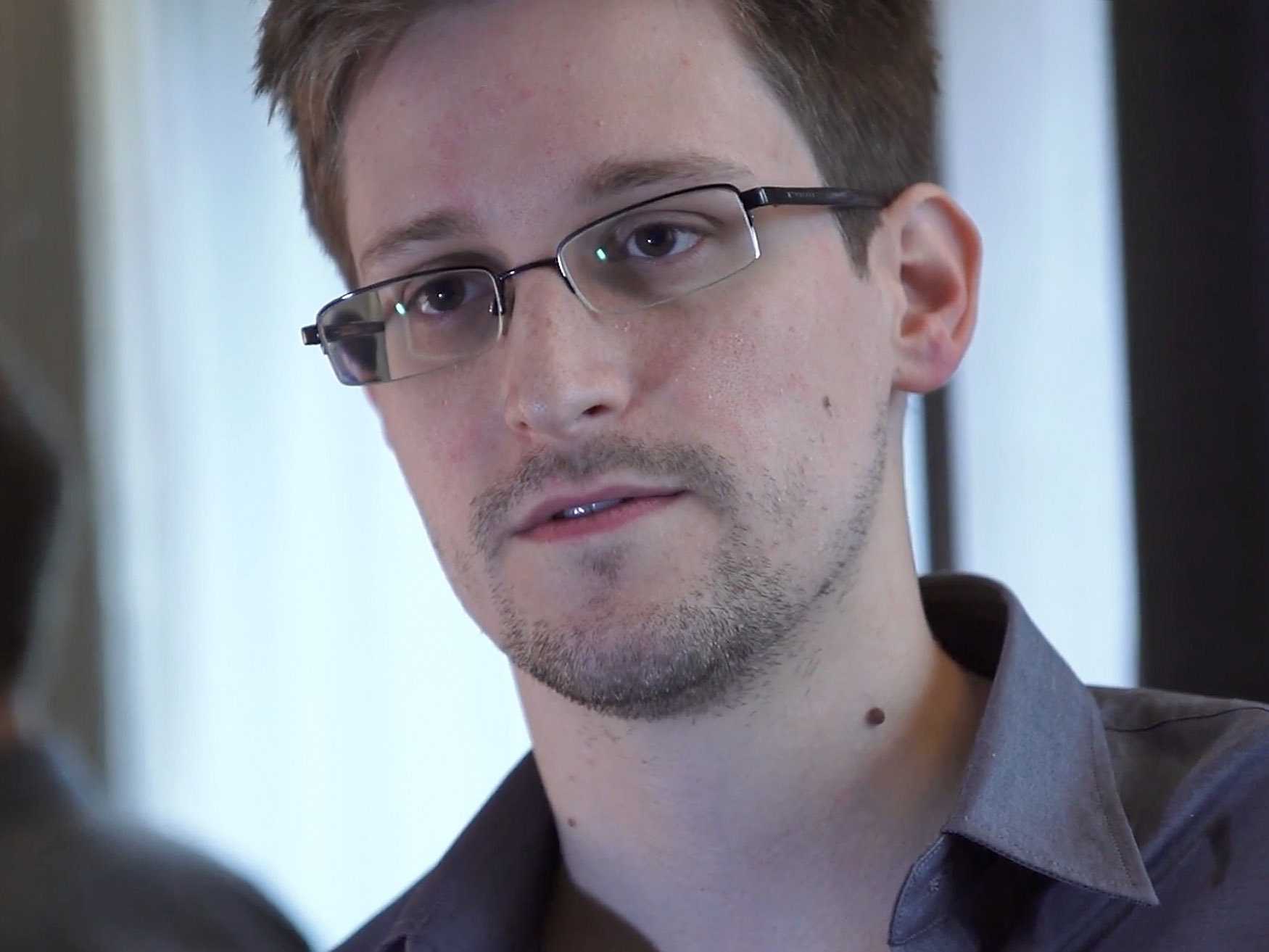
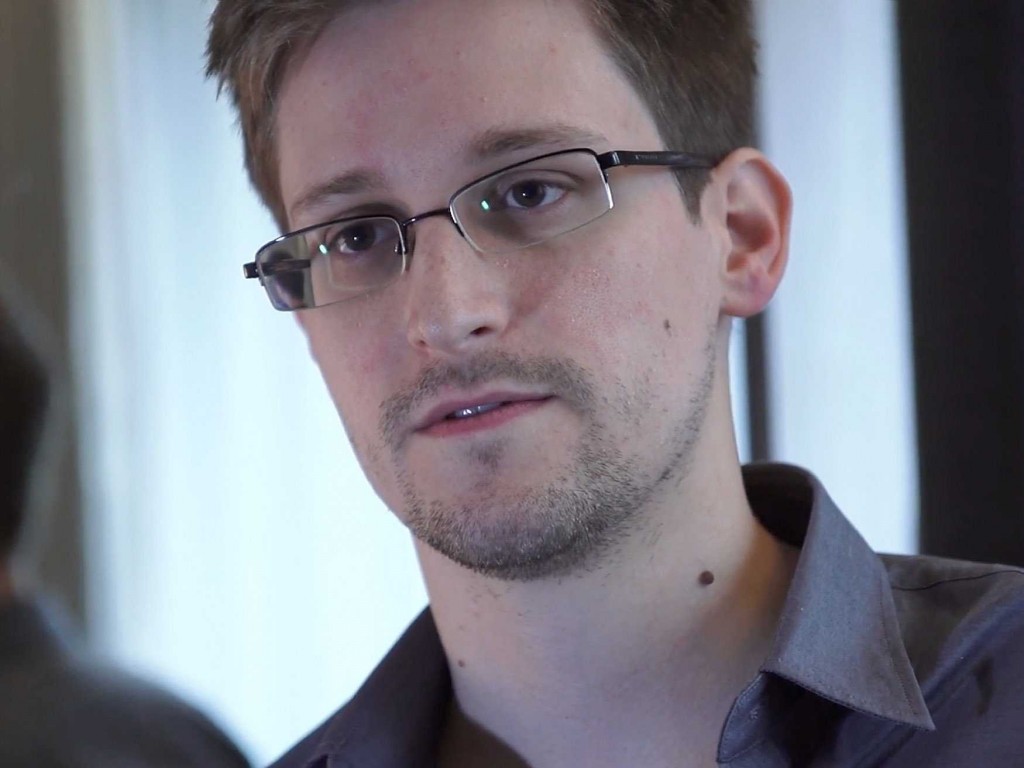
Edward Snowden (1)Presidents Daniel Ortega of Nicaragua and Nicolas Maduro of Venezuela said Friday they were willing to grant asylum to National Security Agency intelligence leaker Edward Snowden.

Snowden has asked for asylum in several countries, including Nicaragua and Venezuela.

Whereas Ortega cautiously stated his offer, Maduro spoke out against the United States and championed Snowden for telling the truth about the government’s global spying programs.
He made the offer during a speech marking the anniversary of Venezuela’s independence. It was not immediately clear if there were any conditions to Venezuela’s offer.

‘In the name of America’s dignity … I have decided to offer humanitarian asylum to Edward Snowden,’ Maduro proclaimed during a military parade marking the country’s Independence Day, Reuters reported.

‘He is a young man who has told the truth, in the spirit of rebellion, about the United States spying on the whole world,’ Maduro said.

In Nicaragua, Ortega said he was willing to make the same offer ‘if circumstances allow it.’ Ortega didn’t say what the right circumstances would be when he spoke during a speech in Managua.

He said the Nicaraguan embassy in Moscow received Snowden’s application for asylum and that it is studying the request.

Snowden is currently believed to be holed up in the transit area of Moscow’s Sheremetyevo airport, according to the news agency.

Russian officials have neither confirmed nor denied his presence there, though they have announced that the transit area is neutral territory. Snowden will only have crossed over on to Russian soil if he passes through the airports customs.

Even if Snowden was to accept the Latin or South American government’s offers it remains unclear how he will get into the countries.

As Reuters noted, the are no direct commercial flights between Moscow and Venezuela. The most common route involves transferring in Havana and there is no word yet if the Cuban government will let Snowden pass.

Snowden’s journey could prove challenging as the United States has made it clear they are monitoring the skies for his presence.


Rock-solid love: Australian woman marries a bridge in France – and even gets the mayor’s blessing

Australian woman marries a bridge in Southern FranceAn Australian woman has taken her desire for the ‘strong and silent’-type to a new extreme when she married a bridge.

Jodi Rose married Le Pont du Diable Bridge in Céret, southern France after falling head over heels for the ‘sensual’ 14th century stone structure.

Ms Rose, or Mrs Le Pont du Diable, has spent the past decade travelling the world recording the vibrations in bridge cables with contact microphones and using them to create experimental music.

After visiting dozens of bridges all over the world for her Singing Bridges musical project, she decided this was ‘The One’.

Although her new husband may struggle to express his feelings, newlywed Jodi said ‘his being is very present, and I feel at peace in his strong embrace.’

‘He makes me feel connected to the earth and draws me to rest from my endless nomadic wanderings. He is fixed, stable, rooted to the ground, while I am nomadic, transient, ever on the road.

The wedding between Jodi and Le Pont du Diable, which translates to The Devil’s Bridge, took place in front of 14 guests and was blessed by the mayor of neighbouring town Saint-Jean-de-Fos.

The pair made their vows at the groom’s entrance. Rose wore a custom bridal gown and veil, and commissioned rings for both her and the bridge.

Their union is not legally recognised in France, but Rose claims their marriage is as strong as any other.

Ms Rose, who says she is completely devoted to her new husband, have yet to explain how she determined the sex of the bridge.

Maid faces three years in jail for adding urine and dirty water to her employer’s tea

tea (1)A maid faces three years in jail for adding urine and dirty wash water to her employer’s tea.

The 22-year-old who was working in Hong Kong, China, was arrested after her employer noticed the tea had strange odour.

She confronted the maid, who admitted to tampering with her drink, although the reasons are unclear.

The maid now faces a jail term for ‘administering noxious substances’ – urine and dirty laundry water are potentially hazardous to human health, reported Shanghaiist.

The identity of the maid and her employer are not known.

Last year a maid in the UAE who added urine to her employer’s tea was jailed for two months.

The 26-year-old Indonesian housemaid was found guilty of endangering the life of a family by the Dubai Court of Misdemeanours.

The maid carried out the crime in order to make the family like her, records say.


Jenny from the Eastern Bloc: Lopez forced to apologize for singing happy birthday to brutal Turkmen dictator accused of torture

Jennifer Lopez performing in Turkmenistan1Jennifer Lopez was forced to apologize after a concert in Turkmenistan on Satruday night because she sang ‘Happy Birthday’ to the repressive dictator of the country’s brutal oppressive regime.
Lopez reportedly changed into a traditional Turkmen outfit during her show and personally serenaded Gurbanguly Berdimuhamedow – whose government is accused of arbitrarily arresting and torturing political dissidents.
Human Rights Watch ranks Turkmenistan as ‘among the most repressive in the world.’ The human rights group says the former Soviet republic imposes ‘draconian restrictions on freedom of expression and association.’
The group also reports that ‘President Berdymukhamedov, his relatives, and associates enjoy unlimited power and total control over all aspects of public life.’
The concert was sponsored by China National Petroleum Corp – a major investor in Turmenistan’s booming gas industry – was meant to celebrate Berdimuhamedo’s 56th birthday.
Lopez released a statement after the concert apologizing for signing for the president and saying she never would have attended to concert if she had known the country’s human rights record.
According to the statement, the birthday song was a last-minute request made by the company to Lopez and she ‘graciously obliged.’

The concert took place in at a $2billion resort and yacht club on the Caspian Sea that Berdimuhamedow had opened just the day before.
The glitzy performance for a rarity to the Muslim-majority country of five million people. In attendance were government ministers, the heads of state-owned companies and foreign dignitaries.

Bert Stern’s iconic Marilyn Monroe portraits to go under the hammer as legendary photographer dies aged 83

merlin monro 12 Bert Stern, the famed photographer best known for his sensual portraits of Marilyn Monroe, passed away on Wednesday at 83 years old – but his iconic images are set to live on, most likely in other people’s living rooms. Stern’s raw and poignant series of Monroe, The Last Sitting, photographed for Vogue at the Bel Air Hotel in Los Angeles just weeks before her drug overdose death, will be auctioned off on September 10. The 2,500 photographs, taken over three days in June 1962, were originally published in a 1982 book titled The Last Sitting, and a second book, Marilyn Monroe: The Complete Last Sitting, that came out in 2000. An undisclosed number of the nude and semi-nude portraits will go under the hammer at Freeman’s Auctioneers in Philadelphia for an estimated $10,000 to $15,000 each. ‘It was a one-time-in-a-lifetime experience, to have Marilyn Monroe in a hotel room,’ Stern said in the 2010 documentary Bert Stern: Original Madman. ‘I would never have taken any nudes of Marilyn if she didn’t want to do it,’ he added in the film. Stern died Wednesday at his Manhattan home, confirmed Ms Laumeister, who said she and Stern had been secretly married since 2009. ‘He’ll be remembered as someone who loved women and loved taking pictures and putting things he felt strongly about in the camera,’ she said. As a commercial photographer, Stern helped redefine fashion advertising and portraiture in the Fifties and Sixties, photographing the likes of Audrey Hepburn, Elizabeth Taylor and Truman Capote; and launching his career with an ad campaign for Smirnoff Vodka.

Deputy Head of “Nubarashen” penitentiary accused of taking bribes

նուբարաշենThe prosecutor implementing prosecutorial supervision confirmed the bill of indictment on criminal case initiated against the deputy head of penitentiary D. Muradyan for taking bribes in particularly large amount.

According to the evidence obtained during the pre-trial proceeding D. Muradyan, being a deputy head of “Nubarashen” penitentiary of RA Ministry of Justice from December 1, 2011 to February 6, 2013, authorized to cooperate the operative and medical service divisions of penitentiary, from August to December 2012 had taken bribes in particularly large amount from A. Hakobyan serving a term in the same penitentiary.
According to preliminary investigation data D. Muradyan had demanded from A. Hakobyan who was imprisoned for the term of 5 years and 6 months for committing crimes of average weight and taken from the latter himself and through his wife a total bribe of 1.631.320 AMD equal to 4.000 USD, as well as furniture costing 540.000 AMD .
According to the obtained evidence D. Muradyan had demanded the bribe for admitting the defendant to the therapeutic part of the penitentiary without sufficient base and keeping there for a lasting period, contributing to long- and short-lasting meetings with his wife, as well as allowing to repair the cell, to furnish it and to have and use a mobile phone violating the defined order.

By the preliminary investigation it was also found out that during 2012 in order to contribute to the early release of the same defendant within his authorities, D. Muradyan had demanded and taken bribe twice and returned it not being able to solve the matter of the early release.

On the base of the evidence obtained by preliminary investigation implemented in RA Special Investigation Service D. Muradyan was accused according to the Point 2 of the Part 4 of the Article 311 of RA Criminal Code.

The criminal case with the bill of indictment was sent to court.

Japanese man, 71, sues TV station ‘for using too many English words’

japanA pensioner is suing a Japanese broadcaster for emotional distress as the channel uses to many foreign words.

Hoji Takahashi, 71, wants 1.41million Yen from broadcaster NHK because of their reliance on English.

He says that it makes programming unintelligible and that they should use the traditional Japanese counterparts, reported Japan Today.

His lawyer, Mutsuo Miyata told AFP: ‘The basis of his concern is that Japan is being too Americanized.
‘There is a sense of crisis that this country is becoming just a province of America.’

Many Japanese speakers use English words such as ‘trouble’, ‘risk’ or ‘drive’.

But in Japanese, these words are often pronounced differently, and have new meanings.

They also use words from other languages such as the German ‘arbeit’ and the Spanish ‘pan’.


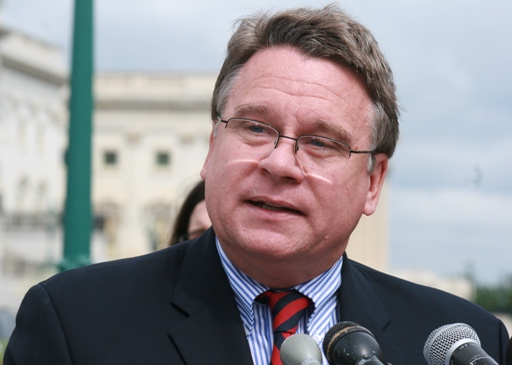
CHAIRMAN SMITH ASKS OBAMA ADMINISTRATION FOR REPORT ON AID TO SYRIAN ARMENIANS

Chris_smith
— Hearing Reflects Growing Bipartisan Interest in Welfare of Syria’s Religious Minorities
WASHINGTON, DC – Republican and Democratic members of a key U.S. House Foreign Affairs subcommittee joined yesterday with the panel’s Chairman, Rep. Chris Smith (R-NJ), in voicing growing Congressional concern for the welfare of Armenians, other Christians, and all religious minority communities in Syria, reported the Armenian National Committee of America (ANCA).
“We want to thank Chairman Chris Smith for holding yesterday’s hearing about religious minorities in Syria, and would also like to share our special appreciation with all his colleagues who joined with him in using this important national platform to raise concerns about the welfare of at-risk and refugee Armenians, other Christians, and all Syrian minorities,” said ANCA Executive Director Aram Hamparian. “We are particularly grateful for Chairman Smith’s formal request of the Obama Administration to share with Congress the specific steps that our government is taking to ensure that U.S. aid programs provide needed assistance to vulnerable Armenians in Syria, as well as for those who have left Syria and found refuge in Armenia. We very much look forward to sharing the work of our State Department and USAID on this matter of urgent concern to all Armenian Americans.”
The hearing, titled: “Religious Minorities in Syria: Caught in the Middle,” featured testimony from a State Department human rights official, Thomas O. Melia, Deputy Assistant Secretary for Democracy, Human Rights, and Labor, as well as from a number of experts:  Nina Shea, Director of the Hudson Institute’s Center for Religious Freedom; Zuhdi Jasser, M.D., a Commissioner on the U.S. Commission on International Religious Freedom; Rev. Majed El Shafie, Founder of One Free World International, and; John Eibner, Ph.D., CEO of Christian Solidarity International, USA.  A video of the hearing, and the full text of the opening remarks of each witness can be found at:
The ANCA’s Armenian Weekly Fellow Lilly Torosyan live blogged about the hearing on the ANCA Facebook page:www.facebook.com/ancagrassroots.
Concerns about the Armenian population and the broader plight of religious minorities in Syria were spotlighted throughout the hearing.  Chairman Smith, referencing a hearing on the Armenian Genocide Resolution that he had chaired in 1996, asked what specific steps the Obama Administration had taken to assist the Armenian refugees who have fled Syria.  Deputy Assistant Secretary Melia noted that U.S. officials have been in touch with Armenian Church and community leaders but would get back to the Subcommittee with a detailed response.
During her testimony, Ms. Shea offered specific examples of the targeting of Christians, including the Armenian population, and noted overall that “Though no religious community has been spared suffering, Syria’s ancient Christian minority has cause to believe that they confront an ‘existential threat,’ according to a finding of the UN Human Right Council’s Commission of Inquiry on Syria, last December. And this group, in contrast to Syria’s Alawites, Shiites and Sunnis, has no defender.”
Dr. Eibner drew a chilling parallel between the Syrian crisis and efforts to bring democratic reform to the Ottoman Empire in the early 20th century.  “One cannot help but look back to the days of the Ottoman Empire, when in 1908 there was a great revolution, we might call it the Ottoman Spring where members of all religious communities, ethnic minorities were dancing in the streets to celebrate freedom and within a decade there is genocide and Anatolia is completely cleared of its religious minorities.  It can happen.  It can happen today, this year.  It can happen next year and the United States has an international obligation to try to prevent genocide…”
The ANCA is continuing discussions with the State Department and Members of Congress to call attention to the plight of the Syrian Armenian community and asking for concrete steps assist the community in Syria and refugees who have fled to Armenia.  Armenian Americans can send a free ANCA Webmail to Secretary of State John Kerry sharing their concerns regarding U.S. policy from the following site:

President Serzh Sargsyan participated at the closing ceremony of the Armenian-Polish Business Forum

Սերժ Սարգսյան

In the framework of his official visit to the Republic of Poland, President Serzh Sargsyan together with the Polish President Bronisław Komorowski today in Warsaw participated at the closing ceremony of the Armenian-Polish Business Forum.

Serzh Sargsyan greeted the organizers and participants of the Business Forum, spoke about the centuries-long Armenian-Polish friendship, cooperation of the two countries in different areas, the Armenian-Polish trade and economic relations and briefly presented the business environment in modern Armenia, tendencies of economic development and investment opportunities.

In his welcoming remarks, the President spoke with esteem about the Polish authorities, in the person of President Komorowski and the Polish businessmen who, according to President Serzh Sargsyan, in the difficult conditions of the global economic and financial crisis have registered great success and through their daily work have further empowered their country.

“The Armenian-Polish friendship is centuries old and soon we will be celebrating the thousand year anniversary of the establishment of the first Armenian settlements in Poland. Becoming stronger with centuries, the Armenian-Polish relations are encompassing every area. The Armenians not only fought for independence of Poland but also made an important contribution to the country’s development. It is no accident that in order to advance the trade and crafts, the kings and princes of Poland were inviting Armenians to settle in different parts of the country, endowing them with numerous privileges and rights.

The high level of our current political relations and achievements registered in different areas, has its origin in the spiritual and cultural community, friendship and mutual sympathy formed during the ages.

Regrettably, today the Armenian-Polish trade and economic ties are substantially lagging behind the relations established in other areas. To fill that void, we, the two Presidents have decided on the necessity to organize a business forum – two years ago in Yerevan, and now here, in Warsaw. It should be noted that there are already some results, especially with regard to the presence of the Polish companies in Armenia and their participation in different Armenian projects. However, it is still not enough, and I urge you to be much more active.

Distinguished Entrepreneurs,

I would like to present briefly the business environment in modern Armenia, tendencies of economic development, as well as the investment opportunities.

Continuous improvement of the business and investment climate is a chief prerequisite of our economic development. Toward that end, in recent years, we have undertaken large-scale economic reforms, particularly related to the opening a business venture in Armenia, construction permits, registration of property, acquisition of loans, protection of investments, filing taxes and some other areas. The achieved results have been reflected in the international ratings, particularly, in the Doing Business-2012 annual report published by the World Bank’s International Financial Corporation. According to the mentioned report, Armenia compared to the previous year, improved her position by 18 points, occupying the 32nd position among 185 countries. Please note that it makes the business climate in Armenia the best in the CIS region.

Nevertheless, we don’t believe that our efforts aimed at the liberalization of the investment field and business climate and improvement of the state governance structure in general stop there. There is still a long road to go and we are passing that road with the assistance of our European friends.

In this context, it is warranted to speak about the Association Agreement to be signed with the European Union and the Deep and Comprehensive Tree Trade Agreement which constitutes its part. It will put our cooperation with the EU member states, including Poland, on a qualitatively new and more comprehensive basis.

Last December, we signed the agreement on visa facilitation with the European Union which was immediately followed by the cancelation of visa requirements for the EU citizens visiting Armenia. Considering also the Polish LOT airlines five times a week flights to Yerevan, I trust that all obstacles for visiting our country and observing the created conditions first hand have been removed.

Along with all this, I believe that Polish entrepreneurs would like to know that Armenia, being a member of the CIS Free Trade Zone agreement and closely cooperating with the Customs Union, has a competitive advantage in the CIS region. It definitely creates extra opportunities to enter the CIS market with more favorable conditions through the capital invested in Armenia.

Steps are also taken toward the improvment of infrastructure and full utilization of the existing opportunities which will allow to decrease the transportation fees.

Ladies and Gentlemen,

I would like to highlight a number of areas which, in my opinion, could possess potential for the further development of the Armenian-Polish cooperation.

The area of information technologies in Armenia is growing rapidly. It ensures high profitability and is really attractive for major foreign investments. It is proved by the presence in Armenia of 360 companies working in the IT area, 151 of which are branches of foreign companies. Many of the major international companies are represented in Armenia, among them Synopsys, National Instruments, Microsoft, D-Link, Mentor Graphics, and others.

Everything is being done to staff the field with professional cadre and, of course, to retrain them. The Armenian National Engineering Laboratories program is being implemented, and retraining programs have been launched at the Microsoft innovation center and laboratories of the Mobile Solutions.

The Tumo supermodern center of creative technologies for 12-18 years old children has been functioning in Yerevan since 2011, and now we are planning to extend the programs of the center to the regions of the Republic as well.

Traditional areas which brought the international recognition to the Armenians are jewelry making and diamond cutting. The Armenian jewelry is sold in many countries of the world, including Poland. We have serious programs on making Armenia a regional and why not, also an international hub for jewelry production through the creation in Armenia of the free zone for the jewelry production.

Armenia attaches importance to the establishment of free trade zones as a strong incentive for the attraction of direct foreign investments, introduction of advanced technologies, implementation of innovative methods, and creation of new jobs.

In coming years, we are planning to make large investments in the area of agriculture, through the technical re-equipment and enhancement of productivity, as well as through the modernization of processing capabilities.

I would like to see the growth of the Polish investments also in the area of tourism, mining, and health care which are continually modernized areas with great potential for development and which the state has declared the priority areas for development.

Distinguished Entrepreneurs,

I am hopeful that today’s Forum will enhance the establishment and expansion of the long-term and mutually beneficial economic programs for the prosperity of the Armenian and Polish peoples. I wish you all success and I hope that soon I will hear of success of the Polish businessmen in Armenia,” President Serzh Sargsyan told the participants of the Armenian-Polish Business Forum in his welcoming remarks.

World’s top places of refuge: where could Snowden go?

Edward SnowdenFleeing US law enforcement, the NSA whistleblower Edward Snowden seems stuck for where to go next. CNN Travel’s own top secret document reveals which countries should be on his list …

Snowden has sown a global trail of confusion in his flight from the United States. Journalists and diplomats have been scrambling to anticipate where he might pop up next.

What should Snowden be looking for in a decent place of refuge?

A willingness to grant “quickie” citizenships and the lack of an extradition treaty are obvious attractions, says Professor Ruth Wedgwood, an expert in international law and diplomacy at Washington’s Johns Hopkins University.

Decent plumbing and good weather probably wouldn’t go amiss, either.

Snowden will have to be quick, though. Fugitives should be careful in choosing their destinations as diplomatic allegiances shift fast, says Michael Abbell, a former director of the US Department of Justice’s Office of International Affairs and a key extradition negotiator under Ronald Reagan.

“Especially when you’re dealing with such things as are arguably political in nature,” Abbell told CNN. “From time to time there have been countries that people could more or less get lost in [but] it depends on the nature of the case.”

What Snowden and other fugitives clearly need is a guide to the world’s political safe havens. This constitutes something of a niche travel guide, and it’s unlikely Lonely Planet or Frommer’s have one in the pipeline.

Fortunately, CNN Travel has compiled just such a list. Until now, it has been encrypted in secure computer servers located deep in the basement behind several locked doors. And then someone went and leaked it…

1. Iceland

Iceland makes for an excellent fugitive destination, particularly for someone with a wintry name such as Snowden. It professes a love for internet freedoms and once checkmated extradition efforts by offering citizenship to tax-evading US chessman Bobby Fischer.

For Snowden it might feel chilly after Hawaii, Hong Kong and midsummer Moscow, but he could easily warm up with a dip in the geothermal waters of the Grindavik Blue Lagoon.

Why stay: Ash-spewing volcanoes could help to shroud your location.

Why leave: New laws to aid whistleblowers are not yet in place. Also, they eat puffins.

2. Ecuador

It’s a two-way deal: exiles get a sub-tropical shelter while the Ecuadorean President, Rafael Correa, gets to burnish anti-American credentials and a distraction from his clampdowns on press freedom.

Why stay: Plenty of Inca ruins and colonial Spanish buildings to admire.

Why leave: Ecuador still has an extradition deal with the United States.

3. The UK

It might be heavily in diplomatic hock to Washington, but the UK remains a popular place of refuge — particularly among Russian exiles drawn by its liberal outlook, robust legal system and miserable weather. OK, maybe not the weather.

Despite security cameras on every corner, plenty of people have managed to lose themselves in London. And if all else fails, it has an Ecuadorian embassy, although since Assange has already snagged the spare room, you’ll be on the sofa.

Why stay: Strong tradition of political radicalism

Why leave: Did we mention the awful weather?

4. The Philippines

The Filipino police have a strong track record of helping foreign agents hunt down their quarry, but with more than 7,000 islands to choose from, it could take them some time.

Why stay: Boracay’s beaches, Banaue’s scenic rice terraces and — as it happens — more colonial Spanish architecture!

Why go: Rampant corruption. Even if you’re not on the lam, you’ll still be bilked for backhanders.

5. Spain

Southern Spain’s enduring popularity among expat UK villains has earned its coastline the unfortunate soubriquet of “Costa del Crime.” A spate of arrests has tarnished its appeal, though.

Why stay: The sunshine, the paella, the sangria.

Why leave: British pubs selling greasy breakfasts to greasier Brits. Abject lack of Spanish colonial architecture.

6. France

The French have a rep for being rude to foreigners — unless they are fleeing justice. The country has ignored extradition deals in the past, refusing to give up US-wanted hijackers in the 1960s and 70s. If you’ve done something political — or you are Roman Polanski — you’re probably safe.

Why stay: France has it all: Culture, countryside and cheese.

Why leave: France also has the French.

7. United States

Why not hide in plain sight? It’s a big, frequently beautiful country and there are parts of America where folks don’t even know who their president is, let alone who’s on his most wanted list.

Why stay: Land of the free.

Why go: Pressure to have plastic surgery. Even if you’re not changing your identity.

8. North Korea

Clearly this would be madness. But as extradition expert Abbell notes, North Korea and Iran are two countries where fugitives are almost guaranteed to be beyond the reach of international justice.

US soldier Charles Jenkins demonstrated this principle between 1965 and 2004 after deserting to the north during the Korean War, and living — albeit rather wretchedly — to tell the tale.

Why stay: Don’t stay.

Why leave: It won’t be your emails that are monitored, just your every waking thought.

9. Cuba

Embargoes didn’t stop Jay Z from heading to Havana, but you probably won’t have to worry about facing the other kind of rap as Cuba seems happy to ignore its extradition treaties.

Why stay: Salsa, cigars and those great old cars held together with washing machine spares.

Why go: Worrying proximity to Guantanamo

10. Transit

Snowden appears to have spent several days airside at Moscow’s Sheremetyevo airport, a location that Kremlin authorities insist does not fall within Russian borders.

Perhaps he could stay there, following the footsteps of Iranian exile Mehran Karimi Nasseri, whose eight years stranded at Charles de Gaulle airport inspired the movie “The Terminal”.

Why stay: Limitless supplies of Dan Brown books and giant Toblerones.

Why go: Audacious flight from justice will be rendered into a lame Tom Hanks comedy.


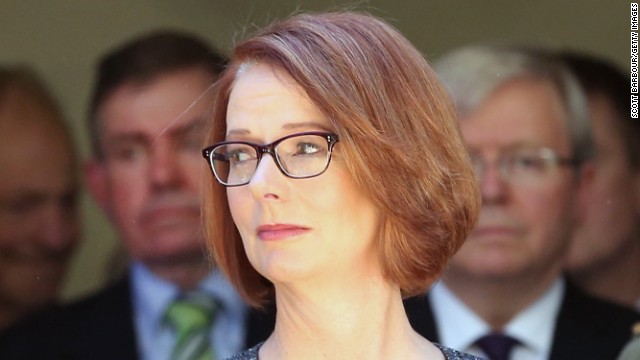
Australian Prime Minister Julia Gillard has resigned, after the Australian Labor Party voted her out of its leadership Wednesday.

130321174405-gillard-australia-story-topShe had called for the vote herself after months of inner-party friction.

Her rival, former Prime Minister Kevin Rudd, takes her place as party leader, after winning the internal ballot by a margin of 57 to 45 votes, according to an ALP spokesman.

He is now Australia’s de facto prime minister and could be sworn in within hours, if Australian Governor-General Quentin Bryce approves him for the office. The governor-general shares the role of head of state with Britain’s Queen Elizabeth II.

In a news conference after the vote, Gillard said she was grateful to have had the opportunity to lead her country.

“This privilege was truly humbling. I thank the Australian Labor Party for that privilege and I thank the Australian people for their support,” she said.

“When I first put myself forward for consideration for Labor leader in 2010, I had the overwhelming support of my colleagues to do so. I thank them for that. And I thank them for giving the opportunity to me not only to serve the nation but to serve as the first female prime minister of this country.”

Gillard said she had written to the governor-general to inform her of the ballot result and asking her to commission Rudd as prime minister. She will go to see Bryce later Wednesday.

Rudd is widely popular with Australian voters, who go to the polls in September to pick a new parliament and government. The ALP has not felt confident it could take an election victory with Gillard at its helm.

Supporters within the ALP circulated a petition calling for Rudd to challenger Gillard’s leadership, but he initially refrained. In the meantime, at least eight of the ministers in Gillard’s Cabinet resigned, purging decades of experience from her government.

This week the prime minister had had enough. Despite no official challenge from any rival, she put her power on the chopping block and handed her party the ax.

“I do think it’s in the best interests of the nation — and in the best interests of the Labor Party — for this matter to be resolved,” she said as she called the vote.

Reluctant Rudd

In a jab at her rival, Gillard complained in an interview with CNN affiliate Sky News Australia this week that no one had approached her to mount a leadership ballot in a traditional manner.

“Call me old fashioned, but the way in which these things are normally done is a challenger approaches the leader of the Labor Party and asks them to call a ballot for the leadership, you shake hands and then a ballot is held,” she said.

Gillard called for any challengers to put their names on the ballot, which would be the last one she would call to challenge her position.

Three hours before the vote, Rudd picked up the gauntlet.

“Various ministers have been free and frank in their public advice to me as to the desirability to contest the leadership in recent days. For the nation’s sake, I believe it’s time for this matter to be resolved,” he said in a statement sent to journalists.

The showdown was set in stone.

Rudd has said that he will not use his win against party rivals.

“Every effort I have in my being will be dedicated to uniting the Australian Labor Party. No retributions, no pay backs, none of that stuff. It’s pointless, it’s old politics,” he said.

Loser leaves

In March, Gillard threw down a similar challenge to her power as the rivalry sapped strength from her government. Rudd refused back then to challenge her, and she won the vote of confidence from her party and kept her job.

But she continued to lose support within her party.

In her interview with Sky News, Gillard said the loser of Wednesday’s vote should get out of the way for the sake of a functioning government.

“If you win, you’re Labor leader,” she said. “If you lose, you retire from politics.”

In her post-vote news conference, Gillard confirmed she will not seek to retain her constituency seat in September’s general election.

CNN’s John Raedler, Brian Walker and Elizabeth Joseph contributed to this report

Japan imports wolf URINE and plays recordings of lions roaring in bid to keep deer from running onto the highway

deerWolf urine and lion roars are being used by transport bosses in northern Japan to tackle the growing problem of collisions caused by deer.

The number of accidents caused by the animal has more than doubled in Hokkaido – the northernmost of Japan’s four main islands – in the past ten years.

As a result, transport officials have taken drastic action. As well as spraying wolf urine near roads and railways they will also be broadcasting the roar of lions to try to keep the deer away.

The urine is being imported from the United States to spray on the island’s highways.

The deer population in Hokkaido was nearly wiped out in the early 20th century because of overhunting and sometimes brutal winters.

But conservation efforts – and the extinction of the indigenous wild wolf population – led to their recovery.

Hokkaido Railway Co earlier this year erected equipment that broadcasts the roar of lions in an effort to keep the timid animals away from its tracks, a spokesman said.