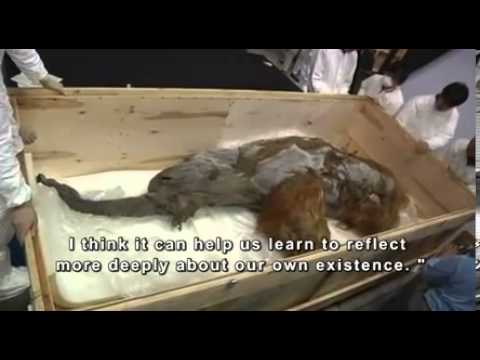
As if it died yesterday: Amazingly preserved woolly mammoth found frozen in Siberia after 39,000 YEARS goes on display in Tokyo (and it’s still woolly!)

Սիբիրում հայտնաբերված 39,000 տարեկան սառած մամոնտը ցուցադրվել է Տոկիոյում (տեսանյութ)A female woolly mammoth, which was found frozen in Russia in May, has gone on display in an exhibition hall in Tokyo.

The 39,000-year-old mammoth will be on display at the hall in Yokohama in the south of the Japanese city from 13 July until September 16.

Visitors and tourists will be able to come and view the extinct creature that was discovered in an ice tomb in the New Siberian Islands, or Novosibirsk Islands, earlier this year.

Parts of the carcass are especially well preserved because they remained entirely frozen for thousands of years.

However, the upper torso and two legs, which were found in the soil rather than the ice, were gnawed by prehistoric and modern predators and almost did not survive.

Visitors to the hall will also be able to clearly see the mammoth’s snout, legs and torso.

The scientists who found the mammoth in May were also able to extract a blood sample from the beast.

It was the first ever well-preserved sample of blood from a woolly mammoth and could be used to recreate the extinct species.

Preserved muscle tissue was also found from the creature, aged between 50 and 60 when she died, according to the Russian team who made the discovery on islands off the northern coast of Siberia.

Semyon Grigoriev, head of the Museum of Mammoths of the Institute of Applied Ecology of the North at the North Eastern Federal University told The Siberian Times: The hope is that at least one living cell of the mammoth was preserved ‘although even with such well-preserved remains, this may not be the case.’

The samples were taken for study to Yakutsk, capital of the Republic of Sakha, also known as Yakutia, the largest region in the Russian Federation.

The carcass weighing around one tonne was then moved to the Siberian mainland and was kept in ice storage before being taken to Tokyo.


Woolly mammoths could be brought back from extinction after scientists discover blood and muscle tissue buried in an ice tomb for 10,000 years

s5Scientists in Siberia have found the first ever well-preserved sample of blood from a woolly mammoth, which could be used to recreate the extinct species.

s1The 10,000-year-old blood was sealed inside ice beneath the carcass of a female mammoth.

Preserved muscle tissue was also found from the creature, aged between 50 and 60 when she died, according to the Russian team who made the discovery on islands off the northern coast of Siberia.

According to The Siberian Times, the blood will now be made available to South Korean scientists seeking to use mammoth DNA to bring creatures back to life.

The find – said to be the first time mammoth blood has been discovered – comes amid a hotly contested debate over the morality of Jurassic Park-style projects to restore extinct creatures to the planet, with some scientists insisting it will be impossible to get exactly the same mammoths as once roamed Siberia.

The mammoth was found in an ice tomb in the New Siberian Islands, or NovosibirskIslands, and parts of the carcass are especially well preserved because they remained entirely frozen for 10,000 years.

The samples have been taken for study to Yakutsk, capital of the Republic of Sakha, also known as Yakutia, the largest region in the Russian Federation.

The carcass weighing around one tonne has been moved to the Siberian mainland and is being kept in a ice storage.

The eventual plan is to plant an implanted egg into a live elephant for a 22-month pregnancy.

Earlier this year a group of scientists from around the world met for TEDx conference in Washington, sponsored by National Geographic.

The group were discussing the possibility of bringing 24 animals back from extinction, also known as ‘de-extinction’.