RAFFI HOVANNISIAN MEETS DIANA JANSE

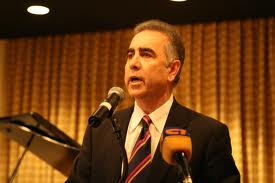
Hovannisian-JanseYerevan–Raffi K. Hovannisian and Diana Janse, Swedish Ambassador to Armenia, held talks here today.


They discussed developments in Armenian domestic and foreign policy, security in the region and European approaches therein, as well as issues relating to the MountainousKarabaghRepublic (Artsakh) and its sovereignty.


Heritage Party Press Service

2013-09-03 / President Serzh Sargsyan met in Moscow with the President of the Russian Federation Vladimir Putin

3668

President Serzh Sargsyan, who is in the Russian Federation on a working visit met today in Moscow with the President of Russia Vladimir Putin.

Before the negotiations with his counterpart, President Serzh Sargsyan in his opening remarks first expressed gratitude to Vladimir Putin for the invitation and noted that that are many issues to be discussed. These issues can be talked over and decided upon for furthering the bilateral relation and, certainly, the integration processes.

“Relations between Armenia and Russia are based on the centuries-long traditions of friendship and brotherhood of our two nations. I am confident that these relations will continue to develop in the spirit of mutual understanding, in line with the Agreement on Friendship, Cooperation and Mutual Assistance. I am certain that each generation of the Armenians and citizens of the Russian Federation should bring their contribution to the history of these relations. We cherish these relations and we will do our best to develop them. It’s an absolute priority of us. Nevertheless, there are, of course, issues which should be solved in a manner which will elevate our relations to a new, higher level, and that’s the purpose of my visit to Moscow,” President Serzh Sargsyan said.

Welcoming his colleague to Moscow, the President of Russia V. Putin thanked President Sargsyan for accepting the invitation and for the visit. “This is your second visit in recent times. I am very glad that our relations are developing dynamically on almost every direction. Our parliaments, governments and business structures also maintain frequent contacts. Honestly, in this regard too, I hope the results are positive. The turnover in our economy has reached 23 percent. Russia remains Armenia’s number one trade partner, and that tendency continues,” the President of the Russian Federation said.

Egypt Floats Genocide Recognition As Trial Balloon to Warn Turkey

Հարութ ՍասունյանBy Harut Sassounian

Publisher, The California Courier


The Arab Spring in Egypt has turned into a hellish summer with countless casualties.

Ever since the Egyptian military deposed President Mohamed Morsi, one particular foreign leader has been screaming the loudest, demanding his immediate reinstatement. That bellicose leader is Recep Tayyip Erdogan, the Prime Minister of Turkey, a staunch supporter of his fellow Islamist Morsi and the Muslim Brotherhood.

Egypt’s new leaders, backed by large segments of the population, were infuriated especially after Erdogan severely criticized the overthrow of Pres. Morsi and the killing of hundreds of Muslim Brotherhood protesters. Using extremely harsh language, the Turkish Prime Minister condemned the Egyptian military for “carrying out a massacre with its soldiers, police officers, [and] heavy artillery.” Ironically, Erdogan called anyone who keeps silent in the face of injustice, “a voiceless devil.”

There is no question that a human tragedy is unfolding in Egypt and becoming more critical with each passing day. While no one can remain indifferent to the killing and maiming of civilians, the Prime Minister of Turkey is the last person on earth who should be taking such a self-righteous attitude. Anyone who has blood on his hands has no right to demonize others! One does not have to go back into history and recall the genocides committed by Erdogan’s forefathers against Armenians, Assyrians, and Greeks. Just a couple of months ago, the Turkish Prime Minister’s own hands were soaked in blood when he proudly acknowledged that he ordered the police to open fire on unarmed demonstrators in Istanbul, killing five people, blinding 11, and injuring 8,000 others. Thus, Erdogan has been stripped of all moral authority to lecture anyone else on democracy and civil rights.

Erdogan’s repeated meddling in Egypt’s internal affairs and his staunch support for Pres. Morsi and the Muslim Brotherhood escalated the hostilities between the two countries to such a degree that Egypt and Turkey ended up recalling their respective Ambassadors, further disrupting their diplomatic relations. The worsening tension has jeopardized the $2 billion Turkish investment in Egypt and frozen the activities of 300 Turkish businesses in that country.

What a difference a year makes! In May of 2012, when I was visiting Egypt on a lecture tour, a local newspaper refused to publish that part of my interview dealing with the Armenian Genocide. I was informed that given the close relationship between the two Islamist nations, it would be impossible to print anything against Turkey.

Curiously, after Pres. Morsi’s unceremonious departure from power, a series of articles appeared in scores of Egyptian newspapers, detailing the history of the Armenian Genocide, demanding that Turkey pay restitution to the survivors, and calling on Erdogan to acknowledge his country’s criminal past.

To top it all, a surprising twitter message was posted on August 17 by Adly Mansour, Egypt’s Interim President, announcing that his country’s “UN representative tomorrow will sign the international document recognizing the Armenian massacres which were committed by the Turkish army, causing the deaths of one million people.”

Even though Egyptian and Turkish newspapers widely reported the twitter message attributed to the Egyptian President, we were unable to independently confirm its authenticity. However, it is clear that the current Egyptian government and media are intent on using the Armenian Genocide as a way of getting back at Erdogan’s heavy-handed interference in their domestic affairs.

Understandably, most Armenians would be displeased that the victimization of their ancestors is being exploited in a political tug of war between the two countries. Yet, unfortunately, this is politics as usual. If Egypt’s new leaders find it expedient to recognize the Armenian Genocide, this would be a welcome change. It is better to recognize the Genocide, regardless of political motives, than not to recognize it for all the wrong reasons! After all, no one can expect the Egyptian government to take a position on an issue, if it is contrary to its own national interests. In this regard, Egypt is no different from other countries, including the United States and Israel, which periodically dangle acknowledgment of the Armenian Genocide as a Damoclean Sword over the heads of Turkish leaders.

The final decision on the recognition of the Armenian Genocide depends on whatever concessions Cairo is expecting from Ankara. If Egypt, the most populous Arab state, recognizes the Armenian Genocide, that would deal a devastating blow to the Turkish government’s frantic efforts to counter the worldwide commemorations of the Genocide Centennial in 2015.

The newly appointed Ambassador of Switzerland to Armenia presented his credentials to the President

3593_bToday, the newly appointed Ambassador of the Swiss Confederation to the Republic of Armenia Lukas Gasser presented his credentials to Serzh Sargsyan.

The President of Armenia congratulated the Swiss Ambassador on his appointment and wished success in his diplomatic mission in our country. According to Serzh Sargsyan, Armenia attaches great importance to the mutually beneficial continued cooperation with the friendly Switzerland in all areas, in bilateral as well as multilateral formats and is ready to undertake steps to further deepen the cooperation.

The parties spoke with satisfaction about the high-level interstate relations established between Armenia and Switzerland which in recent years have been developing through the reciprocal visits and cooperation in various international settings.

At the meeting, President Serzh Sargsyan and Ambassador Lucas Gasser also exchanged views related to the regional issues.

STATE DEPARTMENT CALLS ON ALL SIDES IN SYRIA TO PROTECT CIVILIANS

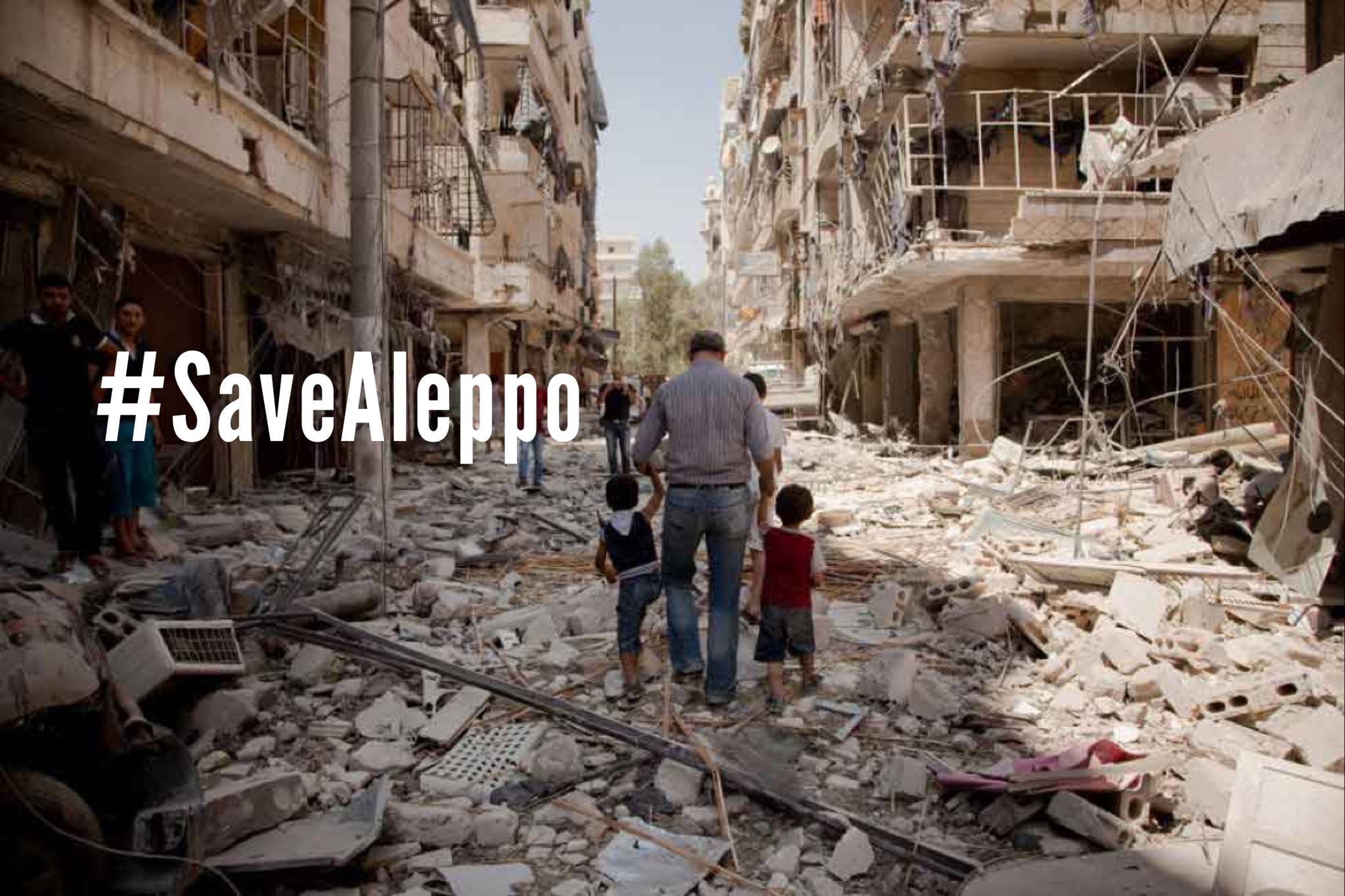
save_aleppo—  Letter to ANCA Outlines U.S. Humanitarian Response to Syria Conflict
WASHINGTON, DC – The U.S. Department of State, in response to concerns raised by the Armenian National Committee of America (ANCA) and a broad cross-section of Armenian American civic and church leaders, has stressed the urgency of ongoing U.S. diplomatic initiatives to remind all sides in Syria of their obligations under international law to protect civilians and to allow humanitarian organizations safe access to all people in need.
The Department’s letter comes following a July 17th U.S. government briefing on Syria humanitarian assistance efforts hosted by the State Department and U.S. Agency for International Development (USAID) for representatives of Armenian American civic, church, and charitable organizations from across the United States.  The letter to the ANCA underscores the importance that the United States attaches to ensuring regular medical and humanitarian access to Aleppo, and notes the life-saving U.S. contributions to meeting basic needs for those in host countries, including Armenia and Lebanon.
The full array of urgent humanitarian issues of concern to Armenian Americans has consistently been raised by community leaders, including:
1) Ensuring the balanced and needs-based distribution of U.S. humanitarian aid to all areas of Syria, including those like Aleppo with large Armenian and other Christian populations;
2) Preventing humanitarian blockades of civilian populations, such as those creating crises in Aleppo;
3) Providing additional assistance to the Armenian government and NGO’s supporting and helping to settle Syrians who have fled to Armenia, and
4) Assisting the Armenian Church and charitable groups in Lebanon as they support the very considerable humanitarian needs of refugees from Syria.
In his August 5th letter to the ANCA, State Department Director of the Office of Europe, Central Asia and Americas, Bureau of Population, Refugees, and Migration for John Underriner referenced community concerns about getting vital humanitarian aid to the affected communities in Syria and the devastating effects of a recent blockade of assistance to Aleppo.  “We recognize the critical need to ensure regular medical and humanitarian access to those who remain in Aleppo and for all displaced and conflict-affected people in Syria,” noted Underriner. “Humanitarian workers are risking their lives to provide life-saving assistance to those suffering and have worked tirelessly with contacts on all of the conflict to attempt to negotiate humanitarian pauses to allow aid delivery. We have reminded all sides to the conflict of their obligations under international humanitarian law to protect civilians, and urge them to allow humanitarian organizations safe access to all people in need.”
The full text of Underriner’s letter is provided below. Since issuing the letter, President Obama announced an additional $185 million in assistance to those affected by the Syrian crisis, bringing to $1 billion the total U.S. assistance commitment to date.
The Armenian American community, along with Armenian communities around the world, has undertaken far-reaching and life-saving humanitarian efforts, through the Armenian Apostolic, Catholic, and Evangelical churches, Syrian Armenian Relief Fund, Armenian Relief Society, Armenian General Benevolent Union and other avenues. The Armenian National Committee of America (ANCA) has undertaken a grassroots effort to educate Congressional legislators about the plight of Armenians and other affected minorities in Syria and urged Congress to provide relief and resettlement support for at-risk Armenians and other Christian populations in Syria and throughout the Middle East as part of the FY 2014 foreign aid bill.
#####
Text of State Department Letter to ANCA Regarding U.S. Humanitarian Assistance to those Affected by the Syrian Crisis


US Intelligence Report: All Armenians Demand Return of Lands from Turkey

Harut SassounianBy Harut Sassounian

Publisher, The California Courier


The recently announced demand for lands from Turkey by the Prosecutor General of Armenia attracted much attention from Armenians worldwide and harsh criticism from the Turkish government. While this was the first time that an Armenian official had raised this issue since the country’s independence in 1991, the demand itself is not new. Armenians have been seeking the return of their historic territories from Turkey for decades.

A confidential 1943 document, declassified by the Central Intelligence Agency, reveals that the US government was well aware of the Armenian demands for recognition of the “atrocities” and return of Turkish occupied “provinces.”

The document dated December 13, 1943, authored by the Office of Strategic Services (OSS), the predecessor of the CIA, stated: “All the Armenian press in the United States is active in keeping the Turkish Armenian massacres fresh in the minds of its readers. Fearful that the Axis atrocities of the present war [World War II] will eclipse the atrocities of the last when the final reckoning comes, they are anxious to keep alive the Armenian case against Turkey. Armenians have present as well as past grievances against Turkey, whose capital levy tax ‘Varlik’ falls harder on Armenians than on any other minority group in Turkey. Even more unforgivable in the eyes of Armenians is the fact that Turkey holds provinces which, they are firmly convinced, belong rightfully to Armenia. Restitution of these provinces to Armenia is the goal of all Armenians.” Elsewhere in the document, OSS accurately reported that “Armenians, almost without exception, entertain feelings of deepest suspicion, hostility, and fear” toward Turkey.

A second declassified confidential document dated July 31, 1944, carries a surprising title: “Tashnags Turn to Soviet Russia.” The OSS indicated that “the once uncompromisingly anti-Soviet Armenian Revolutionary Federation (Tashnags) officially changed its spots, and the swing toward support of the Soviet Union, which has been growing gradually more perceptible during the last few months, has culminated in the adoption of a pro-Soviet policy at the Federation’s annual convention held in Boston the first week of July.” This OSS report was prepared as the Soviet Union had announced its intention to claim the Eastern provinces of Turkey (Kars, Ardahan, and Surmalou) in a post-World War II settlement. The Soviet claim was backed by the Armenian Church, the Soviet Armenian government and the Diaspora, including the anti-Soviet Armenian Revolutionary Federation (ARF).

The OSS astutely reported: “The Tashnags have never actually renounced their dream of a free and independent Armenia, including the Turkish irredenta, which has kept them at loggerheads with the USSR, ever since Armenia was established as a Soviet [illegible] in 1920. … With the vision of independence fading, the now Soviet-friendly Tashnags are turning their attention to the acquisition of the Turkish provinces of Armenia by the SovietArmenianRepublic.”

In explaining ARF’s post-war expectations, OSS stated: “If, as the Tashnags believe and hope, Turkey remains neutral [in World War II], she will be in a highly vulnerable position, and one item of payment for her neutrality, according to Mr. [James] Mandalian [editor of the Boston-based ARF newspaper Hairenik], would be the cession of Turkish Armenia to Soviet Armenia.”

The 1943 OSS document also contained a lengthy report on the Armenian-American press, focusing its attention on six of the 17 Armenian newspapers in the United States: “Hairenik and Asbarez (Tashnag)” classified as “rightist-nationalist;” “Baikar, Nor Or (Ramgavar)” and “Eritassard Hayastan (Hunchag)” classified as “liberal;” and Lraper (Armenian Progressive League of America)” classified as “leftist-Communist.” The last two newspapers are no longer in publication.

According to OSS, Hairenik and Asbarez are “strongly nationalist, anti-Soviet, and anti-Communist,” while Baikar is “resolutely opposed to the Tashnags and their principles. The Ramgavars have accepted the incorporation of Armenia into the Soviet Union as the most satisfactory way out of Armenian problems, and many articles are printed in Baikar extolling the Soviet regime in Armenia, particularly in its relations to the ArmenianApostolicChurch.”

OSS estimated that the 95,000 Armenians in the United States in 1943, mostly settled in Massachusetts, New York, and California, “retain a keen interest in the affairs of their homeland [Soviet Armenia], though few, if any, would go back there.”

President Serzh Sargsyan sent a letter of condolences to the King of Spain Juan Carlos I

Սերժ-Սարգսյան


 President Serzh Sargsyan sent today a letter of condolences to the King of Spain Juan Carlos I

on the derailment of the passenger train in the Galicia region of Spain which claimed over seventy lives and left more than hundred people injured.

“Sharing your and Spanish people’s pain, I wish tenacity and resolve to the families and friends of the victims and a speedy recovery to the injured,” the letter of condolences of the President of Armenia reads.

MENENDEZ PRAISES POWER’S STAND ON ARMENIAN GENOCIDE

Senate UN Ambassador— Senate Foreign Relations Committee Chairman Cites “Principled Position” of U.N. Ambassador Nominee
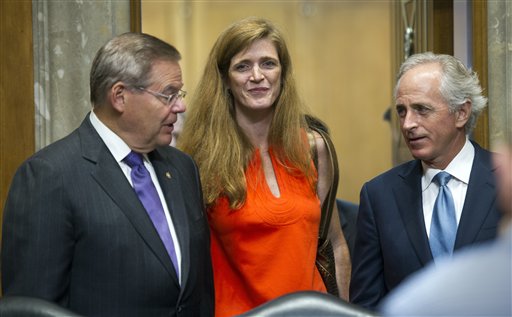
WASHINGTON, DC – Senator Robert Menendez, Chairman of the Foreign Relations Committee, opened his hearing on the confirmation of Samantha Power to serve as U.N. Ambassador by telling her that he is “incredibly appreciative of the principled position you’ve taken on the Armenian Genocide,” reported the Armenian National Committee of America (ANCA).
At the start of the highly anticipated and widely broadcast hearing, Chairman Menendez noted that, “You have been an unrelenting, principled voice when it comes to human rights and crimes against humanity – and I know that voice will be heard around the world — should you be confirmed,” adding: “Personally, I am incredibly appreciative of the principled position you’ve taken on the Armenian Genocide. In 2007, you wrote in Time Magazine – ‘a stable, fruitful, 21st century relationship’ [with Turkey] cannot be built on a lie,’ and I completely agree.”
The New Jersey Democrat also stressed that, “Your belief that we should use the lessons of what clearly was an atrocity of historic proportions to prevent future crimes against humanity is a view consistent with my own and which is supported by your role on the President’s Atrocities Prevention Board.  I agree that we must acknowledge and study the past, understand how and why atrocities happen, to put-into-practice and giving meaning to the phrase, “never again.”
The full text and video of the opening remarks by Chairman Menendez are available on-line:


President Serzh Sargsyan received the EU Special Representative Philippe Lefort

3536President Serzh Sargsyan received today the EU Special Representative for the South Caucasus and the crisis in Georgia Philippe Lefort.

The parties conversed about the dynamically progressing Armenia-EU relations, regional developments as well as about the EU assistance for the reforms in Armenia which are being implemented in a number of areas.

Philippe Lefort reiterated the EU support for the NK peace process in the framework of the OSCE Minsk Group. The parties spoke also about the importance of the confidence building measures in the process of the conflict resolution.

Raffi Hovannisian Meets Štefan Füle

Raffi_Hovannisian_Meets_Stefan_FuleYerevan—Yesterday, on July 10, Raffi K. Hovannisian met with Štefan Füle, European Commissioner for Enlargement. Hovannisian and Füle discussed matters concerning Armenia-EU relations, Association Agreement, and regional challenges.


Later in the day, the Heritage Party’s vice-president Armen Martirosyan, and spokesperson Hovsep Khurshudyan—along with the representatives of other non-ruling parties’ parliamentarian factions—had a separate meeting with Štefan Füle.

PETER KOUTOUJIAN DISCUSSES KEY COMMUNITY CONCERNS WITH ARMENIAN ORGANIZATIONS AT THE HAIRENIK BUILDING IN WATERTOWN

PKoutoujian_HairenikWATERTOWN, MA — Middlesex County Sheriff Peter Koutoujian sat down with the editorial team of The Armenian Weekly and representatives of Armenian American organizations in Watertown yesterday to share the views and values that motivated this veteran public servant to run for the 5th District Congressional seat recently vacated by Rep. Edward Markey following his successful Senate bid, reported Armenian National Committee of America-Eastern Region (ANCA-ER).

“I am proud of my Armenian heritage and of my record of accomplishments on behalf of the Armenian community and all the communities I represent. I look forward to continuing that promise of hard work and commitment if elected to Congress, and I thank the Armenian National Committee of America’s tremendously warm endorsement,” Koutoujian said.

The ANCA has been an early and vocal supporter of Koutoujian’s congressional bid, citing his years of service to the Commonwealth from prosecutor, to State Assemblyman and, now, Middlesex County Sheriff. “His leadership in Massachusetts and in the Armenian American community has been steadfast and inspiring, and he has the ANCA’s full backing in this election process and beyond,” explained ANCA National Board member Stephen Mesrobian in the ANCA’s July 3rd endorsement statement.

Following his in-depth interview with the Armenian Weekly, Koutoujian joined representatives of the ANCA, Armenian Relief Society (ARS), Armenian Revolutionary Federation (ARF), Homenetmen, Hamazkayin, and others for lunch at the Armenian-American Social Club in Watertown.

Koutoujian’s leadership on community concerns extends throughout the Massachusetts’ 5th district, which includes the towns of Belmont, Lexington, Waltham and Watertown – each with large and vibrant Armenian-American presence.

He emphasized the fact that this election will have low voter turnout and the importance of registering new voters, especially Armenian Americans, who can help him claim victory in a few months.

“We’re pleased to see Mr. Koutoujian actively seeking communication with our core Armenian organizations, including the ANCA-ER,” said ANCA-ER Executive Director Michelle Hagopian. “He has a longstanding track record of public service and loves his community, and we’re going to work hard to make sure he is elected to Congress come fall.”

#####

Photo Captions:

Koutoujian_Hagopian.jpeg: Middlesex County Sheriff Peter Koutoujian seen here with ANCA Eastern Region Executive Director Michelle Hagopian.

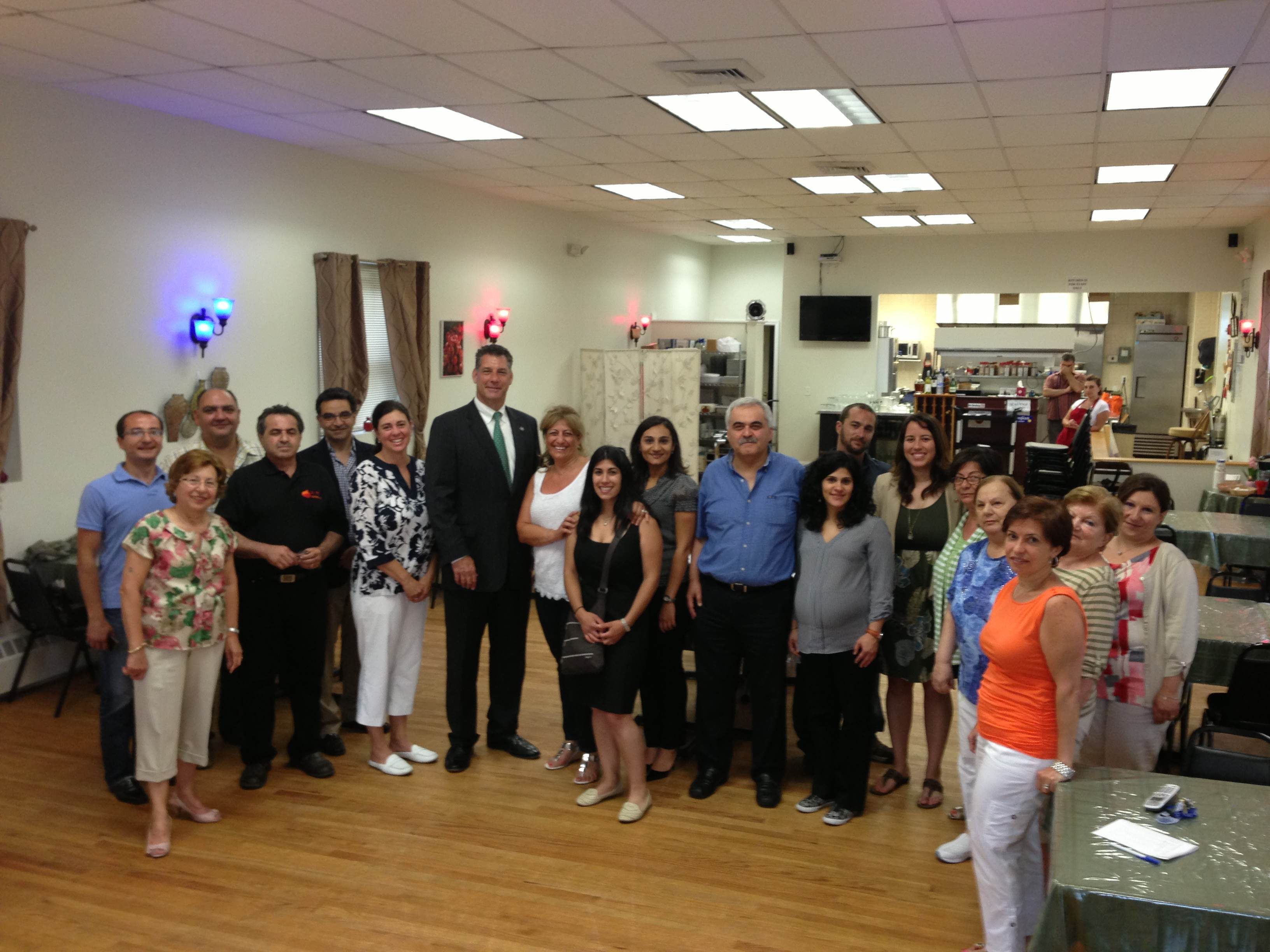
PKoutoujian_Hairenik.jpeg: Peter Koutoujian joined members of Armenian organizations for lunch at the Armenian-American Social Club in Watertown on Monday, July 8, 2013.

On the occasion of Independence Day of the United States of America, President Serzh Sargsyan visited the US Embassy in Armenia

3428


On the occasion of Independence Day of the United States of America, President Serzh Sargsyan visited today the US Embassy in Armenia. He congratulated Ambassador John Heffern, the staff of the Embassy and in their person the people of the United States on the occasion of Independence Day.

On the occasion of the holiday, President Serzh Sargsyan sent also a congratulatory message to the President of United States Barack Obama.


Distinguished Mr. President,

I send my heartfelt congratulations and best wished to you and the friendly people of the United States on the occasion of America’s Independence Day.

In recent years, the close partnership between our countries has registered considerable advancement and today, at the pinnacle of our interstate relations, we have achieved the exceptional level of cooperation in different areas. We highly value assistance provided by the United States to Armenia to our economic development, as well as to the consolidation of democratic institutions and civil society. We are keenly interested in utilizing in full the substantial potential existing in our bilateral relations and to elevate them to a new level.

The US involvement in the resolution of the Nagorno Karabakh conflict deserves special acclamation. We are confident that your administration will continue its active mediation mission and will contribute to the establishment of a stable and durable peace in our region.
Please accept, Mr. President, the assurances of my highest consideration.

Congratulations to President Serzh Sargsyan on the occasion of his birth day

18787972-274C-46F9-9690-5416C94F1FB7_w640_r1_sOn the occasion of his birthday anniversary, President Serzh Sargsyan is receiving congratulations and best wishes from the Heads of states and international organizations, representatives of the state and public sectors, and individuals.

***

President Serzh Sargsyan received a congratulatory message from the President of the Russian Federation Vladimir Putin

On the occasion of President Sargsyan’s birth anniversary along with other Heads of states, he received a congratulatory message from the President of the Russian Federation Vladimir Putin.

“Distinguished Serzh Azatovich,

I cordially congratulate you on the occasion of your birth anniversary.

You deservedly enjoy high esteem in your Motherland and abroad. Your input to the strengthening of the Armenian-Russian relations, which are based on the old traditions of friendship and mutual respect, is hardly to be overestimated.

Our latest meetings contributed to the further expansion of our bilateral political dialogue, constructive partnership and cooperation in the trade, economic and other areas, on the international arena, particularly in the framework of the CIS and CSTO. All this emanates from the basic interests of Russia and Armenia and is channeled toward the security and stability in the South Caucasus.

I wish you excellent health, happiness, well-being and new accomplishments,” the congratulatory message of the President of the Russian Federation reads.

President Serzh Sargsyan participated at the closing ceremony of the Armenian-Polish Business Forum

Սերժ Սարգսյան

In the framework of his official visit to the Republic of Poland, President Serzh Sargsyan together with the Polish President Bronisław Komorowski today in Warsaw participated at the closing ceremony of the Armenian-Polish Business Forum.

Serzh Sargsyan greeted the organizers and participants of the Business Forum, spoke about the centuries-long Armenian-Polish friendship, cooperation of the two countries in different areas, the Armenian-Polish trade and economic relations and briefly presented the business environment in modern Armenia, tendencies of economic development and investment opportunities.

In his welcoming remarks, the President spoke with esteem about the Polish authorities, in the person of President Komorowski and the Polish businessmen who, according to President Serzh Sargsyan, in the difficult conditions of the global economic and financial crisis have registered great success and through their daily work have further empowered their country.

“The Armenian-Polish friendship is centuries old and soon we will be celebrating the thousand year anniversary of the establishment of the first Armenian settlements in Poland. Becoming stronger with centuries, the Armenian-Polish relations are encompassing every area. The Armenians not only fought for independence of Poland but also made an important contribution to the country’s development. It is no accident that in order to advance the trade and crafts, the kings and princes of Poland were inviting Armenians to settle in different parts of the country, endowing them with numerous privileges and rights.

The high level of our current political relations and achievements registered in different areas, has its origin in the spiritual and cultural community, friendship and mutual sympathy formed during the ages.

Regrettably, today the Armenian-Polish trade and economic ties are substantially lagging behind the relations established in other areas. To fill that void, we, the two Presidents have decided on the necessity to organize a business forum – two years ago in Yerevan, and now here, in Warsaw. It should be noted that there are already some results, especially with regard to the presence of the Polish companies in Armenia and their participation in different Armenian projects. However, it is still not enough, and I urge you to be much more active.

Distinguished Entrepreneurs,

I would like to present briefly the business environment in modern Armenia, tendencies of economic development, as well as the investment opportunities.

Continuous improvement of the business and investment climate is a chief prerequisite of our economic development. Toward that end, in recent years, we have undertaken large-scale economic reforms, particularly related to the opening a business venture in Armenia, construction permits, registration of property, acquisition of loans, protection of investments, filing taxes and some other areas. The achieved results have been reflected in the international ratings, particularly, in the Doing Business-2012 annual report published by the World Bank’s International Financial Corporation. According to the mentioned report, Armenia compared to the previous year, improved her position by 18 points, occupying the 32nd position among 185 countries. Please note that it makes the business climate in Armenia the best in the CIS region.

Nevertheless, we don’t believe that our efforts aimed at the liberalization of the investment field and business climate and improvement of the state governance structure in general stop there. There is still a long road to go and we are passing that road with the assistance of our European friends.

In this context, it is warranted to speak about the Association Agreement to be signed with the European Union and the Deep and Comprehensive Tree Trade Agreement which constitutes its part. It will put our cooperation with the EU member states, including Poland, on a qualitatively new and more comprehensive basis.

Last December, we signed the agreement on visa facilitation with the European Union which was immediately followed by the cancelation of visa requirements for the EU citizens visiting Armenia. Considering also the Polish LOT airlines five times a week flights to Yerevan, I trust that all obstacles for visiting our country and observing the created conditions first hand have been removed.

Along with all this, I believe that Polish entrepreneurs would like to know that Armenia, being a member of the CIS Free Trade Zone agreement and closely cooperating with the Customs Union, has a competitive advantage in the CIS region. It definitely creates extra opportunities to enter the CIS market with more favorable conditions through the capital invested in Armenia.

Steps are also taken toward the improvment of infrastructure and full utilization of the existing opportunities which will allow to decrease the transportation fees.

Ladies and Gentlemen,

I would like to highlight a number of areas which, in my opinion, could possess potential for the further development of the Armenian-Polish cooperation.

The area of information technologies in Armenia is growing rapidly. It ensures high profitability and is really attractive for major foreign investments. It is proved by the presence in Armenia of 360 companies working in the IT area, 151 of which are branches of foreign companies. Many of the major international companies are represented in Armenia, among them Synopsys, National Instruments, Microsoft, D-Link, Mentor Graphics, and others.

Everything is being done to staff the field with professional cadre and, of course, to retrain them. The Armenian National Engineering Laboratories program is being implemented, and retraining programs have been launched at the Microsoft innovation center and laboratories of the Mobile Solutions.

The Tumo supermodern center of creative technologies for 12-18 years old children has been functioning in Yerevan since 2011, and now we are planning to extend the programs of the center to the regions of the Republic as well.

Traditional areas which brought the international recognition to the Armenians are jewelry making and diamond cutting. The Armenian jewelry is sold in many countries of the world, including Poland. We have serious programs on making Armenia a regional and why not, also an international hub for jewelry production through the creation in Armenia of the free zone for the jewelry production.

Armenia attaches importance to the establishment of free trade zones as a strong incentive for the attraction of direct foreign investments, introduction of advanced technologies, implementation of innovative methods, and creation of new jobs.

In coming years, we are planning to make large investments in the area of agriculture, through the technical re-equipment and enhancement of productivity, as well as through the modernization of processing capabilities.

I would like to see the growth of the Polish investments also in the area of tourism, mining, and health care which are continually modernized areas with great potential for development and which the state has declared the priority areas for development.

Distinguished Entrepreneurs,

I am hopeful that today’s Forum will enhance the establishment and expansion of the long-term and mutually beneficial economic programs for the prosperity of the Armenian and Polish peoples. I wish you all success and I hope that soon I will hear of success of the Polish businessmen in Armenia,” President Serzh Sargsyan told the participants of the Armenian-Polish Business Forum in his welcoming remarks.

World’s top places of refuge: where could Snowden go?

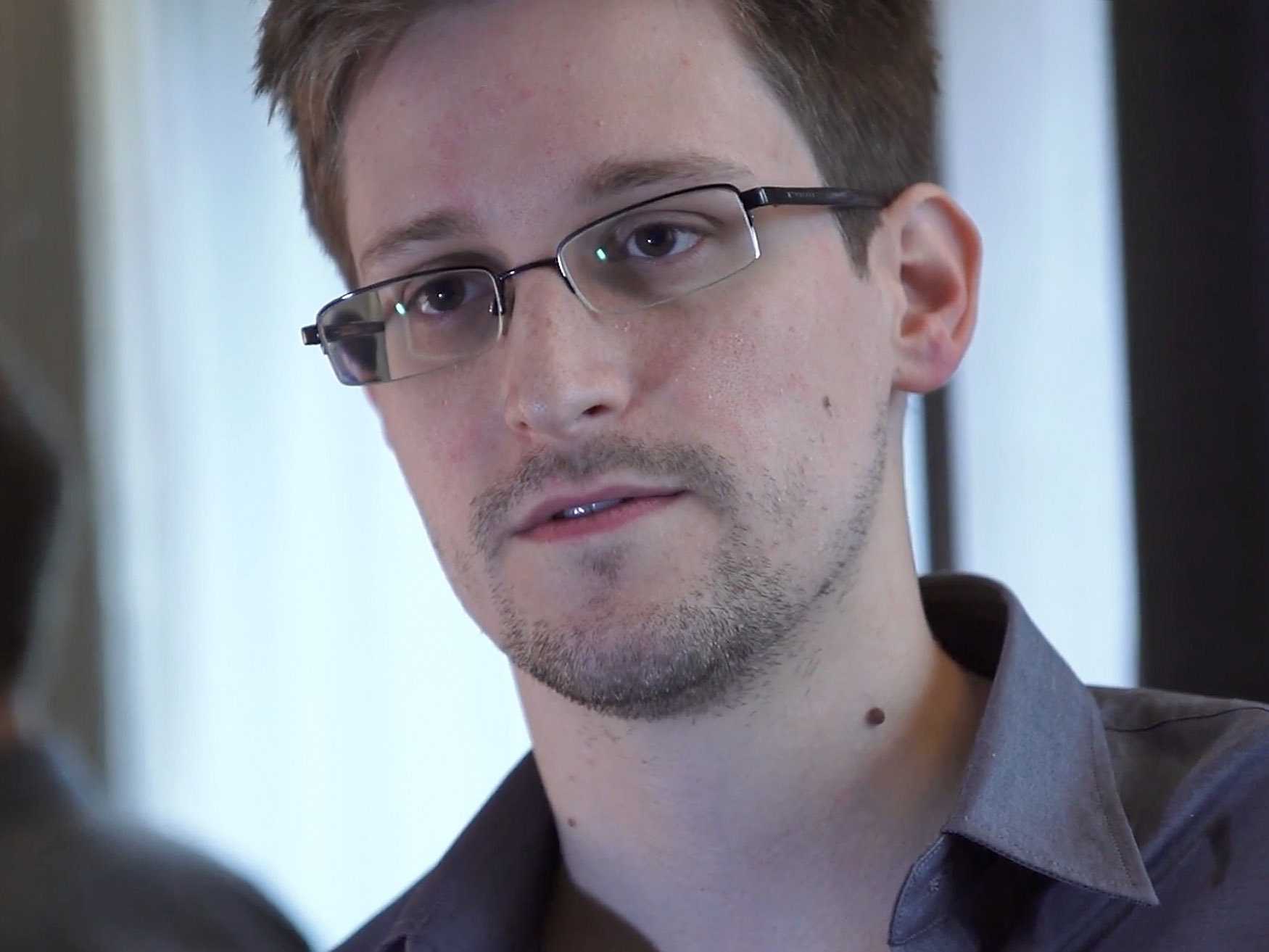
Edward SnowdenFleeing US law enforcement, the NSA whistleblower Edward Snowden seems stuck for where to go next. CNN Travel’s own top secret document reveals which countries should be on his list …

Snowden has sown a global trail of confusion in his flight from the United States. Journalists and diplomats have been scrambling to anticipate where he might pop up next.

What should Snowden be looking for in a decent place of refuge?

A willingness to grant “quickie” citizenships and the lack of an extradition treaty are obvious attractions, says Professor Ruth Wedgwood, an expert in international law and diplomacy at Washington’s Johns Hopkins University.

Decent plumbing and good weather probably wouldn’t go amiss, either.

Snowden will have to be quick, though. Fugitives should be careful in choosing their destinations as diplomatic allegiances shift fast, says Michael Abbell, a former director of the US Department of Justice’s Office of International Affairs and a key extradition negotiator under Ronald Reagan.

“Especially when you’re dealing with such things as are arguably political in nature,” Abbell told CNN. “From time to time there have been countries that people could more or less get lost in [but] it depends on the nature of the case.”

What Snowden and other fugitives clearly need is a guide to the world’s political safe havens. This constitutes something of a niche travel guide, and it’s unlikely Lonely Planet or Frommer’s have one in the pipeline.

Fortunately, CNN Travel has compiled just such a list. Until now, it has been encrypted in secure computer servers located deep in the basement behind several locked doors. And then someone went and leaked it…

1. Iceland

Iceland makes for an excellent fugitive destination, particularly for someone with a wintry name such as Snowden. It professes a love for internet freedoms and once checkmated extradition efforts by offering citizenship to tax-evading US chessman Bobby Fischer.

For Snowden it might feel chilly after Hawaii, Hong Kong and midsummer Moscow, but he could easily warm up with a dip in the geothermal waters of the Grindavik Blue Lagoon.

Why stay: Ash-spewing volcanoes could help to shroud your location.

Why leave: New laws to aid whistleblowers are not yet in place. Also, they eat puffins.

2. Ecuador

It’s a two-way deal: exiles get a sub-tropical shelter while the Ecuadorean President, Rafael Correa, gets to burnish anti-American credentials and a distraction from his clampdowns on press freedom.

Why stay: Plenty of Inca ruins and colonial Spanish buildings to admire.

Why leave: Ecuador still has an extradition deal with the United States.

3. The UK

It might be heavily in diplomatic hock to Washington, but the UK remains a popular place of refuge — particularly among Russian exiles drawn by its liberal outlook, robust legal system and miserable weather. OK, maybe not the weather.

Despite security cameras on every corner, plenty of people have managed to lose themselves in London. And if all else fails, it has an Ecuadorian embassy, although since Assange has already snagged the spare room, you’ll be on the sofa.

Why stay: Strong tradition of political radicalism

Why leave: Did we mention the awful weather?

4. The Philippines

The Filipino police have a strong track record of helping foreign agents hunt down their quarry, but with more than 7,000 islands to choose from, it could take them some time.

Why stay: Boracay’s beaches, Banaue’s scenic rice terraces and — as it happens — more colonial Spanish architecture!

Why go: Rampant corruption. Even if you’re not on the lam, you’ll still be bilked for backhanders.

5. Spain

Southern Spain’s enduring popularity among expat UK villains has earned its coastline the unfortunate soubriquet of “Costa del Crime.” A spate of arrests has tarnished its appeal, though.

Why stay: The sunshine, the paella, the sangria.

Why leave: British pubs selling greasy breakfasts to greasier Brits. Abject lack of Spanish colonial architecture.

6. France

The French have a rep for being rude to foreigners — unless they are fleeing justice. The country has ignored extradition deals in the past, refusing to give up US-wanted hijackers in the 1960s and 70s. If you’ve done something political — or you are Roman Polanski — you’re probably safe.

Why stay: France has it all: Culture, countryside and cheese.

Why leave: France also has the French.

7. United States

Why not hide in plain sight? It’s a big, frequently beautiful country and there are parts of America where folks don’t even know who their president is, let alone who’s on his most wanted list.

Why stay: Land of the free.

Why go: Pressure to have plastic surgery. Even if you’re not changing your identity.

8. North Korea

Clearly this would be madness. But as extradition expert Abbell notes, North Korea and Iran are two countries where fugitives are almost guaranteed to be beyond the reach of international justice.

US soldier Charles Jenkins demonstrated this principle between 1965 and 2004 after deserting to the north during the Korean War, and living — albeit rather wretchedly — to tell the tale.

Why stay: Don’t stay.

Why leave: It won’t be your emails that are monitored, just your every waking thought.

9. Cuba

Embargoes didn’t stop Jay Z from heading to Havana, but you probably won’t have to worry about facing the other kind of rap as Cuba seems happy to ignore its extradition treaties.

Why stay: Salsa, cigars and those great old cars held together with washing machine spares.

Why go: Worrying proximity to Guantanamo

10. Transit

Snowden appears to have spent several days airside at Moscow’s Sheremetyevo airport, a location that Kremlin authorities insist does not fall within Russian borders.

Perhaps he could stay there, following the footsteps of Iranian exile Mehran Karimi Nasseri, whose eight years stranded at Charles de Gaulle airport inspired the movie “The Terminal”.

Why stay: Limitless supplies of Dan Brown books and giant Toblerones.

Why go: Audacious flight from justice will be rendered into a lame Tom Hanks comedy.


Talaat Killed the Ottoman Crown Prince For Opposing the Armenian Genocide?

Harut Sassounian

By Harut Sassounian

Publisher, The California Courier


It is not often that I cover murder mysteries, but I am making an exception given the unusual circumstances of an Ottoman Crown Prince’s death in 1916 and its possible link to Talaat and the Armenian Genocide.


The first clue was an article I came across in the April 3, 1921 issue of The Pittsburgh Press, titled: “Patiently Tracked to His Hiding Place and Killed: How the Bloodthirsty Turkish Grand Vizier, Talaat Pasha, Who Planned the Murders of a Million Armenians Met His Fate.” This news report was occasioned by Soghomon Tehlirian’s assassination of Talaat on March 15, 1921, in Berlin.


One paragraph, in particular, buried in the middle of the lengthy article, contained a shocking revelation: “Perhaps the strangest fact of all in connection with Talaat’s career is that he paved his way to this supreme office by murdering the heir to the throne, Crown Prince Youssouf Eddine, a nephew of the reigning Sultan. The young prince had protested strongly against Talaat’s announced policy of exterminating the Armenians. Talaat, seeing a prospect of serious opposition, shot the prince like a dog.”


To ascertain the veracity of this surprising news item, I conducted a lengthy internet search and consulted publications in English, French, Turkish, Spanish, and Armenian, based on the different spellings of the Prince’s name: Youssouf Eddine, Yusuf Izzeddin, Yusuf Izzettin, etc.


While most of these sources agree that the Crown Prince died under suspicious circumstances, they present three distinct narratives on how he met his untimely death. There is even an entire Turkish book on this mystery, titled: ‘Shehzade Yusuf Izzedin olduruldu mu, intihar mi etti?’ [Crown Prince Yusuf Izzedin was killed or committed suicide?].


The first account is the one mentioned by The Pittsburgh Press claiming that the Crown Prince was killed by Talaat for opposing the extermination of the Armenian people.


The second explanation for the premature death of the Crown Prince is that he committed suicide by slashing his wrists. The Young Turk government issued the following official announcement on Feb. 3, 1916: “In consequence of the malady from which he suffered so long, His Highness the Heir to the throne committed suicide at half-past seven this morning in the bedroom of the harem pavilion of the summer-house at Zindjirly, by opening the veins of his left arm.”


This formal statement was met with widespread skepticism, giving rise to a third explanation for the Crown Prince’s demise. French Minister of State Yves Guyot, in the preface to his book’s English edition, ‘The Causes and Consequences of the War,’ published in 1916, wrote that those who had read the official communiqué were convinced that the Young Turks “made the heir to the throne ‘commit suicide.’ Information from many quarters confirms that suspicion.”


Guyot and other chroniclers asserted that War Minister Enver Pasha had Izzeddin killed for opposing the Ottoman alliance with Germany during WorldWarI. “After the bombardment of Odessa by the Turkish fleet he [Izzeddin] indicated his disapproval in no uncertain manner. From that moment he was doomed,” wrote the French Minister.


Guyot also described in detail a secret meeting in 1915 attended by Talaat, Enver and other Young Turk leaders, during which Enver advocated the elimination of the Crown Prince, who was “assassinated on the day before he was to start for Europe,” according to Guyot.


Bishop Grigoris Balakian, a prominent survivor of the Armenian Genocide, affirms in his memoirs, ‘Armenian Golgotha,’ that the Crown Prince was “killed by Enver and Talaat’s criminal clique…. Enver himself killed Yusuf Izzedin at the imperial farm of Balmomji.” Having witnessed the dead bodies of thousands of Turkish soldiers at the Battle of the Dardanelles, the Crown Prince protested to Enver that “the Dardanelles is the grave of the Turkish Army.” He was murdered after threatening Enver with a pistol.


Those who think that the assassination of a Crown Prince is too far-fetched to be credible should realize that such palace intrigues were a common practice during the long history of the Ottoman Empire. All too often, Sultans would orchestrate the murder of scheming heirs, and rival siblings would kill each other to pave the way for their own accession to the throne. In fact, 15 of the 36 reigning Sultans either abdicated (3), were overthrown (7) or were murdered (5).


President Serzh Sargsyan visited the Embassy of the United Kingdom


3196
On the occasion of national holiday of the United Kingdom of Great Britain and Northern Ireland – the official birthday of H. M. Queen Elizabeth II, President Serzh Sargsyan visited today the Embassy of the United Kingdom in Yerevan.

President Sargsyan congratulated Ambassador Jonathan James Aves and the staff of the Embassy, wishing them productive work. The President of Armenia reiterated the willingness and readiness of our country to develop relations with the United Kingdom in all areas – political, economic, and cultural and noted with satisfaction that particularly in recent years the political dialogue between the two countries has become more dynamic. Among the recent high level visit, President Sargsyan highlighted the visit of the Permanent Under Secretary of the UK Foreign Office Simon Fraser and visit of Prince Charles, which took place days ago and whose participation and sponsorship for Yerevan, My Love program, according to the President, is appreciated by the Armenian people not as a charity act only but as the royal family’s attitude toward Armenia. He said that the Armenian nation is highly appreciative of such attitude.

Ambassador Jonathan Ames noted that he absolutely shares the President’s assessment of the development of bilateral relations and stressed the importance of developing along with the political relations economic cooperation as well.

The parties underscored that the political relations would become even stronger based on the efficient economic cooperation.

In this context, President Serzh Sargsyan and the Ambassador of the United Kingdom Jonathan James Ames discussed issues related to the development and expansion of bilateral relations.

Working visit of President Serzh Sargsyan to Tavush marz

 3189


Today, President Serzh Sargsyan arrived to Tavush marz on a working visit. The President of Armenia visited the international school in Dilijan, familiarized with the construction works at the educational center which is being built in compliance with international standards and use of modern technologies, learned about existing problems, large-scale investments and works related to the development of the curriculum for the school.

At the conclusion of the familiarization tour, Serzh Sargsyan together with Ruben Vardanian, who had come up with the idea to create such school, and an investor to the school’s curriculum Gagik Adibekian watered the tree planted back on April 9, 2010 to mark the commencement in Armenia of the Dilijan International School program. Later, the President held a working meeting with the founders of the Dilijan International School, members of the Board of Trustees and responsible officials related to the school, urban development of Dilijan town in general as well as other important ongoing and prospective issues.

President Serzh Sargsyan received delegation of the Speaker of the National Assembly of Kuwait


President Serzh Sargsyan received today the delegation of the National Assembly of the State of Kuwait headed by the Speaker of the NA Ali Fahad Al-Rashed.

President Sargsyan greeted the guests and underscored that in Armenia, we are always happy to welcome delegations from the friendly Kuwait. Serzh Sargsyan noted that parliamentary ties between Armenia and Kuwait and cooperation have commenced from the very beginning of the relations established between the two friendly states. According to the President of Armenia, our common history clearly testifies to Armenia’s and the Armenian people’s relations with the Arab world. Today that history has become a base for the development of the interstate relations.

The parties noted with pleasure reciprocal visits on different levels which contribute to the enhancement of the political dialogue. Speaking about his visit to Kuwait conducted back in 2009 and agreements reached in the framework of the visit, Serzh Sargsyan stated with satisfaction that they are being implemented: there are embassies in both states, this year the intergovernmental commission will hold its second meeting in Kuwait which will relate to the ongoing programs and the prospects of deepening cooperation in different areas, and encouragement of investments.

The President of Armenia and Speaker of the National Assembly of the State of Kuwait discussed also regional issues and challenges.