Դատավորի անձեռնմխելիության սկզբունքի էությունը

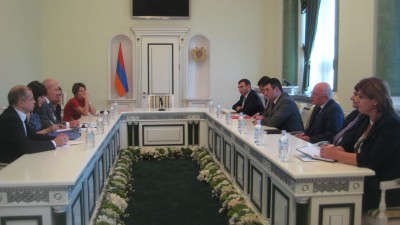
դատարանՀՀ դատական օրենսգրքի 2-րդ գլուխը նվիրված է դատական իշխանության սկզբունքներին, որոնցից մեկն էլ դատավորի անձեռնմխելիությունն է: Համաձայն նույն օրենսգրքի 13 հոդվածի` դատավորն անձեռնմխելի է: Դատավորը չի կարող ձերբակալվել, բացառությամբ այն դեպքերի, երբ ձերբակալումն իրականացվում է հանցագործության կատարման պահին կամ անմիջապես դրանից հետո: Դատավորի ձերբակալման մասին անմիջապես տեղեկացվում են Հանրապետության Նախագահը և վճռաբեկ դատարանի նախագահը: Ձերբակալման մասին որոշումը ոչ ուշ, քան ձերբակալման պահից 24 ժամ հետո ուղարկվում է Հանրապետության Նախագահին և վճռաբեկ դատարանի նախագահին: Ձերբակալումը կատարած մարմինները և պաշտոնատար անձինք պարտավոր են ապահովել վճռաբեկ դատարանի նախագահի անարգել մուտքը այն վայր, որտեղ պահվում է ձերբակալված դատավորը, և ապահովել նրա տեսակցությունը դատավորի հետ:

Դատավորին չի կարելի կալանավորել, նրան որպես մեղադրյալ ներգրավել, դատական կարգով վարչական պատասխանատվության ենթարկել՝ առանց Հայաստանի Հանրապետության արդարադատության խորհրդի առաջարկի հիման վրա Հանրապետության Նախագահի տված համաձայնության:

Դատավորի նկատմամբ քրեական հետապնդում հարուցելու պահից տվյալ գործով մինչդատական վարույթի նկատմամբ դատախազական հսկողությունն իրականացնում է Հայաստանի Հանրապետության գլխավոր դատախազը:

Դատավորին չի կարելի բերման ենթարկել: Առանց փաստաթղթերի բերման ենթարկված դատավորի ինքնությունը պարզելուց հետո իրավասու պետական մարմինը պետք է անմիջապես ազատ արձակի նրան:

Դատավորի կողմից շահադիտական կամ անձնական այլ դրդումներով ակնհայտ անարդար դատավճիռ, վճիռ կամ դատական այլ ակտ կայացնելու փաստի առթիվ քրեական հետապնդում չի կարող հարուցվել, եթե այդ ակտը վերադաս դատարանի կողմից բեկանված չէ:

Խուզարկություն, զննում, փաստաթղթերի կամ իրերի առգրավում կատարելու համար դատարանի շենք մուտք գործելն իրականացվում է դատարանի նախագահի իրազեկմամբ:

Դատավորը չի կարող ենթարկվել քաղաքացիաիրավական պատասխանատվության իր ծառայողական պարտականությունները ոչ պատշաճ կատարելու հետևանքով պատճառված վնասի համար, բացառությամբ, երբ վնասը պատճառվել է դիտավորությամբ կատարված գործողության հետևանքով:

Ռազմական կամ արտակարգ դրության հայտարարումը չի վերացնում դատավորի անձեռնմխելիության երաշխիքները:


Պատրաստեց   Ավետիք ՀԱՐՈՒԹՅՈՒՆՅԱՆԸ

A Proud Moment for Armenians: Courthouse Named after Gov. Deukmejian

Փոլ Իգնատիուսի (Իգնատոսյան)George-Deukmejian-eecue_23978_4hvz_l


By Harut Sassounian

Publisher, The California Courier


Two prominent Armenian-Americans were recently honored with exceptional accolades, making Armenians proud of their accomplishments.


In July, the US Navy announced that a future guided-missile destroyer will bear the name of Paul Ignatius (Iknadosian), the highest ranking Armenian-American official in the Federal Government. He served for eight years in the presidential administrations of John F. Kennedy and Lyndon B. Johnson as Assistant Secretary of the Army, Undersecretary of the Army, Assistant Secretary of Defense, and finally in 1967, Secretary of the Navy.


Last week, a new superior court building in Long Beach, California, was named after Governor George Deukmejian. The official dedication ceremony of the $339 million court complex took place on November 21.


Gov. Deukmejian served the State of California with distinction for 28 years. After narrowly winning his first election as governor in 1982, he was reelected in a landslide in 1986. Earlier, he had served for four years as Attorney General (1979-83), twelve years as State Senator (1967-1979) and Senate Majority Leader (1969), and four years as Assemblyman (1963-67). In 1988, then Vice President and presidential candidate George H.W. Bush considered Gov. Deukmejian as a possible vice presidential running mate. However, Deukmejian asked that his name be withdrawn from consideration in order not to leave California in the hands of a Democratic Lieutenant Governor. Had he not declined and had been picked for the Republican ticket, Deukmejian would have been elected Vice President along with Pres. Bush later that year. Subsequently, he could have run for President, and if successful, become the first US President of Armenian descent!


To honor the governor, over 500 government officials, former colleagues, friends, family members and distinguished guests attended the courthouse dedication ceremony. Congratulatory remarks were delivered by members of the California Supreme Court, Superior Court of Los Angeles County, U.S. Congress, State Assembly, Los Angeles County Board of Supervisors, Mayor of Long Beach, and Bar Association of Long Beach.


The half million square feet Deukmejian Courthouse includes 31 courtrooms, administrative space, detention facilities, offices for county justice agencies, and compatible retail space. The building features the latest safety and environmental innovations with functional public spaces for the efficient conduct of business and movement of people throughout the building.


Successive speakers emphasized Gov. Deukmejian’s strong family values and his Armenian heritage. California Supreme Court Justice Marvin Baxter (Bagdasarian), who had worked for Gov. Deukmejian as Appointments Secretary, mentioned in his keynote remarks that the governor had “moved from New York to California in 1955, armed only with his law degree and high principles instilled by his Armenian-American immigrant parents…. He was an outstanding legislator, attorney general, and governor. He earned and retained our respect through more than a quarter century of excellent public service at the highest levels.”


Gov. Deukmejian, a native of the village of Menands, New York, was named Courken at birth. His father, Courken, was from Aintab and mother, Elbiss (Alice), from Arapkir.


Justice Baxter recalled that the Judicial Council of California had decided with a unanimous vote to name the new building as the Governor George Deukmejian Courthouse. “This action reflects the bipartisan respect and support” the governor enjoys “throughout this nation and state,” Baxter proudly proclaimed.


The 35th governor of California was the last speaker of the evening before unveiling the dedication plaque, surrounded by his wife Gloria, their children and grandchildren.


“So many parties skillfully have combined their talent and expertise to produce a truly extraordinary new courthouse building in Long Beach,” stated Gov. Deukmejian. “It is an outstanding addition to the skyline and to the fabric of the city, and I am proud and pleased to have my name associated with it.” He called the dedication ceremony “a wonderful, touching and humbling capstone to my life and career in public service.”


In a jovial mood, Gov. Deukmejian made self-deprecating remarks about his well-known “lack of charisma,” and his long Armenian last name which he had never considered changing or shortening. “My only concern has been that my name wouldn’t fit” on the courthouse building, the governor joked to the great amusement of the guests.


One would hope that the 85-year-old governor would soon make his first trip to Armenia. It is important that the young generation of Armenians in the homeland get to know him as an outstanding role model and inspiration for their future accomplishments.


The Indelible Imprint of JFK by Ban Ki-moon

պանգի մուն       One of my great personal regrets is not having better preserved the autograph I received from President Kennedy when I had the overwhelming good fortune to meet him as a nameless teenager from a dusty village in Korea.


I was in the United States as part of an eye-opening tour organized by the Red Cross for a group of young people from around the world. It was more than a visit to a foreign country – it was a pilgrimage to the land of possibility, a shining democracy that had helped to save my nation in its darkest hour.


President Kennedy’s signature was quickly dispersed among the many fingerprints of my friends who grabbed at the glossy White House Bulletin and passed it around with such eagerness that by the time it returned to me no trace of his writing remained.


But nothing could remove the imprint the American President made on my life. Meeting him was a turning point. His words that day in the South Lawn sparked my decision to become a diplomat and dedicate myself to public service.


As he looked out at our diverse group representing countries that were then on different sides of the Iron Curtain, President Kennedy reminded us that we could be friends even if our governments were not. And he said the words I chose to live by: “There are no national boundaries; there is only a question of whether we can extend a helping hand.”


As I grew older and progressed through my career in national diplomatic service, that idea came into sharper focus, and I resolved to contribute to the global public good. As Secretary-General of the United Nations, I try my best to serve the peoples of the world in whose name the Organization’s Charter was adopted.


President Kennedy had great faith in the United Nations. His last speech to the General Assembly just weeks before his death reads like a primer for addressing the problems that still plague us today. He stressed the indivisibility of human rights. He opposed wasteful military spending. He called for racial and religious tolerance. He praised United Nations peacekeeping. And he insisted that we embrace peace not only on paper, but in our hearts. These are all values I defend along with a corps of dedicated United Nations staff members around the world.


In my own encounters with the world’s young people, I try to deliver the message that JFK gave to me: Be a global citizen and love your country by serving the world.


Soon after I became Secretary-General, Senator Edward Kennedy came to visit.  He brought me a framed copy of the photograph of our group on the South Lawn along with President Kennedy’s speech that day. I was deeply touched by Sen. Kennedy’s understanding of how much I treasured my encounter with his brother.


Reflecting on President Kennedy’s tragic death a half century ago, I realize perhaps I should revise my regrets over losing his autograph. That signature had not simply faded off the paper into a void; it had been absorbed into the skin of my friends thanks to their enthusiasm. I hope to continue spreading the message of this man, who held fast to high ideals and placed such faith in the United Nations, to all people, especially the world’s youth.


BAN Ki-moon is the United Nations Secretary-General.


Recognition, Appreciation Of State Symbols Deemed As Primary Concern

հհ կառավարության նիստ

The Government held a regular meeting, chaired by Prime Minister Tigran Sargsyan. Opening the meeting, the Prime Minister referred to the questions of submitting a new application to the Millennium Challenge Corpration and the introduction of the funded pension system starting January 1, 2014 (see separately).

After the agenda had been approved, the Executive proceeded to the discussion.

The Government approved amendments to the bills on the law on the Flag of the Republic of Armenia and on Coat of Arms of the Republic of Armenia that had been developed jointly by a Prime Minister-established working group on recognition, appreciation and popularization of State symbols. “Menk” Foundation for Preservation of National Values and in collaboration with other non-governmental organizations.

Tigran Sargsyan noted in this connection, “We have to thank the NGOs, who were proactive, consistent, and were interested in this issue. We also have to ask them to take under control and monitor the enforcement of this law considering the coat of arms and the flag are State symbols, which contribute to the patriotic education of our youth. We are very grateful to the civil society.”

The Government next approved the initiative to extend the enactment of the law on citizens in breach of the procedure of compulsory military service untill December 1, 2013, allowing those offenders over 27 years of age to pay the stipulated fee within the prescribed deadlines, return to the homeland and be safe from prosecution. With the next decision, the meeting considered the bill to be of top priority.

The above draft laws will be sent to the National Assembly in the manner established by law.

The Cabinet approved the fundamental document to be part of Armenia’s official thematic reports subject for submission to UN monitoring bodies and instructed the Minister of Justice to ensure its translation.

The Revised National Report of the Republic of Armenia concerning the European Social Charter was next approved by the session (reference period 2009-2012).

In conclusion, the Executive approved a proposal for signing a protocol on amendments to three agreements on cooperation between the CIS-member States. The agreements relate to the determination of the country of origin of goods, the Trade Fair and the development of congress activities, as well as a number of previously signed instruments on coordination of intergovernmental relations.

Armenia Should Renounce Turkish Protocols Long Before Genocide Centennial

Հարութ Սասունյան


By Harut Sassounian

Publisher, The California Courier


Expecting a public relations nightmare during the Armenian Genocide Centennial, Turkish officials are anxious to prevent further damage to their country’s already tarnished reputation.


Even though they have no intention to open the border with Armenia, Turkey’s leaders are pretending to do so by constantly issuing fake conciliatory statements. By falsely claiming that Turkey is in the process of patching up its differences with Armenia, Ankara’s hidden agenda is to discourage additional countries from recognizing the Armenian Genocide.


However, given Azerbaijan’s paranoid reaction to any talk of Turkey opening its border with Armenia, Turkish officials are forced to retreat by warning that the Armenia-Turkey border would remain closed, unless ‘progress’ is made on the Karabagh (Artsakh) issue.


Such contradictory Turkish statements have been issued countless times, ever since Armenia and Turkey signed Protocols in 2009 to open their mutual border and establish diplomatic relations. As recently as last week, Foreign Minister Ahmet Davutoglu told a closed session of the Turkish Parliament’s Foreign Relations Committee that preparations are underway to open the border with Armenia. When confronted by an opposition parliamentarian about Turkey’s true intentions, Davutoglu quickly reversed himself, stating that Armenia must first withdraw from Karabagh before the border could be opened.


The Foreign Minister made similar remarks a month ago while visiting Switzerland, when he announced that Turkey was looking for “creative ideas” to improve its relations with Armenia. Davutoglu’s creative or rather clever ploy is to avoid looking like an obstructionist, while making excuses for his country’s refusal to ratify the Protocols.


Back in 2009, the Turkish government appeared eager to ratify the Protocols which included various extraneous matters, including the formation of a committee of historians to study archival documents on the Armenian Genocide. When Azerbaijan vehemently objected to Turkish plans to open the border with Armenia, Turkey announced that it could no longer ratify the Protocols, even though it was clearly in its national interest to do so. Thus, despite its claims of being a major regional power, Turkey caved in to Azerbaijan’s veto. During his remarks in the Turkish Parliament on November 6, Davutoglu sheepishly reiterated that his country would open its border with Armenia only after obtaining Azerbaijan’s permission.


Clearly embarrassed by this leak to the press, a Turkish Foreign Ministry spokesman denied that Davutoglu had made such a statement. This is not a credible denial as Turkish officials have made similar statements many times before. One plausible explanation for reviving the prospect of opening the border and railway link to Armenia could be Turkey’s intent to pressure the newly-elected President of Georgia who refuses to support the long-planned Kars-Tbilisi-Baku railway which was expected to circumvent Armenia.


To put an end to continuous Turkish exploitation of the Protocols, Pres. Serzh Sargsyan should carry out his promise of three years ago, when he warned that unless Turkey ‘shortly’ ratifies the Protocols, he would reconsider his position on this issue, implying that Armenia would withdraw from this agreement. Since the Protocols are still not ratified four years after they were signed, Pres. Sargsyan should declare them null and void.


Understandably, Armenian officials are reluctant to take such a drastic step, as they are concerned that the major powers would blame them for the Protocols’ failure. Armenia would prefer that the Turkish side be the first to withdraw from the Protocols, and thereby bear the blame for their collapse. Turkish officials could be playing the same blame game, by waiting for Armenia to be the first to withdraw.


In my view, Armenia can no longer afford to wait. With the Centennial of the Armenian Genocide less than 18 months away, Armenia’s President should do what he promised three years ago and withdraw his government’s signature from the ill-fated Protocols. Armenia could not be blamed for this action, as Turkish officials have repeatedly announced that they have no intention of ratifying the Protocols.


Not surprisingly, Davutoglu also declared last week that Turkish efforts to counter Armenian plans for the 100th anniversary of the genocide are moving forward ‘at full speed.’ In order not to allow Turkey to undermine worldwide Armenian commemorations for the Genocide Centennial, Armenia’s leaders must renounce the Protocols long before April 24, 2015.


Furthermore, given the Turkish government’s century-old intransigence to acknowledge its culpability for the Genocide and refusal to make appropriate amends, Armenian officials should announce that they plan to seek justice, at long last, by applying to local, regional and international courts.


Customs reform strategy has been established

10832_am_1

The Government held a regular meeting, chaired by Prime Minister Tigran Sargsyan.

The Government approved the State Revenue Committee of Customs Administration Strategy Program for 2013-2014.
During the reform process of the legislative, institutional, human resource management, enforcement, information technology development and other areas numerous problems and tasks are revealed, methods and ways of their solution are reflected in the strategic document.
Prime Minister instructed to include the Customs Union agreements in this program document.
The government authorized the proposal about the creation of the agreement between the Governments of the Republic of Armenia and the Russian Federation concerning the Russian-Armenian humanitarian response center.
Tasks to be implemented by the Centre are the prevention measures in emergencies, urgent humanitarian assistance to the population affected by emergency situations, joint projects and programs, trainings for specialists, etc.
During the meeting the project between the Republic of Armenia and the International Development Association, as well as the International Bank for Reconstruction and Development and the Republic of Armenia “development policy first funding” and “the first development policy loan” credit agreements projects have been approved.
According to them USD 72 Million will be directed to the improvement of a number of industries.
Changes and additions are made in one of the government’s previous decisions; the government established the privilege procedure for handle relations with the income tax provided by the development cooperation agreement between the Republic of Armenia and the Republic of Austria’s governments
The government has allowed the “temporary import” tax regime terms extension for the imported goods by “Korsan – korviam construction” JSC Armenia branch until 2015. November 27.
Last year, the company has been recognized as a winner of the international open competition of the road reconstruction and improvement, imported equipments by the North-South Road Corridor Investment Program which development will continue this year as well, so there is a need for decision-making.
The government redistributes the 2013 budget made changes and additions in one of the earlier decisions of the Ministry of Urban Development and has allocated almost AMD 6 million for making a structural inspection of 19 high school buildings.
Pursuant to the President’s decree of 2013 November 6, about the “winter conscription and demobilization”, the government has decided to set up a military commission in order to ensure the overall management of the recruitment committee, coordinating the work of the Marz (Yerevan city) military commissions to confirm their compositions.

Land of the Rising Sun: Fertile Ground for Armenians

Հարութ Սասունյան

By Harut Sassounian

Publisher, The California Courier


I visited the amazing land of Japan for the first time last month.


The minute I set foot on Tokyo’s Narita Airport, it felt like entering a surreal country — almost too good to be true!


The first thing that one notices is the extreme politeness of the Japanese people. Their repeated bowing to greet guests is incomparably more respectful than our customary casual handshake. I was amazed to find out that everyone gets the same excellent service, at no extra charge! No one gets tips, including waiters and parking attendants.


Japan is impeccably clean. No litter can be found anywhere. Piles of dirt or garbage are nowhere to be seen. You cannot find a single car in the streets with a dent or speck of dust. Even trucks hauling construction materials are covered with a net and hosed down before leaving the loading site, not to scatter dirt on city streets. Amazingly, after a typhoon directly hit Tokyo, there was no debris in the streets.


To top it all, there is very little crime in Japan due to the calm demeanor of the population and absence of guns. Despite Tokyo’s crowded sidewalks, everyone goes about their business, without pushing or shoving, arguing or raising their voices. Drivers respect traffic laws and conduct their cars in an orderly manner, without cutting in front of others or honking horns.


Many people are seen in the streets wearing medical masks. One would think that they were protecting themselves from catching the flu or some other disease from passersby. It turns out that the mask wearers were the ones who had the flu. They were being exceedingly considerate, not wishing to pass their germs onto others!


Besides visiting Japanese shrines and ancient palaces, I had the opportunity to engage in Armenian-related activities in this far away land. I was pleased to learn that the Republic of Armenia had an Embassy in Tokyo. Amb. Hrant Pogosyan and Attache Monica Simonyan received me graciously and briefed me about their relentless efforts to foster friendly relations between the two countries. We discussed opportunities for collaboration between the Armenian community in the United States and the Embassy of Armenia in Japan, particularly during the upcoming Centennial of the Armenian Genocide.


A totally unexpected treat was the concert organized by the Armenian Embassy, celebrating the 110th anniversary of Aram Khachaturian’s birth. Three top musicians, pianists Armen Babakhanian and Julietta Vardanyan, and cellist Aram Talalyan, had flown from Armenia especially for this one night performance. The Japanese audience, foreign diplomats, and a handful of Armenian students and businessmen were highly impressed with Khachaturian’s music and the virtuosity of the performers. I even met a Japanese scholar who spoke Armenian fluently. I had never heard Armenian spoken with a Japanese accent!


Japanese friends had kindly arranged that I meet CEO’s of several major corporations in Tokyo and Kyoto and discuss investment possibilities in Armenia. I was highly impressed by state of the art stem-cell research laboratory at Kyoto University.


Later that day I had the unique opportunity to give a lecture to a group of bright university students and their professors. They spoke English quite well and asked numerous questions, even though I was told that Japanese students normally do not ask questions. My talk covered the Armenian Genocide, the Artsakh (Karabagh) conflict, Syria’s civil war, the Arab Spring, the controversial issue of Comfort Women, and the necessity of peaceful resolution of conflicts.


After returning to Tokyo, my hosts surprised me by presenting me from the archives of The Japan Times newspaper, a copy of the issue dated Oct. 4, 1998, which had a half-page article about my humanitarian efforts for Armenia on behalf of the United Armenian Fund.


My final meeting was with three high-ranking Japanese government officials with whom I discussed at length Japan’s relations with Armenia, Azerbaijan, Turkey, China, Russia, and South Korea.


My conversations with Japanese university students and government leaders made me realize that Armenians have made a habit of concentrating all of their political efforts on the Middle East, Europe, North and South America, and totally ignoring the large number of strategically important countries in Asia.


It may be politically and economically more productive to extend the span of our attention to countries whose citizens know hardly anything about Armenia and Armenians.


Turkey Returned Some Church Effects After the Genocide: We Demand the Rest

Հարութ-Սասունյան1By Harut Sassounian

Publisher, The California Courier

This is the amazing tale of the Turkish government handing over to Istanbul’s Armenian Patriarchate in the 1920’s some of the church effects looted during the Genocide.

According to attorney Loutfig Kouyoumjian’s book, Hay Hamankayin Antsoutartser: 1927-1950 [Armenian Community Happenings: 1927-1950], published in Istanbul in 1950, the Turkish government had turned over to the Armenian Patriarchate 64 large crates full of church effects. Kouyoumjian was a member of the Patriarchate’s Finance Committee.

The returned items included crowns inlaid with diamonds and pearls, vestments, garments with gold threads and silver crosses, a belt buckle from the famous Abousheikh Church with golden latches decorated by diamonds, emeralds and rubies, 72 rugs belonging to Sourp Garabed Monastery and Sourp Krikor Lousavorich Church of Gesaria, and churches in Talas and other regions, and a gold box covered with precious stones containing several saints’ relics. Another crate had the vestments of Gomidas Vartabed, his gold fountain pen, and valuable manuscripts of his musical arrangements of church liturgy. The Locum Tenens Archbishop Kevork Arslanian signed a receipt acknowledging his acceptance of these items and appointed Archpriest Drtad Boyajian as their guardian.

The list of the returned items prepared by the Patriarchate included “scrolls, manuscripts, and antique books. In keeping with the laws on antiquities, the books were delivered to the Istanbul Museum.”

These revelations raise several important questions. What happened to the returned church effects? Our investigation indicates that none of these items are currently in the custody of the Armenian Patriarchate. A few of them were handed to Armenian clergymen of Istanbul, while others were sent to Etchmiadzin. The overwhelming majority simply vanished several decades ago, most probably stolen and sold.

Mr. Kouyoumjian reported in his book that in the late 1920’s, Judge Haroutioun Mosdichian, Chairman of the Patriarchate’s Executive Committee, informed the Finance Committee that he had solid evidence that several of the returned silver pieces were sold at the Istanbul jewelry market. Mosdichian was a highly respected individual who had occupied important positions in the Turkish government.  The Finance Committee immediately sealed the room where the returned items were stored. The next day, Abp. Arslanian broke the seal and left the door of the storage room open. The Archbishop then dismissed the Committee members.

A special investigative committee, including Mr. Kouyoumjian, then conducted a thorough search and transmitted its findings to the Executive Committee. The latter blamed not only Mosdichian but also Abp. Arslanian of wrongdoings regarding the returned church effects. Abp. Arslanian in turn accused Patriarch Mesrob Naroyan of being responsible for the missing items. After Patriarch Naroyan formed a committee to update the list of the remaining church effects, he discovered that almost nothing was left of the contents of the 64 crates delivered earlier to the Patriarchate.

In his book, Kouyoumjian relates another strange tale regarding the rugs delivered to the Patriarchate by the Turkish government. On March 8, 1924, two Turks — Haje Ismail, the son of Molla Khalil of Gesaria, and Mehmet of Talas — presented to Abp. Arslanian a written demand, claiming that nine of the rugs had nothing to do with the Armenian Church and must be returned to them. When the Patriarchate rejected their request, the Turks filed a lawsuit against Abp. Arslanian, claiming that the nine rugs were worth 1,975 Ottoman gold pieces.

On June 26, 1924, attorney Kouyoumjian defended the Patriarchate’s interests in court. Strangely, the Patriarchate agreed to settle the lawsuit by paying 500 gold pieces to the two Turks. Several years later, when Mr. Kouyoumjian inquired about the disposition of those rugs, he was told that there were no such rugs at the Patriarchate.

In light of this newly found reference to the Turkish government’s return of church effects, the Armenian Patriarchate must now conduct a thorough investigation of its archives to review its records of the missing items.

More importantly, by having returned the 64 crates, the Turkish government had in effect admitted the theft of Armenian Church properties during the Genocide. A lawsuit must be filed not only against the Istanbul Museum for the antique books it improperly received in the 1920’s, but also against museums and libraries throughout Turkey for the return to the Armenian Patriarchate of the vast number of religious effects looted from several thousand Armenian churches!

Pentas

Пентас-ланцетовидный1

Pentas is one of the best butterfly-attracting plants around. It blooms all summer long, even during the hottest weather, with large clusters of starry blooms that attract butterflies by the dozens as well as hummingbirds. The plant grows well in containers and in the ground — and it can even make a good houseplant if you have enough light. It does best in full sun and moist, well-drained soil. Pentas is grown as an annual in most parts of the country, but it’s hardy in Zones 10-11. Plant it outdoors after all danger of frost has passed.

Light:
Sun
Zones:
10-11
Plant Type:
Annual,Perennial
Plant Height:
To 4 feet tall
Plant Width:
To 3 feet wide
Landscape Uses:
Containers,Beds & Borders,Privacy,Slopes,Groundcover
Special Features:
Flowers,Attracts Birds,Attracts Hummingbirds,Easy to Grow

1266266413_pentas

pentas_lanceolata

Pentas1

Top Varieties


Pentas ‘Butterfly Light Lavender’ bears lavender-pink flower heads on compact 14-inch-tall plants.
view >

Pentas ‘Graffiti Bright Red’ bears large clusters of rich-red flowers on dwarf 12-inch-tall plants.
view >

Pentas ‘Graffiti Lipstick’ is adorned by clusters of bright rosy-pink flowers on compact 12-inch-tall plants.
view >

Pentas ‘Graffiti Pink’ bears big heads of pink flowers on 12-inch-tall plants.
view >

Pentas ‘Graffiti Red Lace’ bears large heads of red flowers with white centers on 1-foot-tall plants.
view >

Pentas ‘Graffiti White’ bears large flower heads of pure-white blooms on 12-inch-tall plants.
view >

Pentas ‘Kaleidoscope Appleblossom’ shows off clusters of soft-pink flowers through the summer. It grows 18 inches tall.
view >

Pentas ‘Kaleidoscope Deep Red’ is an especially showy selection with clusters of rich-red flowers all summer long. It grows 18 inches tall.
view >

Pentas ‘Kaleidoscope Pink’ bears large clusters of soft-pink blooms on 18-inch-tall plants.
view >

Pentas ‘New Look Pink’ bears light pink flowers on 12-inch-tall plants.
view >

Pentas ‘Northern Lights Lavender’ is a large selection that’s been bred to tolerate cooler temperatures. It offers lavender-pink flowers on a 4-foot-tall plant.
view >

фото Пентаса ланцетовидного фото Пентаса ланцетовидного сорт Nova фото Пентаса ланцетовидного сорт Kermesina
Pentas lanceolata Pentas lanceolata ‘Nova’ Pentas lanceolata ‘Kermesina’


Lindsey Vonn puts comeback on ice for now

Lindsey Vonn(CNN) — Ski queen Lindsey Vonn has put her return to racing on ice — for now.

The new World Cup ski season begins in the Austrian resort of Soelden this weekend but the Olympic downhill champion will not take part as she continues her comeback from a serious knee injury.

Vonn was airlifted to hospital February after she landed heavily on her right knee on the opening day of the Alpine Ski World Championships in Austria.

Less than seven months after her horror crash, the 29-year-old American returned to the slopes in Chile to test out her reconstructed knee.


Lindsey Vonn vows to take on the men

See skier’s downhill (careful at 1:21!)

Secret of U.S. ski team’s success

But Vonn, who is dating golfer Tiger Woods, says she is not yet ready to return to competitive action on the snow.

“My training camp in Soelden went very well and I made great progress, but I feel that I need more training before I start racing again,” Vonn explained on her personal website.

“The Soelden race is not in the cards this year. Patience is not my strong suit so not racing is very hard for me but it will only make me more excited for the next one.”

Vonn was crowned America’s snow queen when she became the first American woman to win the Olympic downhill title at the Vancouver Games in 2010.

She followed up her Vancouver victory with a stellar World Cup season in 2011-2012, winning 12 races and the overall title with a new record points haul.

A combination of illness and injury disrupted Vonn’s dominance on the slopes last season but she is confident she remains on course to defend her Olympic crown.

She plans to return at the World Cup event in Beaver Creek, Colorado on November 29.

“I will go home to Vail and continue my preparation for the Beaver Creek races and my ultimate goal in February!” she said.

There is an old face returning to the opening round of the new World Cup season in Soelden, however, as American Olympic super combined champion Bode Miller is back from his ski sabbatical.

It will be the 36-year-old’s first World Cup start since February of 2012.

Ted Ligety, Julia Mancuso and slalom world champion Mikeala Shiffrin are all included in the nine-strong U.S. team in Soelden.


RA Prosecutor General G. Kostanyan received EC Commissioner for Human Rights N. Muiznieks

 G. Kostanyan , EC Commissioner for Human Rights N. MuizniekOn 21 October, 2013 RA Prosecutor General G. Kostanyan received the delegation headed by EC Commissioner for Human Rights N. Muiznieks. The head of EC Office of Commissioner for Human Rights I. Gashe, the deputy head B. Urumova, the representative of EC Secretary General to Armenia O. Pavlyuk were involved in the delegation.

RA Deputies Prosecutor General A. Tamazyan, H. Badalyan, E. Babayan also took part in the meeting.

Greeting the guests Mr. Kostanyan mentioned that he highlighted the cooperation with EC Commissioner for Human Rights both as RA Prosecutor General and as Armenian Representative to the European Court of Human Rights.

The Prosecutor General expressed readiness to continue the cooperation with the Commissioner for Human Rights on stable and comprehensive bases. Mr. G. Kostanyan briefly represented the steps implemented in the process of providing guarantee for human rights and fundamental freedoms. The Prosecutor General highly evaluated the cooperation with the ex-Commissioner for Human Rights T. Hammerberg.

Congratulating Mr. Kostanyan on appointment as RA Prosecutor General Mr. N. Muiznieks emphasized that he was well-aware of Mr. Kostanyan’s activity and said he was sure they would have an efficient cooperation with RA Prosecution Office. EC Commissioner mentioned that his visit had a cognitive aim.

The members of EC delegation were interested in a number of issues regarding the soldiers’ rights in armed forces, issues on alternative service, the functions and authorities of prosecution office in the stage of judicial reforms.

RA Prosecutor General G. Kostanyan gave detailed answers to the questions the guests were interested in. He also offered to establish direct relations between the Office of Commissioner for Human Rights and RA Prosecutor General’s Office to have a quick exchange of information.

Baby Prince George is christened, 7 godparents named

By Laura Smith-Spark and Max Foster, CNN
Watch this video

Prince George’s big day out

London (CNN) — Prince George made his first public appearance in three months Wednesday, as he arrived with his parents, Prince William and Catherine, Duchess of Cambridge, for his christening at St. James’s Palace.

The baby prince smiled as he was shown off to family members including his great-grandparents, Queen Elizabeth II and Prince Philip, before the royals entered the Chapel Royal.

George was dressed in an elaborate lace and satin christening gown that’s a replica of one made in 1841 for the christening of Queen Victoria’s eldest daughter.

Being baptized into the church is more significant for George than for most people, since he is in line to become king, which would also make him the supreme governor of the Church of England.


Back row, from left: the Duke of Edinburgh, Prince Charles, the Duchess of Cornwall, Prince Harry, Pippa Middleton, James Middleton, Carole Middleton and Michael Middleton. Front row, from left: Queen Elizabeth II, Duchess of Cambridge with Prince George and Prince William.Back row, from left: the Duke of Edinburgh, Prince Charles, the Duchess of Cornwall, Prince Harry, Pippa Middleton, James Middleton, Carole Middleton and Michael Middleton. Front row, from left: Queen Elizabeth II, Duchess of Cambridge with Prince George and Prince William.
Prepping for Prince George’s christening

Royal couple’s 1st appearance since baby

Royal family portrait

The occasion was kept uncharacteristically small, in a shift away from the larger ceremonies that his father and grandfather enjoyed at Buckingham Palace.

His grandfather Prince Charles and uncle, Prince Harry, were among the select few invited to the ceremony, along with Catherine’s parents, Carole and Michael Middleton, and her siblings, James and Pippa.

New photos of Prince George released

The Archbishop of Canterbury, the Most Rev. Justin Welby, greeted the guests as they arrived at the chapel.

The royal baby, who was born in July, has seven godparents, among them Prince William’s cousin Zara Tindall, daughter of Princess Anne, and close friends of the couple.

They include Oliver Baker, who got to know William and Catherine at St. Andrew’s University, Emilia Jardine-Paterson, who went to school with Catherine, and William van Cutsem, a childhood friend of William.

The other godparents are Jamie Lowther-Pinkerton, a former private secretary to the Duke and Duchess of Cambridge and Prince Harry; Julia Samuel, who was a good friend of William’s mother, Diana, Princess of Wales; and Earl Grosvenor, son of the Duke of Westminster.

The replica christening gown was brought into use in 2008 to help preserve the 170-year-old original, used until then for every royal christening, including those of Prince William and his father, Charles.

The venue for the christening also has a special significance for Prince William. The body of his mother, Diana, rested in the Chapel Royal for five days before her funeral in 1997.

After the service, Prince Charles and Camilla, Duchess of Cornwall, held a private tea at Clarence House. The guests were served slices of christening cake, which is a tier taken from William and Catherine’s 2011 wedding cake.

Prince William interview: Future king talks fatherhood, baby George

‘What a gift’

In a short video posted on his website, Welby spoke of the significance of the baby prince’s baptism, which will see him “join the family of the church,” numbering almost 2 billion people around the world.

Welby said any christening was a moment for the parents to celebrate the birth of their child, royal or not.

“All babies are unbelievably special, not only royal babies,” he said.

But Prince George’s christening does carry an extra significance, he said.

“As a nation we are celebrating the birth of someone who in due course will be the head of state. That’s extraordinary. It gives you this sense of forward looking, of the forwardness of history as well as the backwardness of history, and what a gift to have this new life and to look forward.”

As with any other infant’s baptism, Welby marked the Prince with the sign of the cross on his forehead and splash water on his head.

The silver font used for George’s baptism has been used for every royal christening since 1841 and will be filled with water from the River Jordan.

The 3-month-old boy has already made history. He’s the first royal baby to be honored with a christening coin from the Royal Mint.

The design of the coins, produced by the mint in a range of sizes and materials, has been approved by his parents and the Queen, the Royal Mint said.

The public can buy the keepsakes, which start at 13 pounds ($21) for the simplest type but rise to a whopping 50,000 pounds ($80,000) for a version containing a kilogram of gold.

A historic look at royal baby clothes

Service details

Prince George’s christening ceremony included two hymns, two lessons and two anthems, according to Kensington Palace.

Prince Harry read him a lesson form John 15:1-5, and his aunt Pippa Middleton read Luke 18:15-17.

The music started with a processional, Bach’s “Fantasia in G,” played on organ.

The Choir of Her Majesty’s Chapel Royal, made up of six men and 10 boys, sang the anthem “Blessed Jesu! Here we Stand,” which was written for the baptism of baby George’s father, Prince William, in 1982.

The second anthem was “The Lord Bless You and Keep You” by John Rutter.

The newest royal also heard the hymns “Breathe on Me, Breathe on God” and “Be Thou My Vision” before the organ played the recessional, which was C.W. Widor’s Toccata from Symphony No. 5.


ANCA RALLIES AGAINST WHITE HOUSE DECISION TO BLOCK SMITHSONIAN DISPLAY OF ARMENIAN GENOCIDE ORPHAN RUG

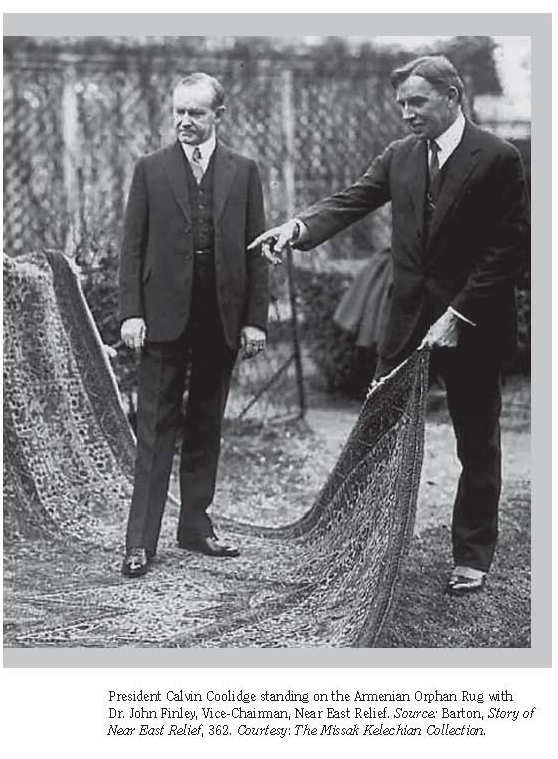
Coolidge_Armenian_Orphan_RugWASHINGTON, DC — Armenian Americans across the U.S. are calling upon the White House and Congress to secure a prominent and permanent public display of a historic rug woven by Armenian Genocide orphans and presented to President Calvin Coolidge in 1925, in appreciation for U.S. humanitarian assistance in the aftermath of Turkey’s murder of over 1.5 million Armenians from 1915-1923, reported the Armenian National Committee of America (ANCA).
The ANCA campaign was initiated after The Washington Post reported, earlier this week, that a planned December 16th Smithsonian Institution exhibit featuring the rug, organized in conjunction with the Armenian Cultural Foundation and the Armenian Rug Society, was abruptly cancelled when the White House, reversing an earlier affirmative decision, refused to lend the iconic symbol of American and Armenian shared heritage to the museum.
Armenian Americans can take action by visiting:
Armenian_Orphan_RugWashington Post staff writer and Pulitzer Prize winning journalist Philip Kennicott, reported, “There was hope that the carpet, which has been in storage for almost 20 years, might be displayed December 16th as part of a Smithsonian event that would include a book launch for Hagop Martin Deranian’s ‘President Calvin Coolidge and the Armenian Orphan Rug.’ But on September 12th, the Smithsonian scholar who helped organize the event canceled it, citing the White House’s decision not to loan the carpet. In a letter to two Armenian American organizations, Paul Michael Taylor, director of the institution’s Asian cultural history program, had no explanation for the White House’s refusal to allow the rug to be seen and said that efforts by the U.S. ambassador to Armenia, John A. Heffern, to intervene had also been unavailing.”
Kennicott described the controversy as “a sign of the Obama administration’s dismal reputation in the Armenian American community that everyone assumes… must be yet another slap in the face for Armenians seeking to promote understanding of one of the darkest chapters in 20th-century history.”
The complete Washington Post article is available online at:
The White House response thus far has been vague – with National Security Staff Assistant Press Secretary Laura Magnuson offering the following comment to the Asbarez Armenian Newspaper: “The Ghazir rug is a reminder of the close relationship between the peoples of Armenia and the United States.  We regret that it is not possible to loan it out at this time.”  A statement with the same exact wording was released by the White House last week and included in Kennicott’s article.
“The White House should simply come clean,” said ANCA Executive Director Aram Hamparian.  “It’s time for the White House to open up about Turkey’s role, and lay out all the facts about its decision to block the Smithsonian’s exhibit of the Armenian Orphan Rug – a historic, Armenian Genocide-era work of art that speaks powerfully to the common values and shared experiences of the American and Armenian peoples.”
In a letter sent earlier today to President Obama’s Chief of Staff, Denis McDonough, ANCA Chairman Ken Hachikian reminded the White House that “upon receiving the rug, President Coolidge wrote, ‘The rug has a place of honor in the White House where it will be a daily symbol of goodwill on earth.’ I ask you, in this spirit, to remove any obstacles to the Smithsonian’s display of this historic artwork and to secure a prominent and permanent public home for this powerful symbol of America’s humanitarian values and friendship with the Armenian people,” continued Hachikian.
Placing this latest controversy in context, Hachikian noted that: “since taking office, President Obama has not only failed to recognize the Armenian Genocide, but has actively blocked Congressional legislation (H.Res.252, 111th Congress) to commemorate this atrocity and, through his Solicitor General, officially opposed efforts in the U.S. courts (Arzoumanian v. Munchener Ruckversicherungs-Gesellschaft Aktiengesellschaft AG) to allow American citizens to pursue Genocide-era property claims.  In addition, the Administration has regularly sent senior officials to speak at events organized by Armenian Genocide deniers, while refusing repeated invitations to simply attend Congressional observances of this atrocity.  In these areas, and, sadly, many more, the President has not simply failed to honor his pledge, but rather – in both letter and spirit – worked to fundamentally undermine and reverse the very policies he pledged to pursue.”
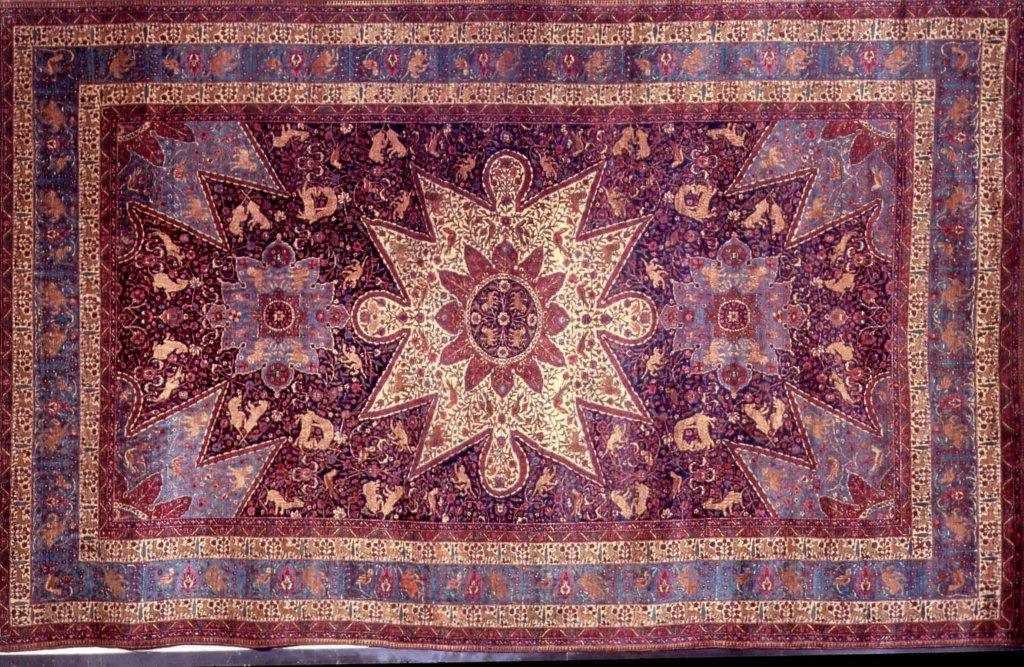
According to Dr. Hagop Deranian, the Armenian orphan rug measures 11’7″ x 18’5″ and is comprised of 4,404,206 individual knots.  It took the Armenian girls in the Ghazir Orphanage of the Near East Relief Society 10 months to weave.  A label on the back of the rug, in large hand-written letters, reads “IN GOLDEN RULE GRATITUDE TO PRESIDENT COOLIDGE.”
Additional information about the history of the Armenian Orphan Rug is available in Dr. Hagop Martin Deranian’s book, “President Coolidge and the Armenian Orphan Rug,” published on October 20, 2013, by the Armenian Cultural Foundation and soon to be available on Amazon.com

Air Communications To Be Liberalized In Armenia

10789_am_3

A Cabinet sitting was held today, chaired by Prime Minister Tigran Sargsyan.

The government first approved a program to ensure competitive and continued provision of air transport services, established a project implementation task force and endorsed its composition.

After assessing several draft projects, it turned out that the policy of open skies will have the greatest positive impact on the economy, leading to jobs and growth in the number of passengers, as well as to reduced flight tariffs. The meeting set up a task force was set up, headed by the Minister of Economy and approved its composition.

Prime Minister Tigran Sargsyan reminded that there have been heated discussions over this issue and there were many contradictory approaches, from strict regulation up to the option of maximum liberalization.

“In order to take the best decision over this issue of strategic importance, the President ordered the National Competitiveness Council to sign a contract with one of the world’s most famous companies McKinsey. The latter hired the best professionals in this sector in order to develop a strategy for the Republic of Armenia.

The strategy was twice discussed with the President of the Republic of Armenia. McKinsey presented detailed reports and analyses, their experts visited Armenia several times and the result was a concept which is now submitted to your judgment.

According to the world’s best experts in this field, Armenia should go along the path of liberalization to promote GDP growth, create new jobs and make passenger traffic more comfortable and less expensive.

These are those basic principles reflected in our strategy, which specifies steps, measures and the timing of how these reforms should be carried out in the Republic of Armenia. We still have 5 days to work with the professionals of McKinsey in order to localize this paper to the maximum possible extent and make it feasible for our country. I am therefore asking all the stakeholders to continue working with the Minister of Economy. McKinsey experts will be available to provide all-out assistance, additional explanations and advice.”

The government passed a dozen decisions to amend relevant decrees adopted in 2002-2012 concerning the licensing process, the procedure for free granting of repatriation certificates, the approval of Dilijan International School program and a list of project implementation entities.

The Government approved a set of draft amendments to the Judicial Code of the Republic of Armenia and 8 other laws to create a new independent and self-governing judicial body – the Council of Judges, introduce a more efficient system of distribution of cases among judges, enact the principle of mandatory reporting by courts and judges, as well as to appoint court presidents for a limited period of time.

The meeting agenda comprised some 60 items altogether.

Serge Samoniantz Honored for 35 Years of Service to Journalism

By Harut Sassounian

Publisher, The California Courier

This column is devoted to Serge Samoniantz, former English editor of Asbarez newspaper for 10 years, and current editor of The California Courier for the last 25 years.

Serge is a modest person who has worked quietly most of his life, shunning any attention to himself. When I told him last Sunday night that he was about to be honored by Asbarez, Serge whimsically replied in his typical self-deprecating style: “Did they run out of people to honor?”

The occasion for honoring Serge was the banquet celebrating the 105th anniversary of Asbarez, one of the world’s oldest Armenian newspapers. Asbarez began publication in 1908 in Fresno, California, and moved to Los Angeles in the 1970’s.

While my weekly columns receive considerable attention by being published in dozens of newspapers worldwide and posted on hundreds websites in half dozen languages, Serge quietly prepares The California Courier for publication each week. He is in charge of everything from news gathering to editing, layout, and advertising.

The management of Asbarez should be commended for honoring Serge. Even though he hasn’t worked for Asbarez since 1988, the newspaper’s current Armenian and English editors, Apo Boghigian and Ara Khachatourian, had not forgotten their former colleague and wished to express their appreciation for his good work a quarter century later. It is not very often that Armenian organizations remember their employees and organize banquets in their honor.

While it is proper to recognize those who donate considerable sums to Armenian institutions, since not much can be accomplished without their generous contributions, it is just as important to honor humble servants of the nation, who have devoted their entire lives to the community, such as teachers, journalists, and clergymen.

Making the celebration truly memorable was the surprise announcement that His Holiness Aram I, Catholicos of the Great House of Cilicia, had bestowed upon Mr. Samoniantz the Mesrob Mashdots Medal. His Eminence Archbishop Moushegh Mardirossian, Prelate of the Western Prelacy of the Armenian Apostolic Church, read the special encyclical prepared by the Catholicosate, as he pinned the Medal of Honor on Mr. Samoniantz.

I was asked to introduce Serge at the October 20th banquet, held at the Baghramian Hall in Montebello. Here are my introductory remarks which include a short biography of Mr. Samoniantz:

Serge was born in 1943 in Marseilles, France, where he lived until age 9. His family moved to San Paolo, Brazil, in 1952 and then to Massachusetts in 1961. He joined the Armenian Youth Federation and then the ARF Keri Gomideh in 1966, after moving to Montebello, California.

In 1964, Serge enlisted in the U.S. Marine Corps and was honorably discharged as sergeant in 1970. After completing his military service, Serge attended California State University at Los Angeles, graduating with a degree in History. He later received a Certificate from UCLA in Public Relations.

Starting in 1973, Serge assumed the editorship of the English edition of Asbarez for seven years. He then served as Executive Director of the Armenian National Committee, Western U.S., from 1983 to 1984. He then resumed his previous post as the English editor of Asbarez from 1985 to 1988.

In 1985, Serge and I were part of the ANC delegation in Geneva, Switzerland, successfully lobbying for the recognition of the Armenian Genocide by the United Nations.

In 1988, Serge joined the California Courier as editor where he has been employed for 25 years. He is a consummate journalist and a top notch professional. It has been a great honor and pleasure for me to work with him both as a close friend and colleague for a quarter century!

Serge is a quiet man and tireless worker. He has been a life-long activist in various social and political issues and a staunch defender of the Armenian Cause.

Sharing the joy of Serge’s honor was his family, including his wife Mariam, sister-in-law Laura Manukian, his son Raffi and wife Nano, and their two children, Emilly and Sebouh.

Congratulations to Serge Samoniantz for his unwavering dedication to Armenian journalism for the past 35 years and congratulations to the staff of Asbarez for their hard work and commitment to continue the legacy of those who founded the newspaper 105 years ago!


Honored for 35 Years of Service to Journalism

SamoniantzBy Harut Sassounian

Publisher, The California Courier


This column is devoted to Serge Samoniantz, former English editor of Asbarez newspaper for 10 years, and current editor of The California Courier for the last 25 years.


Serge is a modest person who has worked quietly most of his life, shunning any attention to himself. When I told him last Sunday night that he was about to be honored by Asbarez, Serge whimsically replied in his typical self-deprecating style: “Did they run out of people to honor?”


The occasion for honoring Serge was the banquet celebrating the 105th anniversary of Asbarez, one of the world’s oldest Armenian newspapers. Asbarez began publication in 1908 in Fresno, California, and moved to Los Angeles in the 1970’s.


While my weekly columns receive considerable attention by being published in dozens of newspapers worldwide and posted hundreds websites in half dozen languages, Serge quietly prepares The California Courier for publication each week. He is in charge of everything from news gathering to editing, layout, and advertising.


The management of Asbarez should be commended for honoring Serge. Even though he hasn’t worked for Asbarez since 1988, the newspaper’s current Armenian and English editors, Apo Boghigian and Ara Khachatourian, had not forgotten their former colleague and wished to express their appreciation for his good work a quarter century later. It is not very often that Armenian organizations remember their employees and organize banquets in their honor.


While it is proper to recognize those who donate considerable sums to Armenian institutions, since not much can be accomplished without their generous contributions, it is just as important to honor humble servants of the nation, who have devoted their entire lives to the community, such as teachers, journalists, and clergymen.


Making the celebration truly memorable was the surprise announcement that His Holiness Aram I, Catholicos of the Great House of Cilicia, had bestowed upon Mr. Samoniantz the Mesrob Mashdots Medal. His Eminence Archbishop Moushegh Mardirossian, Prelate of the Western Prelacy of the ArmenianApostolicChurch, read the special encyclical prepared by the Catholicosate, as he pinned the Medal of Honor on Mr. Samoniantz.


I was asked to introduce Serge at the October 20th banquet, held at the Baghramian Hall in Montebello. Here are my introductory remarks which include a short biography of Mr. Samoniantz:


Serge was born in 1943 in Marseilles, France, where he lived until age 9. His family moved to San Paolo, Brazil, in 1952 and then to Massachusetts in 1961. He joined the Armenian Youth Federation and then the ARF Keri Gomideh in 1966, after moving to Montebello, California.


In 1964, Serge enlisted in the U.S. Marine Corps and was honorably discharged as sergeant in 1970. After completing his military service, Serge attended CaliforniaStateUniversity at Los Angeles, graduating with a degree in History. He later received a Certificate from UCLA in Public Relations.


Starting in 1973, Serge assumed the editorship of the English edition of Asbarez for seven years. He then served as Executive Director of the Armenian National Committee, Western U.S., from 1983 to 1984. He then resumed his previous post as the English editor of Asbarez from 1985 to 1988.


In 1985, Serge and I were part of the ANC delegation in Geneva, Switzerland, successfully lobbying for the recognition of the Armenian Genocide by the United Nations.


In 1988, Serge joined the California Courier as editor where he has been employed for 25 years. He is a consummate journalist and a top notch professional. It has been a great honor and pleasure for me to work with him both as a close friend and colleague for a quarter century!


Serge is a quiet man and tireless worker. He has been a life-long activist in various social and political issues and a staunch defender of the Armenian Cause.


Sharing the joy of Serge’s honor was his family, including his wife Mariam, sister-in-law Laura Manukian, his son Raffi and wife Nano, and their two children, Emilly and Sebouh.


Congratulations to Serge Samoniantz for his unwavering dedication to Armenian journalism for the past 35 years and congratulations to the staff of Asbarez for their hard work and commitment to continue the legacy of those who founded the newspaper 105 years ago!


A Number of Facilities To Be Completed

ՀՀ կառավարության նիստ

A Cabinet sitting was held today, chaired by Prime Minister Tigran Sargsyan.

The Government made redistributions in the 2013 State budget and amended one of its earlier decisions to allocate AMD61mn to the Ministry of Urban Development to implement expenditure programs, complete the ongoing construction sites with no due dates designed to provide financial support (reasonable proportion) of design documents, pay for the services rendered in 2012-2013.

In this context, Prime Minister Tigran Sargsyan addressed the issue of monitoring and completing the State-owned and unfinished construction sites: “The point is that we have an obligation to provide welfare housing to the citizens of certain social groups. It will cost us far less, if we complete the unfinished sites rather than start new ones. If there are any unfinished facilities, it is advisable to spend money on them. The same applies to unfinished facilities in the private sector. There are many buildings unfinished for more than 10 years now, and we can not watch them fall into decrepitude. We have to make a decision about what to do, if the private sector does not comply with the obligation of bringing them to completion. As a result, many problems arise due to these issues, which need discussing and tackling, inclusive of penalties or judicial processes.”

The Government has set an export insurance company in line with the government’s export- oriented industrial strategy. The company is meant to safeguard the bank of exporters or exporting company from the risk of non-payment by the borrower or buyer, create new ways insurance schemes for banks, lower interest rates and expand the banks’ coverage of export operations.

The Government amended one of its earlier decisions, allocating AMD8mn to Veterinary and Phytosanitary Laboratory Service Center SNCO for the purchase of materials and supplies necessary for honey expertise.

With the next decision, the Executive approved standards, health certification procedures and certification forms applicable to honey and other bee products fit for human consumption and due for export toward the European Union.

The meeting decided to earmark AMD22.5mn to the Ministry of Culture for transfer to Minas Avetisyan charitable foundation in order to ensure the fixation and restoration of “Armenia” fresco by Minas Avetisyan now on display at the House of Culture in Vahramaberd village of Shirak Marz. To remind, in the period 2010-2012, the Foundation fixed, restored and moved a number of key works by Minas Avetisyan, including “Meeting,” “Khachkar,” “Carpet Weaving,” “Yerkank,” “Spinning,” “Armenian Pastoral,” etc.

In conclusion, the Government decided to exempt from the payment of entry visa-necessitated State duties those foreign nationals featuring on the list of “Sahakyan” choir due to arrive from Turkey to Armenia for a concert tour this October 14 to 2013.

Justice Dept. Records Reveal: Azerbaijan Pays Millions to U.S. Firms

Հարութ Սասունյան


By Harut Sassounian

Publisher, The California Courier


Awash in billions of petrodollars, but lacking a moral compass, Azerbaijan has been busy handing out loads of money to anyone who is willing to heed its propaganda.

Baku’s bribery scheme, known worldwide as “caviar diplomacy,” has now ensnared Washington’s movers and shakers. Apparently, there is no shortage of Americans who are eager to sell their souls for a fistful of dollars. As a novice in the field of lobbying, Azerbaijan has quickly learned the tricks of the trade from its ‘elder brother’ Turkey, a well-versed master of political deception.

The website of the U.S. Dept. of Justice lists the names and amounts paid by various Azeri entities to 11 American firms:

— Azerbaijan’s Embassy in Washington pays $35,000 per month to Patton Boggs “for advice and assistance on U.S.-Azerbaijan bilateral relations”; $18,250 per month to Melwood Communications to assist in “media relations and communications strategy”; $20,000 per month to the DCI Group for “public relations and media outreach, and building relationships with think tanks”; and $45,000 per month to The Podesta Group to carry out public relations.

— The Livingston Group, named after former House Speaker Bob Livingston, who left public office in disgrace, has so far received close to $2 million for lobbying on behalf of Azerbaijan’s Foreign Ministry.

— The International Bank of Azerbaijan pays Jefferson Waterman International (JWI) $25,000 per month “to develop relations with American institutions” and “media relations strategy.” JWI receives another $25,000 per month from “The Presidency of Azerbaijan” for counseling on media strategy. Azerbaijan’s Ministry of Finance owns 51% of the shares of the International Bank of Azerbaijan.

— The Azerbaijan America Alliance has so far paid Fabiani & Company $2.4 million “for planning and executing strategies to encourage research and advocacy about the Azeri people, country, culture and international relations.” A recent gala dinner in Washington, hosted by the Azerbaijan America Alliance, was attended by 700 guests, including Obama administration officials, members of congress, and foreign diplomats. Notorious congressional opponents of Armenian issues attended the banquet, including Senators Saxby Chambliss and Richard Burr, House Speaker John Boehner and former Cong. Dan Burton.


— Roberti White LLC is paid $20,834 per month by SOCAR USA, the American subsidiary of the State Oil Company of Azerbaijan, to explore business opportunities in the United States.

— Since money is no object, even the Consulate General of Azerbaijan in Los Angeles can afford to hire its own public relations firm. Over the years, it has engaged the services of Sitrick and Company ($50,000 per year); The Toolshed Group LLC ($35,000), founded by Jason Katz, former Director of Public Affairs for the American Jewish Committee; and The Potomac Square Group (amount undisclosed) “to provide media outreach…and interaction with editors.”

Now comes yet another ex-congressman who is chasing Azerbaijan’s Almighty Dollar! Former New York Cong. Michael McMahon is handling public affairs/government relations for the so-called “Turkish Republic of Northern Cyprus,” a territory recognized only by its occupying power — Turkey! McMahon, who served on the House Foreign Affairs Committee until his defeat in 2010, is leading the lobbying effort on behalf of Herrick, Feinstein LLP of New York which won a $200,000 per year contract to arrange congressional visits to occupied Northern Cyprus and improve its public image in the media. McMahon also handled the development and construction of Turkey’s expanded Consulate in New York City.

It is, therefore, not surprising that McMahon’s name surfaced last week, trying to legitimize Pres. Ilham Aliyev’s falsified re-election in which he gained 85% of the vote, while his nine opponents collectively received the remaining 15%!

While international observers criticized Aliyev’s re-election as “unfair and rife with fraud,” The New York Times quoted McMahon as stating that the vote was “honest, fair and really efficient. There were much shorter lines than in America, and no hanging chads,” a reference to the disputed ballots in Florida during the 2000 U.S. presidential race.

Shockingly, The N.Y. Times fell victim to McMahon’s ploy, deciding to title its article on the fraudulent vote as “Observers Differ on Fairness of Election in Azerbaijan.” The Times thus equated one man’s pro-Azeri propaganda with the overwhelming evidence of widespread fraud confirmed by respectable international observers, such as the Organization for Security and Cooperation in Europe (OSCE). Fortunately, The Times pointed out that “the split in assessments seemed to reflect an aggressive lobbying effort by the Aliyev government to portray the election as fair.”


Armenian-Americans cannot compete with Azerbaijan’s lavish handouts. They don’t have to. Since the truth is on their side, they do not need to spend millions on lobbying to present the facts as they are!


The Vaccine Hoax is Over. Documents from UK reveal 30 Years of Coverup

պատվաստանյութAndrew Baker ( FFN),– Freedom of Information Act in the UK filed by a doctor there has revealed 30 years of secret official documents showing that government experts have 1. Known the vaccines don’t work 2. Known they cause the diseases they are supposed to prevent 3. Known they are a hazard to children 4. Colluded to lie to the public 5. Worked to prevent safety studies Those are the same vaccines that are mandated to children in the US. Educated parents can either get their children out of harm’s way or continue living inside one of the largest most evil lies in history, that vaccines – full of heavy metals, viral diseases, mycoplasma, fecal material, DNA fragments from other species, formaldehyde, polysorbate 80 (a sterilizing agent) – are a miracle of modern medicine. Freedom of Information Act filed in the US with the CDC by a doctor with an autistic son, seeking information on what the CDC knows about the dangers of vaccines, had by law to be responded to in 20 days. Nearly 7 years later, the doctor went to court and the CDC argued it does not have to turn over documents. A judge ordered the CDC to turn over the documents on September 30th, 2011. On October 26, 2011, a Denver Post editorial expressed shock that the Obama administration, after promising to be especially transparent, was proposing changes to the Freedom of Information Act that would allow it to go beyond declaring some documents secret and to actually allow government agencies (such as the CDC) to declare some document “non-existent.” Simultaneous to this on-going massive CDC cover up involving its primary “health” not recommendation but MANDATE for American children, the CDC is in deep trouble over its decades of covering up the damaging effects of fluoride and affecting the lives of all Americans, especially children and the immune compromised. Lawsuits are being prepared.  Children are ingesting 3-4 times more fluoride by body weight as adults and “[t]he sheer number of potentially harmed citizens — persons with dental fluorosis, kidney patients tipped into needing dialysis, diabetics, thyroid patients, etc — numbers in the millions.” The CDC is obviously acting against the health of the American people. But the threat to the lives of the American people posed by the CDC’s behavior does not stop there. It participated in designed pandemic laws that are on the books in every state in the US, which arrange for the government to use military to force unknown, untested vaccines, drugs, chemicals, and “medical” treatments on the entire country if it declares a pandemic emergency. The CDC’s credibility in declaring such a pandemic emergency is non-existent, again based on Freedom of Information Act. For in 2009, after the CDC had declared the H1N1 “pandemic,” the CDC refused to respond to Freedom of Information Act filed by CBS News and the CDC also attempted to block their investigation.  What the CDC was hiding was its part in one of the largest medical scandals in history, putting out wildly exaggerated data on what it claimed were H1N1 cases, and by doing so, created the false impression of a “pandemic” in the US. The CDC was also covering up e financial scandal to rival the bailout since the vaccines for the false pandemic cost the US billions. And worse, the CDC put pregnant women first in line for an untested vaccine with a sterilizing agent, polysorbate 80, in it. Thanks to the CDC,  “the number of vaccine-related “fetal demise” reports increased by 2,440 percent in 2009 compared to previous years, which is even more shocking than the miscarriage statistic [700% increase]. The exposure of the vaccine hoax is running neck and neck with the much older hoax of a deadly 1918-19 flu. It was aspirin  that killed people in 1918-19, not a pandemic flu. It was the greatest industrial catastrophe in human history with 20-50 million people dying but it was blamed on a flu. The beginning of the drug industry began with that success (and Monsanto was part of it). The flu myth was used by George Bush to threaten the world with “another pandemic flu that could kill millions” – a terror tactic to get pandemic laws on the books in every state and worldwide. Then the CDC used hoax of the pandemic hoax to create terror over H1N1 and to push deadly vaccines on the public, killing thousands of unborn children and others.  (CDC will not release the data and continues to push the same vaccine.) But pandemic laws arranging for unknown vaccines to be forced on the entire country are still in place with HHS creating a vaccine mixture that should never be used on anyone and all liability for vaccines having been removed. Meanwhile, a Canadian study has just proven that the flu vaccine containing the H1N1 vaccine which kills babies in utero, actually increases the risk of serious pandemic flu. Thanks to the Freedom of Information Act (FOIA), we know that vaccines are not a miracle of modern medicine.  Any medical or government authority which insists vaccines prevent diseases is either ignorant of government documents (and endless studies) revealing the exact opposite or of the CDC’s attempts to hide the truth about vaccines from the public, or means harm to the public.

nsnbc international


European Court of Human Rights Provides More Options to Sue Turkey

ՄԻԵԴBy Harut Sassounian

Publisher, The California Courier

 While there is frequent talk about the pursuit of Armenian claims against Turkey in the International Court of Justice (World Court), the possibility of taking legal action in the European Court of Human Rights (ECHR) is rarely mentioned, despite its distinct advantages.

The key difference between the two courts is that only governments can file lawsuits in the World Court, while any individual, group or state can take legal action in the ECHR, giving Armenians countless possibilities for lawsuits against the Turkish state. Litigants before ECHR must first exhaust all domestic remedies and be from one of the 47 member states of the Council of Europe, which includes Armenia and Turkey.

It is not a coincidence that Turkey leads the list of countries being sued in ECHR, as in the last two and half years alone, over 20,000 cases have been filed against that country. Contrary to popular belief, Turkey has no choice but to comply with all ECHR judgments if it wants to maintain its membership in the Council of Europe. This explains why the Ankara government has diligently paid tens of millions of dollars to litigants after losing hundreds of ECHR judgments.

A case in point is ECHR’s October 1, 2013 decision against Turkey, in which the court awarded over 5 million euros (close to $7 million) to two Greek brothers, Ioannis Fokas and Evangelos Fokas, who live in Katerini, Greece. The Turkish courts had barred them from inheriting their sister Polikseni Pistika’s buildings in Turkey because of their Greek nationality.

In their lawsuit, the Fokas brothers claimed that “they had been deprived of the ownership and use of three immovable properties in the Beyoglu district of Istanbul, namely three buildings and land, which they were entitled to inherit from their sister.” The expropriated properties consisted of an eight-story building worth 3.3 million euros, a six-story building worth 1.4 million euros, and a four-story building worth 400,000 euros, based on the appraisal by an Istanbul real estate agency.

The ECHR found that the Turkish courts’ “refusal to recognize the applicants’ status as heirs constituted an interference with their right to peaceful enjoyment of their possessions and that such interference was incompatible with the principle of lawfulness…. Accordingly, recognition of the applicants as the heirs of Polikseni Pistika…would place them in the position they would have been in, had the State [Turkey] not expropriated the deceased’s property.… In those circumstances, an award of compensation for the pecuniary loss seems to be the most appropriate just satisfaction (see Nacaryan and Deryan vs. Turkey, no. 19558/02 and 27904/02, <<<<16-17, January 8, 2008). The Court considers that such an award principally corresponds to the amount that the applicants could legitimately expect to have obtained as compensation for the loss of their property, had there been a mechanism to request such compensation.”

Based on the above ruling, the European Court awarded the Greek brothers 5 million euros for their expropriated real estate, as well as compensating them for their “anguish and frustration which the applicants must have experienced over the years in not being able to use their properties.” The Court ordered the Turkish government to pay the amount of the award to the applicants within three months.

In the referenced Nacaryan and Deryan vs. Turkey case, ECHR found that the Turkish courts had also violated the rights of Yeran-Janet Nacaryan and Armen Deryan by claiming that as Greek citizens, they could not inherit the property of their deceased relative in Turkey “on the ground that the condition of reciprocity between Greece and Turkey had not been met.” ECHR declared Turkey guilty and awarded the two Greek-Armenian applicants a total of 500,000 euros.

At the international conference of Armenian lawyers held in Yerevan last July, Constitutional Court Chairman, Gagik Harutunyan, announced the formation of a committee of experts to study the legal merits of filing a lawsuit against Turkey to remedy the massive losses resulting from the Armenian Genocide.

Given the fact that ECHR provides for European Council litigants many more opportunities than the World Court, the recently-formed Armenian committee of legal experts should cast a wider net in considering the possibilities of filing lawsuits against Turkey in the European Court of Human Rights, as well as in national and international courts.