Baku police prevents a rally in support of demonstrations in Istanbul

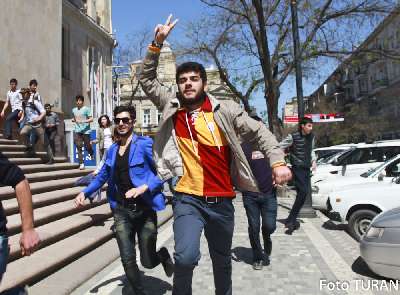
1On Monday at 4 o’clock, police prevented a group of young people trying to hold a rally of solidarity with the protesters in Istanbul. About 50 people gathered in front of the Turkish Embassy in Baku, calling to meet the demands of demonstrators in Istanbul. They called on the Turkish government to stop pressure on the protesters, and to abandon plans for the restructuring of Taksim Square, according to correspondents from the scene.

The police pushed the crowd away from the embassy. Young people told reporters they continue to hold solidarity actions in other locations in central Baku, without naming specific addresses. -03В-

Iran’s president Ahmadinejad survives ‘helicopter incident’ after it makes emergency landing while touring rural area

A helicopter carrying Iranian President Mahmoud Ahmadinejad was forced to make an emergency landing in a mountainous region north of Tehran on Sunday.

The president’s website later said that no one was hurt.

Ahmadinejad had been on his way to a ceremony to inaugurate a road tunnel, the website said.

It is not known what caused the emergency landing.

Iran’s official news agency says Mahmoud Ahmadinejad’s helicopter experienced an unspecified ‘incident’ while touring a rural area, but the Iranian president’s pilot landed the aircraft safely and the leader was unhurt.

The report by IRNA did not elaborate on the Sunday incident, which happened as Ahmadinejad was en route to a mountainous area in the north of the country to inaugurate a highway tunnel.

It said the pilot landed skillfully and neither the president nor his companions were hurt. The report said Ahmadinejad made it to the inauguration ceremony on time.

Mr Ahmadinejad is coming to the end of his second term as Iranian president. There are fresh elections later this year, but Mr Ahmadinejad cannot stand again as Iranain rulers are barred from standing for presidential office three times.

Top Muslim cleric urges Sunnis to join Syria war

1Մուսուլման հոգևոր առաջնորդը կոչ է անում սունիներին միանալ Սիրիայի պÕInfluential Muslim cleric Yusuf al-Qaradawi has called on Sunni Muslims to join the rebels fighting the Syrian regime, as he lashed out at Shiite group Hezbollah for sending its men to fight the mostly-Sunni insurgents in Syria.

Qaradawi, a controversial figure in the West but who has millions of supporters, mostly from the Muslim Brotherhood, also hit out at Iran for backing the Syrian regime of President Bashar al-Assad.
“Every Muslim trained to fight and capable of doing that (must) make himself available” to support the Syrian rebels, the cleric said at a rally in Doha late Friday.
“Iran is pushing forward arms and men (to back the Syrian regime), so why do we stand idle?” he said, branding Lebanese militant group Hezbollah, which means the party of God in Arabic, as the “party of Satan”.

World’s loneliest schoolboy Bacho attends classes by himself in remote Georgian village of only 30 people

b9Bacho Tsiklauri, nine, is the only pupil at the primary school in the remote mountain gorge village of Makarta, Georgia, 62 miles north of the capital Tbilisi.

He is one of only four children in the village, which is home to about 30 people. The older children, including his brother Dato, attend a high school in a nearby village two miles away.

Reuters photographer David Mdzinarishvili travelled along 12 miles of dirt track through the Gudamakari gorge, which separates Makarta from the rest of Georgia, to meet Bacho.

The journey through the gorge took as long as it did to cover on the main road.

Bacho knows it is time for lessons when he sees 47-year-old Ms Tsiklauri, who teaches Georgian and mathematics, walking past his house at about 10am each day.

‘Lia began the lesson by taking the register, but then she laughed and with this the tension disappeared.

‘They soon forgot about my presence, and the class went as usual: checking homework, going over previous lessons, being called to the board, and learning new material.

At break time, Bacho kicked a half-flat football around the courtyard by himself and did a few laps, Mr Mdzinarishvili said. Then the boy’s other teacher, 40-year-old Inga Chokheli, arrived for his English lesson.

Both the teachers were full of praise for their only student. They just had one disappointment: when he goes to high school, the primary school in Makarta will close.


Muiznieks: greater freedoms of expression and assembly urgently needed in Azerbaijan

Եվրոպայի խորհրդի մարդու իրավունքների հանձնակատարը խստորեն քննադատեÕ“Journalists, bloggers, activists and other independent thinkers continue to experience severe limitations to their freedom of expression in Azerbaijan” said today Nils Muiznieks, the Council of Europe Commissioner for Human Rights, at the end of a three-day visit to the country. Referring in particular to the detention of a number of these persons, the Commissioner expressed his view that “clearly, they should not be in prison”. In the course of his visit, the Commissioner travelled to Ismayilli, where he discussed the protests which took place there last January. He also went to Kurdakhani Detention Centre, where he met with Ilgar Mammadov, Hilal Mammadov and Zaur Gurbanli.

“Releasing all persons who are in detention because of the views they hold and express should be a priority for the Azerbaijani authorities in order to protect freedom of expression” said the Commissioner, noting that this should be accompanied by measures to enhance the independent and impartial review of the relevant cases by the judiciary. In parallel, the authorities should bring the long-standing work on the reform of defamation legislation to a successful conclusion, by ensuring that it provides for defamation to be dealt with through proportionate fines and not imprisonment. The Commissioner welcomed that the authorities are currently engaged with the Council of Europe Venice Commission on this reform, which is also required in order to execute two judgments of the European Court of Human Rights against Azerbaijan. However, he found it “difficult to reconcile” this commitment with the amendments adopted by the Azerbaijani Parliament only two weeks ago, aimed at facilitating the application of defamation provisions to online expression. The Commissioner called on the President of Azerbaijan not to sign these amendments into law.

Freedom of assembly is also seriously thwarted, with restrictions in practice going well beyond those which are permissible according to human rights standards. “Not only have peaceful protesters been effectively banned from demonstrating in central Baku since 2006, but recent months have seen a harshening of the fines and the use of administrative detention for those who organise or participate in unauthorised public gatherings” the Commissioner observed. Noting the announced publication by the authorities of a list of locations where demonstrations will be authorised, the Commissioner called for these to include adequate locations in the centre of Baku and other cities, as a first step towards a better enjoyment of the right to freedom of assembly by the Azerbaijani population.

Regarding freedom of association, the Commissioner was particularly worried to note that problems relating to the registration of non-governmental organisations have not abated. The Venice Commission identified some shortcomings in its 2011 Opinion on the legislation of non-governmental organisations of Azerbaijan, such as the absence of any specific time-frame within which an agreement on the registration of the local branches of international NGOs has to be signed with the Ministry of Justice, resulting in unduly long delays. The authorities should swiftly address these deficiencies.

Finally, several interlocutors expressed concerns about continuous demolitions of houses in the centre of Baku, which allegedly have no legal basis. The Commissioner was informed that a number of cases relating to these demolitions are now pending before the European Court of Human Rights. Instead of awaiting the outcome of these cases, the authorities should ensure that an effective remedy exists at national level. More generally, they should better implement the Court’s case-law rather than relying on the Court to correct the shortcomings of national remedies.

Heydar Aliyev and Armenian Flag Make Joint Appearance

Aliyev051713_0Tbilisi’s Old Town has long been an area where ethnic Armenians, Azeris, Jews, Kurds, and Georgians intermingle.

There’s the Azeri teahouse run by ethnic Armenians on one street, and, on another, one run by ethnic Azeris, where an ethnic Armenian waitress serves customers.

A mosque frequented mainly by ethnic Azeri Muslims sits atop a hill just a few minutes away from an Armenian church where Sayat Nova, the 18th century troubadour who wrote songs and poetry mainly in Azeri, is buried.

A statue to Sergei Paradjanov, the surrealist ethnic Armenian filmmaker whose last film was shot in Azerbaijan, stands just meters away from a shisha café, staffed by ethnic Armenians from the Middle East and often frequented by customers from Azerbaijan.

Home to sizable ethnic Azeri and Armenian populations, Georgia is well-accustomed to such coexistence. But, nonetheless, that doesn’t mean that awkward situations cannot occur.

Recently, for example, an Armenian flag appeared flying outside a privately owned, neighborhood bathhouse that adjoins a park featuring a bust of Heydar Aliyev, the late Azerbaijani president.

The flag was still flying until the eve of Azerbaijan’s May 10 Flower Day celebration, an event to mark the birthday of the late president. On the day itself, the flag reportedly disappeared. A day later, it reappeared.

The juxtaposition, needless to say, is unusual. Aliyev, in office from 1993 until 2003, was Azerbaijan’s president when the war with Armenia and Karabakhi separatists over the breakaway region of Nagorno Karabakh ended with a cease-fire in 1994.

Precise reasons for the flag’s appearance, disappearance, and reappearance could not be confirmed. The management of the bathhouse that displays the flags was not available for comment. “They just chose some international flags from somewhere,” an employee commented, with a shrug.

The Armenian flag appears alongside those of the United States, Israel, European Union, and Georgia, at the end closest to the Heydar Aliyev Park.

The Azerbaijani embassy to Tbilisi and the Georgian office of the State Oil Company of the Azerbaijani Republic, which maintains the Heydar Aliyev Park, did not respond to requests for comment about the flag’s appearance.

Reaction to the above photograph, posted on Facebook, was mixed, with activists weary of the cult of personality surrounding Aliyev sharing the image, while others alleged Photoshop manipulation.

But sources familiar with the circumstances claim that the Azerbaijani ambassador to Tbilisi personally visited the owners of the baths to request that the Armenian flag be taken down.

An Azerbaijani TV crew also apparently visited the Heydar Aliyev Park to film the bust and the offending flag, but allegedly was denied permission to do so.

When the flag reappeared, the Azerbaijani ambassador, reportedly furious, made another visit to the bathhouse, the sources claimed.

The bathhouse employee, who did not give his name, denied that the facility’s Armenian flag had caused any controversy.

But given increasing tensions between Armenia and Azerbaijan, they might yet find that the potential for controversy is far from over.

— Elizabeth Owen, EurasiaNet.org’s Caucasus/Turkey news editor, added reporting to this post.

Anti-Gay Riot in Georgian Capital

Embarrassment for government after police struggle to protect anti-homophobia march.
By Tina Zhvania – Caucasus
CRS Issue 688,
geo_anti_gay_riot

An attempt to hold a march against homophobia in the Georgian Tbilisi ended in rioting as hostile protesters attacked participants and police lines crumbled.

Dozens of people were injured, including journalists and police officers trying to escort people away from the trouble.

Prime Minister Bidzina Ivanishvili condemned the May 17 violence, saying, “The right to gather peacefully and to freely express one’s opinion is fundamental to our democracy.“

Opponents of the march against homophobia were already gathering on the capital’s central Rustaveli Avenue the previous day, and they numbered several thousand by the time it was due to begin.

Police cordoned off a section of Freedom Square for the few dozen people who were still determined to take part. But when they were due to begin, an aggressive crowd surged towards the square, and police evacuated most of the anti-homophobia marchers on buses before their opponents could reach them.

Accompanied by Orthodox priests, and armed with stones, poles and other weapons, the protesters attacked a minibus containing some of the participants, smashing windows and pelting those inside with stones.

Flushed with victory, some took control of the square to celebrate, while others fanned out into the city.

The anti-gay protesters had been spurred on by a statement issued by the head of the Georgian Orthodox church, Patriarch Ilia II, who compared homosexuality to a disease and called on the city mayor to ban the march.

In response, the city authorities pointed out that demonstrations do not require prior permission, and that organisers merely have to inform officials of their plans.

In an earlier press briefing, Ivanishvili had promised protection for the anti-homophobia march, whatever others thought of it.

“There are people who can’t accept this, but we will do everything to protect the rights of any minority. That is what is going to happen in this case,” he said.

Afterwards, he said that the perpetrators of violence would be dealt with, and defended the action taken by the police. He said more than 2,000 police had been deployed to prevent trouble, but they were “overwhelmed” by several thousand anti-gay demonstrators.

His government nevertheless faced accusations of failing to ensure an adequate police response.

“Some Georgian citizens were not given a chance to exercise their constitutional rights. The state was unable to create conditions for holding the action or to prevent violence,” Georgia’s human rights ombudsman Ucha Nanuashvili said when he arrived on the scene of the clashes.

Aleko Tskitishvili, director of the Human Rights Centre in Tbilisi, said most people had assumed the anti-homophobia march would go off peacefully after the prime minister’s pledge to protect participants.

“There were calm and clear statements that the government would maintain order. But sadly, a tragedy occurred and people suffered,” he said, adding that eyewitness accounts suggested that the police did have the resources needed to stop the riot.

“I believe questions must be raised about the responsibility of the interior minister and the police officers who were in charge,” Tskitishvili added.

Other rights groups and opposition groups agreed that both government and police had been discredited by their failure to maintain control.

“We need a state that is ready to respond to aggression,” Chiora Taktakishvili, a member of parliament from the opposition United National Movement, said.

More generally, the ugly scenes in Tbilisi left many Georgians fearing an upsurge in religious intolerance, and saddened that their country’s reputation had been dented.

“It’s very hard to watch members of the priesthood taking part and unashamedly allowing children to take part in their violence,” opposition politician Taktakishvili said.

Tskitishvili, from the Human Rights Centre, said, “Sadly, because of what has happened the government’s reputation has been seriously damaged and, what’s worse, the reputation of the whole country has, too.

“All those who are to blame for this tragedy must be identified and punished. Neither the priest’s cassock, nor the king’s crown nor the presidential chair should guarantee impunity.”

Tina Zhvania is a freelance journalist in Tbilisi.


Iranian authorities hang two ‘spies’ convicted of working for U.S. and Israel

Iranian authorities have executed two men convicted of spying for Israel’s Mossad and the American CIA spy agency, according to the country’s state radio.

Mohammad Heidari, accused of passing security-related information and secrets to Mossad agents in exchange for money, and Kourosh Ahmadi, accused of gathering information for the CIA, were hanged at dawn, it said.

The sentence for their execution was handed down by Tehran’s Revolutionary Court and confirmed by the country’s Supreme Court.

The report did not say when the pair were arrested nor when their trial took place.

Iran has in the past said it had successfully detected and dismantled spy networks operating inside the country.

Tehran accuses Israel and the U.S. of spying on its vital interests, particularly its nuclear program, which the West suspects is aimed at producing an atomic weapon.

Tehran denies the charge. It has blamed the assassinations of scientists associated with its disputed nuclear programme on Western spy agencies, especially Mossad.

The United States has denied any role in the killings. Israel has not commented.

Last month, Amnesty International reported that Iran had 314 officially confirmed executions in 2012, the second highest behind China. It is feared that the actual total is much higher.

France wants ‘decisive sanctions’ against Iran

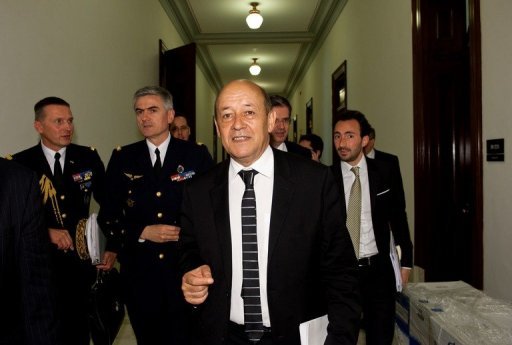
1Ֆրանսիան ցանկանում է ավելացնել Իրանի դեմ պատժամիջոցների քանակըThe United States and European nations should take “decisive sanctions” against Iran over its controversial nuclear program, French Defense Minister Jean-Yves Le Drian said Friday.

“Given the inflexibility of Iran’s position, this dual, sanctions-dialogue approach should allow us to increase pressure on Iran in the coming months as the Iranian uranium enrichment program continues to expand in quantity and quality,” Le Drian said.
“More than ever we have a responsibility to defeat this strategy of procrastination and concealment to ensure nuclear non-proliferation,” he added during a talk at the Carnegie Endowment for International Peace think tank.
The United Nations and Western nations have imposed a range of sanctions on Iran for several years in an effort to deter Tehran from acquiring nuclear weapons under cover of a civilian program to develop nuclear energy.
Le Drian also met the head of the US Senate Armed Services Committee, Carl Levin, during his visit to Washington, where Syrian war was discussed.
Levin, who has urged President Barack Obama to consider pursuing limited military options against the regime of Syrian President Bashar al-Assad, later said Le Drian had not dismissed the possibility out of hand.

Chaos in Turkey as police use tear gas and water cannons to put down rioters protesting over Syria

Dozens of demonstrators were faced with tear gas and water cannons by police in Istanbul today as they protested against the Turkish government’s policy towards Syria.

Two groups of protesters were marching to Besiktas district near the Dolmabahce Palace on the European side of the city when officers blocked their path, reports the state-run Anatolia News Agency.

Some of the demonstrators, said to be mainly students, tried to climb barriers while police used water cannons and tear gas on the groups. Others took refuge in the historic Dolmabahce Mosque.

The crackdown followed similar scenes in Ankara yesterday, where clashes between students and security forces using cannons and gas saw 30 arrested and two injured.

Crowds in Istanbul and Ankara were protesting against prime minister Recep Tayyip Erdogan’s funding and support for the Syrian rebels against President Bashar Assad.

Syria has accused the Turkish government of facilitating the flow of arms, explosives, vehicles, fighters and money to rebels across the border.

Turkey, a Nato member, has hosted opposition leaders, rebel commanders and thousands of refugees since the Syrian civil war began.


The term of arrest for Ilgar Mamedov Extended another Three Months

Ադրբեջանում REAL շարժման առաջնորդի ձերբակալության ժամկետը նորից երկարNasimi District Court today, extended another three months to Ilgar Mamedov arrest term, the leader of  “Republican Alternative” Movement  (REAL), who is accused of organizing riots in the Ismailli region on January 23-24.

Mamedov was arrested on February 4, held for two months, and then the arrest was extended for another two months. Thus, the total period of detention during the investigation will be extended until September 4.

According to the lawyer Cavad Cavadli, in a sign of protest against the illegal arrest Mamedov, refused to stand up when the judge came in.

The investigation motivated the detention term extension by needing time to question additional witnesses.  However, Mamedov said that the real reason for his arrest and term extension term is  to remove him from participating in the country’s political life.

The lawyer, Cavadli, also pointed out the invalidity of extending the period of detention.

Mamedov has been charged under Articles 233 (organization of actions that lead to violations of public order) and 315.2 (resistance to authority by force, causing a threat to life and health.) In late April, a heavier one, 2201(organization of mass disorders.), replaced the charge Article 233

On April 9, the ​​European Court of Human Rights adopted Mamedov’s case for consideration, and has began to communicate with the Azerbaijani government.—16D06–


Court of Appeal Upheld Editor of Khural in Jail (updated)

Բաքվի վերաքննիչ դատարանը մերժել է “Հուրալ” թերթի գլխավոր խմբագրի հաBaku Court of Appeal on May 13 rejected the appeal of the editor of the newspaper Khural Avaz Avaz Zeynally against the decision of the Baku Court of Grave Crimes and upheld the verdict.

March 12 Baku Court of Grave Crimes Court recognized Zeynally guilty under Articles 311.3.3 (bribery on a large scale), 311.4 (extortion by threats), 306 (non-enforcement of the judgment) and 213.1 (evasion of taxes in a significant amount) of the Criminal Code and sentenced him to nine years in prison.

Zeynally was arrested in October 2011 on the complaint of former MP Guler Ahmadova, which herself is now under arrest for fraud. During the trial, the allegations were not substantiated and virtually all of the defense’s arguments were rejected.

Lawyer Elchin Sadigov, commenting for Turan the appellate court’s decision, called it unfair and illegal.

According to him, the judicial structure was not entitled to consider the appeal because the court was biased. It is these judges that during the preliminary investigation dismissed the appeal against the decision to carry out searches in the office, apartment and car of Zeynally. In addition, the appellate court did not hold re-trial.

The need for this was explained with the fact that during the trial court neither Akhmedova, nor a number of other witnesses answered the questions of the defense.

Sadigov said that the decision of the Court of Appeal will be appealed to the Supreme Court. At the same time, a complaint will be sent to the European Court of Human Rights.

Zeynally himself said at the trial that he was arrested for political order and is a victim of free speech.

At the same time, he expressed his conviction that “someday those who fabricated his case will look from this iron cage and beg for mercy.” -06B-


The Surrender of Shusha, by Former Head of Azerbaijan Yagub Mamedov

050800035539On the 21st anniversary of the occupation of Shusha former head of Azerbaijan, Yagub Mamedov commented in an interview with Turan on reasons why the city was surrendered to the enemy. In his view, there were political and military reasons for the capture of Shusha.

At that time, Azerbaijan virtually had no regular army or military equipment or weapons, even though there was a Ministry of Defense. Time was needed to prepare armed forces.

With this in mind, and given the severe war situation, Azerbaijan took Iran’s proposal to hold a meeting between the presidents of Azerbaijan and Armenia, in Tehran.

Different countries and the OSCE tried to deal with the situation by reaching temporary truces for short periods, but each truce was violated.

Mamedov did not agree with the opinion that Iran provided military assistance to Armenia.

“Brokered by Iran, we signed a memorandum of ceasefire with Armenia, addressing the issue by political and peaceful means. However, external forces who did not want Iran’s mediation and the opposing political forces of Azerbaijan and Armenia, undermined the agreement and the town was occupied,” said Mamedov.

Another reason for the occupation was the severe situation in Azerbaijan.  “It was one of the hardest periods in the country’s history of the 20th century. Domestically, there were big controversies and struggle for power. The Soviet Union collapsed and the economy was destroyed. In such a situation, various forces were ready to do anything to come to power,” said Mamedov.

Did Mamedov face pressure from external and internal forces?  Responding to this question, Mamedov said the day after the leadership’s arrival, he called on all the opposition forces to cooperate.  At the talks, they discussed issues on joint activities to try to solve the Karabakh conflict and cease the power struggle.  “They agreed on the words, and acted differently. Streets and squares were filled with protesters. In other areas, they overthrew the administration heads, appointing their own men. I even appointed two members of the opposition as ministers, Tahir Aliyev for the Interior and Rahim Gaziyev for the Defense. However, the situation with each passing day was getting worse,” said Mamedov.

Was there a role of Russia in the return to power of Ayaz Mutalibov in May 14, 1992? To this question Mamedov answered:  “Certainly, Russia had its own interests. In the occupation of Shusha, it was a large part of Russia. In the occupation of Khojaly, the 366th Russian regiment was also involved,” he said, adding that representatives of the Russian Ministry of Foreign Affairs did not arrive in Tehran, where there were negotiations between Armenia and Azerbaijan. It was promised that the Ambassador of Russia would participate in the negotiations, but he did not come.

The situation worsened, with the return of Mutalibov to power on the one hand, and on the other, the struggle for power between different forces.

Self-defense units, most of which were created by the opposition, fought in the country. They did not obey the Ministry of Defense and did not want to operate under a single command.

What are the implications of these historical events, and who’s to blame? To this the then Head of State said, “I can not name specific perpetrators. Naming someone, one must provide evidence. Otherwise, they will say it is libel. However, then the political situation, the struggle for power, the actions of interested external forces did their business,” concluded Mamedov. -16/03B-

India opposition urges PM to quit

6Հնդկաստանի ընդդիմությունը կոչ է անում վարչապետին հրաժարական տալ

India’s opposition demanded Saturday the resignation of Congress Prime Minister Manmohan Singh, raising the stakes after forcing the exit of two cabinet ministers over corruption scandals.
Pressure has been building for months on the premier, who is widely accused of ineffectiveness while overseeing a sharp economic slowdown and turning a blind eye to a slew of graft controversies that have alarmed foreign investors.
“The government is facing serious corruption allegations,” said Rajnath Singh, president of the Hindu nationalist opposition Bharatiya Janata Party (BJP).
“If the prime minister honestly introspects about what should be done to strengthen the faith of the people in the government, he will find he has no other option but to resign,” Rajnath Singh told reporters in New Delhi.

Iran ex-president Rafsanjani to stand again

5Իրանի նախկին նախագահը առաջադրել է իր թեկնածությունըIran’s moderate conservative former president Akbar Hashemi Rafsanjani on Saturday registered his candidacy to stand for the office again in the election on June 14, an AFP correspondent witnessed.
Rafsanjani, who will be 79 in August, filed his papers at the interior ministry during the final minutes of the five-day registration process which wrapped up on Saturday.
Rafsanjani, president between 1989 and 1997, currently chairs the Expediency Council, the highest political arbitration body, whose members are appointed by the supreme leader, Ayatollah Ali Khamenei.

4 Killed in Blasts Near Turkish-Syrian Border

146115_mainimgTurkey’s Interior Minister Muammer Guler says at least four people were killed and 18 others were injured by explosions in a town near Turkey’s border with Syria.

Guler said the cause of the explosions Saturday in Reyhanli, was under investigation. He gave no other details.

Private NTV television said there were at least four explosions. Earlier, Reyhanli’s Mayor, Huseyin Sanverdi, told Haberturk television that one of explosions occurred near the municipal building, while the other was close to a post office building.

Health Minister Mehmet Muezzinoglu said at least 15 ambulances were helping the injured.


Strong Quake Jolts Southern Iran, 15 Injured

i1Iranian state TV says a strong 6.2 magnitude earthquake has jolted the south of the country, injuring at least 15 people.

The report said the quake struck the Arabian Sea port town of Jask at 6:38 a.m. (GMT 2:08 a.m.) Saturday damaging hundreds of homes.

Even moderate quakes can be deadly in the Iranian countryside, where houses are often built of bricks.

A 6.1 magnitude earthquake killed at least 37 in southern Iran last month. Some 26,000 people were killed by a 6.6 magnitude quake that flattened the historic southeastern city of Bam in 2003.

Iran is located on seismic fault lines and, on average, experiences at least one slight quake every day.

Baku sends to Tehran a note regarding the arrest of writer

Բաքուն բողոքի նոտա է ներկայացրել ԹեհրանինAzerbaijan’s Foreign Ministry sent a note to Iran regarding the arrest in Tehran  of the Azerbaijani writer, Khalida Khalid.

As the press service of the Foreign Ministry, the note was transferred to the Iranian side  by the consulate of Azerbaijan in Tabriz.

Khalida was arrested on  April 30 by  intelligence agencies in the house of the writer

Mohammed Rashid (ethnic Azerbaijani.)  Several otrher people were rrested together with them.

It is notcreported of what Khalid is  accused. -03D-

Election Date Modified

1 (1)

Milli Majlis amended the Electoral Code, which involves changing the date of the upcoming presidential election.

The fact is that the presidential elections were scheduled for October 16, 2013. However, this year October 15-16 are non-working days on the occasion of Kurban Bairam (Holy Sacrifice Day).

Therefore, it was decided to amend the legislation. Now, if the election falls on a holiday non-working day, the day of voting is postponed to another day of the month.

The amendment will enter into force after its approval by the President and published in the press.

The bill, however, does not specify for how many days the forward elections could be postponed.

According to the Head of the Law and Development Center Hafiz Hasanov, the elections should be postponed to a later date.

Much more alarming is the amendment to the Constitution of the possibility of canceling the elections in connection with military operations, he said. -06B-


The police does not allow to commemorate the victims of the terrorist attack at the Oil Academy(video)

ադրբեջանReinforced police prevented the youth activists to commemorate the victims of the massacre in the Oil Academy on the occasion of the 4th anniversary of the tragedy.

Police cordoned off the building of the Oil Academy, where the bloody drama was played out, and no one was  allowed there.   The police forced out young people with flowers in their hands, and detained Abulfaz Gurbanly, the head of the Youth Committee of Popular Front.

Later, a member of the  NIDA Movement, Turgut Gambar, was detained near the Library named after Akhundov.  It happened when the police began to disperse approximately  50 young people who  gathered  to make a rally.

Another group of young people  managed to lay flowers on the boulevard, where the concert will take place today. In this way, young people protested against the  concert on the day of the victims of terror.

Neither the government nor the leadership of the Oil Academy conduct activities commemorating the victims of the tragedy.

* On April 30, 2009 a native of Georgia, Farda Gadirov, entered the building of the Oil Academy, opened fire with a pistol, killing 12 and wounding 13 people. Four fellows of  Gadirova were convicted on the case  – three to life imprisonment, and one – to 11 years in prison. –16C06-