Shant could never imagine that this hobby would one day become his main source of income

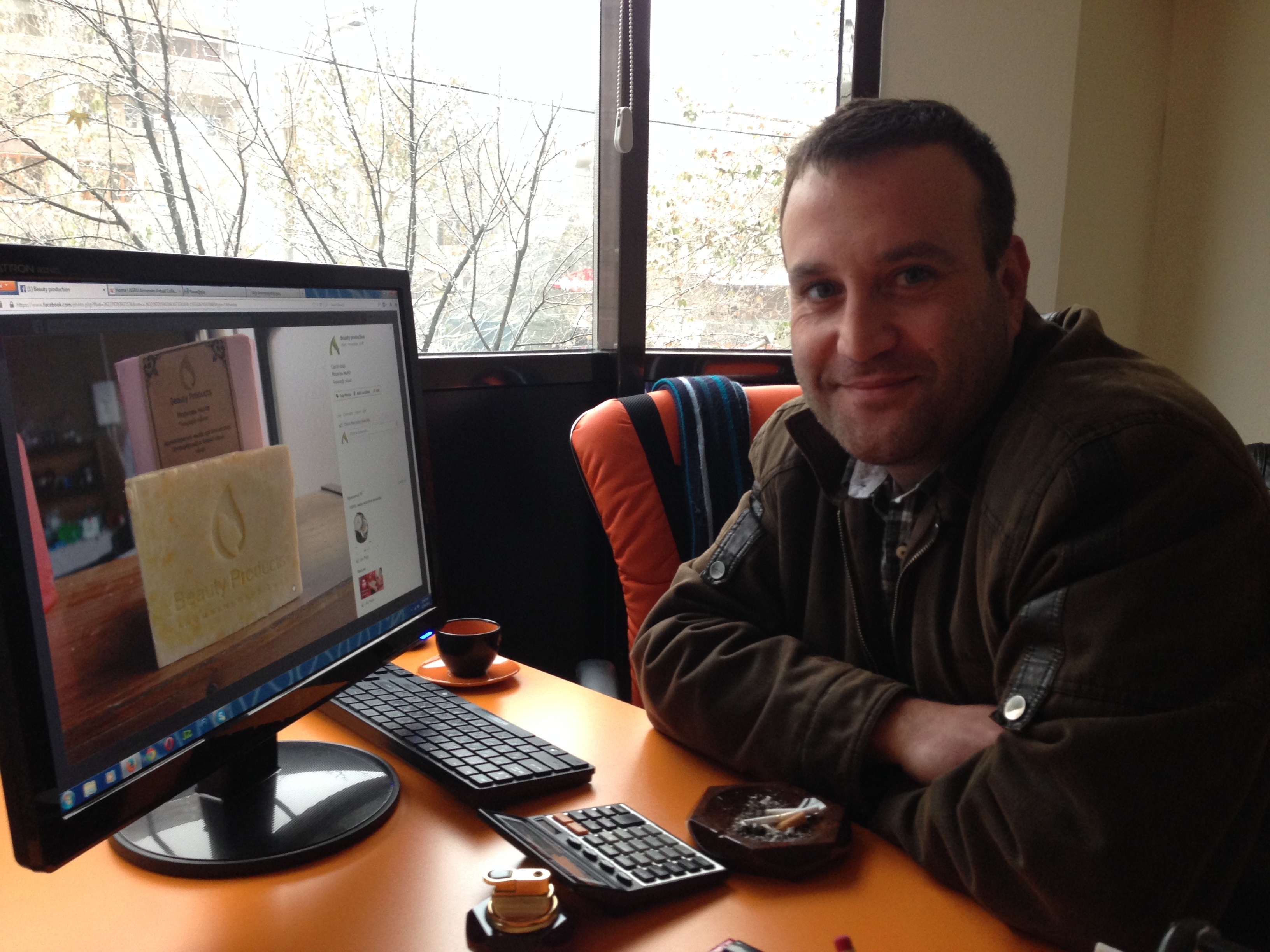
IMG_2203Shant Khayalian was born in Aleppo in 1976. He attended Armenian school there, and continued his education in England attaining a degree in Advertising and Marketing.

After returning to Syria, Shant established several of his own enterprises, each one different from the other – an automotive spare parts shop, olive oil production, an advertisement company and a car repair center. Shant struggles to recall all of his businesses. For curious, restless, and innovative Shant, even Sundays were boring, so he decided to fill this day of rest with something new and asked his friend, a chemist, to suggest something interesting for him to learn and practice. The friend suggested making soap and Shant liked the idea. He learnt how to make soap, and he started creating soap using the olive oil he produced.

Around three months later, Shant managed to produce his first soaps. He also developed his production and invented new kinds of soaps using milk, carrot juice, parsley, chamomile, honey and other items. “I would produce the soaps not to gain an income, but because I enjoyed doing it. It was like a hobby – I would make gifts for my relatives and friends”, says Shant.
շանթ

Shant could never imagine that this hobby would one day become his main source of income.

The organic soaps produced by Shant do not contain chemical colors or aromas. They are entirely natural. However, in Armenia organic products are not fully appreciated. Shant noticed that when buying soap, people in Armenia smell it and if they like how it smells they will buy it. Shant thinks that this is the wrong attitude, because a good smell does not mean good quality. Instead, it shows existence of additional chemicals.

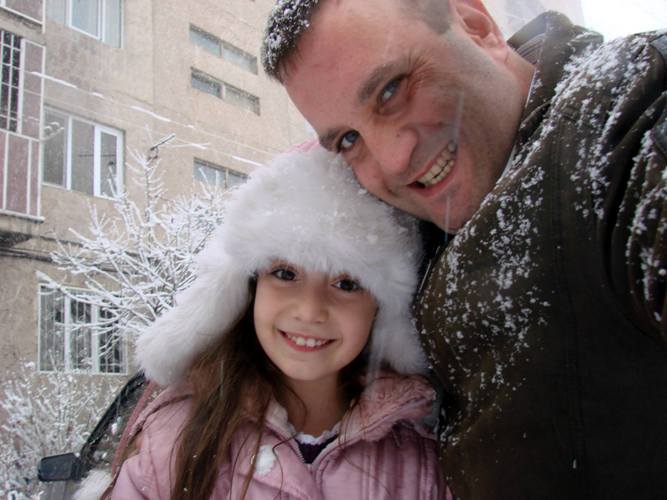
In 2012, when the situation in Syria became critical, Shant left his birthplace and moved to Armenia with his wife and daughter. Luckily, years ago Shant had bought an apartment in Yerevan, with the thought that his children might live there one day. “When we left, it had already been a month since I had closed the shops, because it was impossible to work in those conditions. Even on the last day, when I went to work I witnessed terrible scenes – burnt bodies in the streets”. “Before that, my car had been shot at twice by a sniper trying to kill me. Once there was such a huge blast near our house which injured my back due to the pressure it created. Another time, when we were sleeping, the window of our house broke because of a bullet. So we understood that it was the time to leave the country.”

While arranging his family’s move to Armenia, Shant’s friend from Jordan suggested he move there to begin a soap production business, so Shant left for Jordan alone. “My friend’s wife had a business of non-natural cosmetics and soap. I suggested to them that I produce my own soaps and we develop the business together.”

“I participated in a charitable fair in Jordan where I presented my production. After a month, I received a call from the Royal Palace informing me that the Queen liked our soaps very much and had invited us to the palace for a dinner reception”. But there was not only a dinner invitation. The soap makers also received appreciation letters, royal souvenirs and badges. They tried to convince Shant to stay and develop their soap business in Jordan, but Shant was determined to move to Armenia.

Observing the soap market of Armenia, he has met many people who produce soap and discovered that they all work in house and kitchen conditions – they bring the material from abroad, melt it, add colors and aromas, shape the soap and sell them. “I do everything myself. I even make the essential oils myself. The glycerin is also natural, and as far as I understand no one produces glycerin in Armenia – I am the first to do so.”

As Shant left Syria without financial means and there was no money to start a business, he applied to Small and Medium Business Development Center for a loan. He introduced his business plan and it got approved. The money was transferred six months later, during which Shant could hardly bear the idleness – he tries to do different jobs: teaching at the Eurasia University, giving private English lessons, even driving a taxi with his own car. “Life is hard, you have to run here and there. If you sit back you’ll get nothing. There are people who had a good life in Syria, but after losing what they had, they are not able to adjust to the idea that they will earn less in Armenia. I used to live well – I would spend several thousands of dollars within a week, but now I cannot earn that money in months. What should I do? Get disappointed? Do nothing? On the contrary, one shouldn’t get disappointed, one should act, be flexible and adjust to new situation.”

933943_270904829727398_597397948_n

Shant’s first product in Armenia – the Beauty Products – is already out. It has 8 kinds of soaps with olive oil, lemon and glycerin, apricot and blackcurrant. In Armenia, doctors advised him to also use frankincense flower, which is very beneficial for skin.

The label of the soaps note that they are handmade. Indeed, doing everything by hand is very difficult, but Shant considers it to be the uniqueness of his produce. He uses the technologies of 1688, so everything is done by hand.

Despite the huge volume of work and high quality, Shant wants to make the price of his produce available for the consumers, so that many people can use them in Armenia. A 110 gram bar of soap will cost around 600 AMD.

This is indeed wonderful. But Shant has not made it to the market yet. Currently he is looking for specialists to help him with marketing because he will not be able to manage it on his own. If his business is well established in Armenia, then Shant will seriously consider exporting his produce to external markets. Currently he has exported his products to Norway, France, Korea, China, Ukraine and other countries, where he received positive responses.

Despite the fact that the social and economic situation is not wonderful in Armenia, and starting things from scratch is very difficult, Shant still does not want to move to another country. He doesn’t want to return to Syria either, because he thinks that even if the war stops and businesses re-open, the situation and the atmosphere will not be the same as before. “I have chosen my path. I don’t need much. If I can provide for my family to a decent level, then I will not leave Armenia”, he says.

Shant thinks that the Syrian crisis has given him an opportunity to return to the homeland and live there. “History teaches us lessons, but we still don’t take them into consideration. After the massacres of 1915, we were scattered and during the 1988 events we scattered again. Then, with the war in Iraq, the Armenians came and left again. Now the Syrian Armenians are arriving here… Eventually, everyone should understand that we don’t have space in a foreign land. Indeed, we are born and raised there, we lived there and are thankful for that, but an Armenian should live on Armenian land”, says Shant Khayalian, who is already a member at Repat Armenia and considers himself a true repatriate.

Translated by Irena Grigoryan

Edited by Liz McFadden

“It is very difficult for a Diaspora Armenian to become adapted to the local life because in our imaginations Armenia is different; a more idyllic place, but the reality is starker”.

418168_10151981011647814_595704366_nHarut Lakhoyan moved to Armenia before the crisis in Syria began. In 2001, he was accepted to study at the Department of Programming at the State Architectural University of Yerevan. After finishing his studies, he decided to stay in Armenia. Like many locals, he had difficulties finding a job in this profession, so he started to work in a completely different field while adjusting to life in Armenia.

“It is very difficult for a Diaspora Armenian to become adapted to the local life because in our imaginations Armenia is different; a more idyllic place, but the reality is starker,” he shares.

Harut’s parents were not pleased with his decision to stay in Armenia. They would have preferred for him to return to Aleppo where he could find a good job and have an easier life. “For me, it would be easier to live in almost any foreign country other than Armenia. Armenia is the most difficult option, but the most preferable to me, as well”, he says.

The so-called well-off life of Syria was not for Harut because he aspired for more than Syria could offer. “In terms of culture, Syria, my birthplace, was on a lower and limited level. Having lived in Armenia for five years, the contrasts between Yerevan-Aleppo have become more obvious to me,” he mentions.

“Despite this, the human relationships are on a higher level in Aleppo, than in Yerevan. Even Arab people were more likely to reach out and be helpful”, he adds.

Despite many disappointments in Armenia, Harut has also met many good people and these interactions and friendships make him see Armenia in a positive way too.

In 2006, Harut graduated university and because he couldn’t find a job in his profession, he began to work as a real estate agent. When, in 2006, the inflow of Armenians started as a result of the Syrian crisis, he observed many controversial phenomena in Armenia. He discovered that many people took the opportunity to take advantage in the field of real estate, directly harming Syrian Armenians. In the meantime, there were people who lived abroad, but provided their apartments in Yerevan for the repatriates.

Harut has been married for over a year to a local Armenian. They rent an apartment because he finds that buying an apartment is difficult not only for him, but also for many local young people, especially those who don’t receive state assistance or an inheritance from their parents.

Despite the difficulties, currently Harut is developing a serious business with two partners. As a result of long negotiations, last year they became the exclusive representatives of the famous Swiss company Swissbacks not only in Armenia, but also in 20 countries, including Russia, Ukraine, Belarus, Iran and others.

The company offers innovative works of jewelry, like new locks for earrings, invented by the French jeweler Sebastian Barier. It is a one piece flexible lock which easily clips the earring onto the ear. Swissbacks was established in 2006 and, since then, there have been many attempts to create this type of locks. The first model didn’t succeed, because it would break after clipping several times. The current model of locks can be used around 15,000 times, but before reaching this result, 60,000 pair of earrings were broken. Today the locks have such an advanced mechanism that even Chinese companies cannot copy it. The only company that could develop it is the world-known Swiss company Rollex.

On the basis of these locks the Armenian jeweler also developed 70 models of earrings, which will be displayed and sold at the “Dalma Garden Mall” soon.

Being an innovation, the locks of Swissbacks are more expensive than the gold of the earrings. The advantage of the locks is not only how it looks, but also the usability. Firstly, it is attached to the earring, so its loss is less likely. Also, they don’t hurt the ear, one can even wear them when sleeping, without any discomfort.

Harut hopes that his business will succeed, because it is innovative and there are no competitors in the field. He and his partners do everything according to the law. Despite this, he thinks that there are problems with legislative regulations in Armeia. “If we want to become a developed country, then we should do it gradually rather than by bringing in a model and trying to apply it directly. It’s the same as putting a Ferrari engine on an old Soviet car. That car will not run”, he says.

He finds that in terms of business and entrepreneurship Armenia has a sad picture. Instead of developing the laws to support a business environment, they hinder the development.

Nonetheless, he loves Armenia and emphasizes this. “I cannot imagine my life outside of Armenia. Maybe I have a lot of patience to continue living here after many disappointments or I am not yet completely disappointed. Besides, I have overcome the fear that every repatriate experiences when moving to Armenia – the fear of being deceived. I have been deceived many times, I have lost many things and I have overcome that stage”, he laughs.

Harut is among more than 500 repatriates who are registered at the Repat Armenia Foundation. People who, by their own example, call to the Armenians living abroad to repatriate.

Translated by Irena Grigoryan

Edited by Liz McFadden

President Serzh Sargsyan conducted a meeting at the Ministry of Economy

սերժ սարգսյան,էկոնոմիկայի նախարարություն

 President Serzh Sargsyan visited today the Ministry of Economy. The President toured the premise of the Ministry, conversed with the employees of the Ministry’s departmental reform group, the Agency for Licensing and Authorization and other departments about their work and forthcoming plans, inquired about the working conditions and existing problems. Later, at the conference hall of the Ministry, the President conducted a working meeting with the leadership of the Ministry.

At the meeting, the Minister of Economy, Deputy Ministers and Head of Staff reported on the works carried out in their respective areas, spoke about the existing problems and development programs.

Minister Vahram Avanessian along with the economic trends presented also the main emphases which will appear in the future activities of the Ministry. In particular, he reported on the works carried out in the area of Armenia’s accession to the Customs Union, the process of reformation undertaken in the area of civil aviation, departmental reforms, improvement of business environment and information technologies, development of small and medium enterprises, as well as about the works conducted in the area of innovative policies.

Deputy Minister Ara Petrossian presented the area of trade and market regulation speaking, particularly, about the turnover and increase of export volumes in January-October of 2013.

Main activities conducted in 2013 in the area of quality infrastructure and technical regulation were presented by Deputy Minister Garnik Badalian. The Deputy Minister spoke also about the drafts of 4 national technical regulations, National Accreditation body, works of the national institutes of Standards and Measures.

Another Deputy Minister, Garegin Melkonian presented the results of international economic cooperation, cooperation with EU and intellectual property issues, particularly, bilateral and multilateral cooperation, assistance programs implemented by the European Union in 2012-2013 and other areas under his supervision.

Deputy Minister Tigran Harutyunian spoke about investment policy, main directions and priorities for industrial development.

Head of Staff of the Ministry of Economy Emil Tarasian familiarized the President of Armenia with the structure of the Ministry, reported on human resources and administration and steps taken towards the enhancement of the staff efficiency.
After listening to the reports, the President spoke about tasks and priorities before the Ministry of Economy. “To recap our tasks, I should say that there has opened a new and vast field for work, and I anticipate active, persistent and thorough work. I emphasize these words because such work qualities are really necessary for us, related to our membership to the Customs Union. We all should realize that it is a responsibility which we have assumed,” the President underscored.

Serzh Sargsyan stressed also the importance of the Ministry’s persistent work on other directions, including strengthening of favorable business environment, development of the areas which have great export potential and capacity to generate multiple jobs, support of small and medium enterprises.

Serzh Sargsyan spoke about the necessity to develop in the Ministry of Economy of analytical capacities and creation of a relevant center whose activities should be of a more applicable nature. The President stressed the importance of a public nature of the works conducted by the future center work and availability of its analysis for the public at large. The President of Armenia noted that as the initial step, he anticipates that already in February-March 2014, when the National Statistical Service will have issued final social and economic results for year 2013, the Government will present a comprehensive and meticulous analysis. Presented will be tendencies registered throughout the year; it will become clear whether goals set for year 2013 have been met and if not, what are the subjective and objective reasons which resulted in deflection, how the external factors have influenced the final results, what base has been set for future development, etc. According to the President, such analyses are also necessary so that adopted decisions and approaches become comprehensible for all.

At the Ministry of Economy, the President responded also to the questions raised by the participants of the meeting. In particular, presenting his view on the pension reform, which is being broadly debated nowadays, Serzh Sargsyan said, “You see, I have been working on that issue personally for some time and in the past have conducted a number of meetings, also with the participation of the political forces represented in the National Assembly, to be more precise, with at least four groups, with the participation of party leaders. The objective was to understand all problems which might appear – from public discontent to economic and financial problems, and with this conviction we have drafted a law, sent it to the National Assembly and, thanks God, we already have a law which has been voted on, and my attitude towards that law is positive. I hear different opinions every day and these opinions, by the may, could be easily split as political and professional; in political as well as professional opinions present are both superficial and rather thoughtful approaches. I would like every one who believes this is a useful reform to be more active. After all, what do we want? We want to put an end to a bad situation existing today, related to the social security of the elderly. To be honest, I occasionally feel embarrassed, ashamed. I even believe, the time has come to apologize to these people. We have to solve this problem so that future state officials are not compelled to apologize. I want every official who could have solved this problem years ago, hear me now, we wouldn’t be forced to apologize now. Tall tales that a system which was created through the solidarity of generations and decades is now being destroyed. Who said that is being destroyed? The system will remain intact. What we say is “we make this addition to it.” I am very positive about it, and all those who believe it’s a good thing, should be more active,” the President said.

At the conclusion of the meeting, a group of the Ministry employees were awarded for their diligent and efficient work. Artak Baghdassarian, Head of the Economic Development Policy Department, Artashes Hovhannissian, Head of the First Division, Nina Ter-Grigorian, Leading Specialist at the Department of International Economic Cooperation received Presidential Letters of Commendation.


 Անկախ

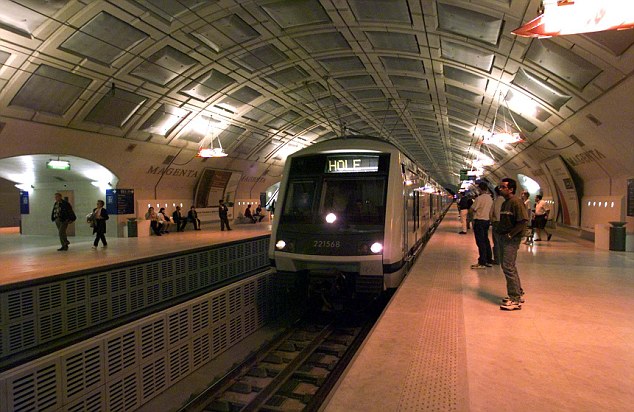
‘Do not stare at beautiful women’: Paris releases 12 commandments for how to behave on its Metro system

Փարիզ,մետրո


Most people know the handful of rules that govern using the London Underground – such as letting passengers off the train first and not prizing the doors open when the train is trying to set off.

These orders are barked out by station staff through a loudspeaker system.

Parisians also have rules for their underground system. However, these have been distributed with a little more sophistication – via an online ‘politeness’ manual released by the Paris transport authority to ensure civility prevails at all times.
Called the ‘Manuel du savoir-vivre à l’usage du voyageur moderne’ – or ‘politeness manual for the modern traveller’ – it lists 12 ‘commandments’ for Parisians to abide by and comes complete with quaint sketches to illustrate the points.

The rules insist that Parisians must offer help to tourists ‘in Bermuda shirts with a metro map in one hand and the other hand in their hair’, hold the door open for passengers behind them – and greet the driver.

Travellers should also understand, the guide states, that ‘the huge crossed out cigarette on the platform is not a work of art but a ban on smoking’.


Staring at beautiful women-metro

The key no-nos are not playing music too loudly through headphones, resisting the temptation to stare for a long time at beautiful women and holding back from starting a fight with someone who’s just stepped on your toes.

Loud phone conversations should also be avoided, old lady’s bags should be carried up stairs, armpits should be covered by arms and not exposed to the carriage – and handkerchiefs not just used to wave someone off with, but to sneeze into.

Last but not least – the Metro is not to be mistaken for a lavatory.

վարորդին:

Երթևեկողները պետք է նաև հասկանան, որ պատին փակցված ծխախոտի վրա խաչ քաշված պատկերը արվեստի գործ չէ, այլ ծխելու արգելման նշան:

Հիմնական չթույլատրված գործողություններից են նաև ականջակալներով բարձր երաժշտություն լսելը, երկար ժամանակ գեղեցիկ կնոջը նայելը և ձեր ոտքը տրորած մարդու հետ չկռվելը:

Պետք է խուսափել նաև հեռախոսով բարձր խոսելուց, վերև բարձրացնել ծեր կնոջ պայուսակները, թևատակերը պետք է ծածկել թևերով, ոչ թե ցուցադրել ամբողջ վագոնի մարդկանց, իսկ թաշկինակները պետք է օգտագործել դրանց մեջ փռշտալու, ոչ թե ինչ-որ մեկին ճանապարհելիս թափահարելու համար:

Եվ վերջին ցուցումը զգուշացնում է մետրոն չշփոթել զուգարանի հետ:


U.S. Embassy and Charentsavan City Library Partner to Open New American Corner

event1_2


The U.S. Embassy in Armenia, in partnership with the Charentsavan City Library, officially opened the Charentsavan American Corner. Attending the event were U.S. Ambassador to Armenia John A. Heffern, Deputy Minister of Culture Arev Samuelyan, Governor of Kotayk Marz Kovalenko Shahgaldyan, and Mayor of Charentsavan Hakob Shahgaldyan. This is the fifth American Corner in Armenia; the first one opened in 2005.


In his opening remarks, U.S. Ambassador John Heffern noted the American Corner will make diverse resources accessible to the residents of Charentsavan and Kotayk Marz and facilitate the dialogue and mutual understanding between Armenia and the United States.  It will also foster the use of the English language.


American Corners are small American-style libraries located throughout the world that help increase mutual understanding between the United States and the host country.  A network of over 470 American Corners is operating globally through partnerships between the U.S. Department of State and local host organizations.  American Corners provide information about America in a variety of formats, including reference books, works of fiction, journals, and videos.  These resources focus on such topics as studying in the United States, American society, U.S. history, conducting business in the United States, and English as a Second Language.  The Corners also provide computers with Internet access, and offer a variety of public programs including speakers and workshops.  The American Corners are open to the general public and access is free of charge.


Currently American Corners are in operation in Yerevan, Gyumri, Vanadzor, and Kapan. Last year, the corners had over 40,000 visitors.


“Suffering” in Bulgaria and Armenia Highest Worldwide

— For the third year in a row, Bulgaria in 2012 once again had the negative distinction of leading the global suffering list, with 39% of Bulgarians rating their lives poorly enough to be considered “suffering.” However, this time, Bulgaria is not alone at the top. Thirty-seven percent of Armenians were suffering, and Cambodians, Haitians, Hungarians, Malagasy, Macedonians, and Iranians followed closely behind.

Gallup classifies respondents as “thriving,” “struggling,” or “suffering” according to how they rate their current and future lives on a ladder scale with steps numbered from zero to 10 based on the Cantril Self-Anchoring Striving Scale. Gallup considers people to be suffering if they rate their current lives a 4 or lower and their lives in five years a 4 or lower. The respondents do not label themselves as suffering.

In 20 out of 143 countries and areas surveyed in 2012, at least a quarter of the adult population rated their lives poorly enough to be considered suffering.

Suffering was 2% or less in 17 countries and areas — most of them wealthier and more developed countries. Some developing countries also made this list: Thailand, Venezuela, Nigeria, the Somaliland region, and Libya.

Results are based on telephone and face-to-face interviews with approximately 1,000 adults, aged 15 and older, per country.

The winners of the EU Centre online quiz announced

ԵՄ-Հայաստան

The Head of the EU Delegation, Ambassador Traian Hristea drew the winners of  an European Union themed online quiz of the EU Centre on 3 December.

The grand prize, a new laptop went to Anush Torosyan from Vanadzor. The second prize, a netbook, went to a translator Ninel Miqayelyan from Yerevan and the third prize, a Kindle eBook, went to the student Verjine Minasyan.

Ambassador Traian Hristea expressed hope that everyone who took the quiz learned something new about the European Union and its activities in Armenia. “The next quiz will be online in April next year,” he informed and encouraged meanwhile everyone to follow the website of the EU Centre and stay updated with useful information and interesting facts about EU-Armenia cooperation.

The online quiz was taken 1,570 times altogether and 316 people got all the answers right. The quiz in Armenian was taken 1,205 times and 206 people answered all questions correctly. The quiz in English was taken 365 times with 110 people getting all answers right. All main prizes will be drawn from those entries where all 16 questions were answered correctly.

The quiz consisted of 16 multiple choice questions with the links for further information embedded in the website. The quiz was open to Armenian residents only and was available online from 16 September to 1 December 2013.

In addition to the main prizes that will be handed out in January 2014, the EU Centre will give out EU Centre goody bags and organise a day full of activities at the EU Centre in Yerevan inviting everyone who participated in the quiz and got all the answers right. The event will focus on three important issues: EU and Armenia relations, EU development cooperation in Armenia and introduce EU funded projects.

The EU Centre is the main feature of the EU funded project “Support to the EU communication on reforms in Armenia”. Its goal is to raise awareness on EU development cooperation in Armenia and support education on the European Union. The Centre’s website is a gateway to EU cooperation with Armenia. The duration of the project is two years and it is implemented by GOPA-Cartermill S.A in consortium with Altair Asesores and Fainberg LLC.

Prime Minister Pays Working Visit To Shirak Marz

Վարչապետ, Գյումրի

Prime Minister Tigran Sargsyan traveled today to Shirak Marz of Armenia for a working visit.

His first stop was at Pemzashen community where the Prime Minister attended the opening of a reconstructed kindergarten building. On this occasion, Tigran Sargsyan welcomed and congratulated the residents of the community: “A campaign pledge made by the President of the Republic of Armenia has been fulfilled. Much has to be done yet in your community, since the need for kindergarten is three times the one available today. This means that the program must be continued. Allow me to once again congratulate you all on the first step.”

The Prime Minister went around the premises, getting familiar with the facilities and amenities, talking to the kids and getting photographed with them. The total cost of the project (note that the kindergarten dates back to 1960) is 76,171,019 drams. Implemented by Shinkarkas LLC, construction work started in November, 2012 and was completed in August, 2013. The reopening ceremony was attended by Head of the World Bank Yerevan Office Jean – Michel Happi.

Leaving Pemzashen for the regional center of Gyumri, the Prime Minister toured the Gyumri Technopark to inspect the ongoing activities. It was noted that the bulk of construction work was complete so that the Park would be commissioned by this yearend.

“Today, Gyumri Technopark fully provided programs. Several international organizations have already submitted requests for activity in the industrial park so that the Park project will be fully implemented in 2014. Our promise to build the Gyumri technopark and the programs to achieve progress in the field of IT are coming true. Dozens of companies are looking forward to getting involved the industrial park. Besides youth can benefit from services that is, it will be the best and most powerful information center in Armenia,” the Premier told the reporters during a briefing.

Then Tigran Sargsyan visited the newly opened Russian Book House in Gyumri, which serves as a center for sale of books and as a cultural center, which boasts a vast amount of literature on Armenian-Russian cultural relations and history.

The Head of Government asked about the center’s activities, talked to the students and made an record in the Guests’ Book. During the working visit to the second capital of Armenia, Prime Minister Tigran Sargsyan also visited the NAS Institute of Geophysics and Engineering Seismology after Ara Nazaryan, the unfinished building of which is reconstructed in the framework of the reconstruction program of Gyumri.

According to the project, the building has experimental and laboratory offices, an auditorium and a basement adapted for the installation and operation of equipment. Construction work is scheduled for completion in 2014.

The Prime Minister also visited the former buildings of a surgical hospital after G. Gulbenkian and the Gyumri municipality, as well as the Gyumri territorial department of the National Statistics Service of Armenia.

In this regard, the Prime Minister told reporters that the purpose of visit and inspection of the data structures is the study of these areas for the rational allocation of government departments and ensure the availability of public services.

The Prime Minister’s visit ended up with a short halt at Samaritain rehabilitation center, after which he attended an exhibition-tasting of dishes at Hoktember cinema in Gyumri.

Republic of Armenia reaffirming the Government’s commitment to gender equality

PC-3

On the International Day for the Elimination of Violence Against Women, representatives of the UN, US, EU, OSCE and Council of Europe Office in Yerevan welcome the 22 November statement of the Women’s Council chaired by the Prime Minister of the Republic of Armenia reaffirming the Government’s commitment to gender equality.

We highly commend the determination of the Women’s Council to adhere to Armenia’s international commitments on gender equality, including the UN Convention on the Elimination of All Types of Discrimination against Women (CEDAW), to which Armenia is signatory since 1993.  We also encourage Armenia’s signature of the Council of Europe Convention on Preventing and Combating Violence against Women and Domestic Violence.

Furthermore we also support the Council’s call to ensure the effective implementation of the law “On Provision of Equal Rights and Equal Opportunities for Women and Men.”

We also support the call to the law-enforcement bodies to undertake all the necessary measures to prevent and prosecute intimidation of individuals and organizations working on gender equality and women’s rights.


We acknowledge the Armenian Government’s efforts towards harmonization of domestic legislation with international standards, as well as implementation of provisions and commitments of international legal documents to which Armenia is party.

Gender equality is a cornerstone of democratic governance and sustainable development.  We reiterate our willingness and determination to support the Government of Armenia in the further implementation of legislation on non-discrimination and equal rights and opportunities of men and women.


Bako Sahakyan received Laurent Corbaz

Բակո Սահակյան,Կարմիր խաչ,Լորան Կորբային On 18 November Artsakh Republic President Bako Sahakyan received Laurent Corbaz, the ICRC’s head of operations for Eastern Europe and Central Asia and head of the ICRC mission in Stepanakert Nicolas Fleury.
The implementation of a number of humanitarian projects and the activity of the ICRC in Artsakh were touched upon during the meeting.
Both sides underlined high level of cooperation between the ICRC and corresponding structures of the Artsakh Republic as well as readiness to maintain the recorded positive dynamics of relations.
Minister of foreign affairs Karen Mirzoyan and other officials partook in the meeting.

President Bako Sahakyan met in Martakert region’s Vank village with participants of the “Artsakh Youth Forum-2013”

Բակո Սահակյան, "Արցախի երիտֆորում-2013" On 17 November President Bako Sahakyan met in Martakert region’s Vank village with participants of the “Artsakh Youth Forum-2013”.
A number of issues related to foreign and domestic policy of Artsakh as well as programs being implemented for the youth were raised during the meeting.
According to the Head of the State youth problems are always at the spotlight of the authorities, and the state will continue to do everything possible for solving them efficiently.
Minister of culture and youth affairs Narine Aghabalyan, minister of education and science Slava Asryan and other officials partook in the meeting
Բակո Սահակյան, "Արցախի երիտֆորում-2013"


Artsakh Republic President Bako Sahakyan met famous Spanish opera singer Plácido Domingo Jr

Արցախ, Բակո Սահակյանը, Պլասիդո Դոմինգո-կրտսեր On 17 November Artsakh Republic President Bako Sahakyan met famous Spanish opera singer Plácido Domingo Jr.
President Sahakyan expressed gratitude to the singer for concertizing in Artsakh noting that it contributed greatly to developing culture, deepening intercultural dialogue, adding that it possessed a message of peace. Issues related to realizing a number of cultural programs in our country were touched upon too.
NKR culture and youth affairs minister Narine Aghabalyan, other officials partook in the meeting.

President Serzh Sargsyan visited military units dislocated in the central and southern parts of Artsakh

4622


In the framework of his working visit to Artsakh, President Serzh Sargsyan on November 14 together with the President of NKR Bako Sahanian, Heads of the Defense Ministries of the two Armenian Republics and the highest commanding staff visited a military unit of the Defense Army dislocated in the central part of Artsakh. After greeting the troops on the drill ground, the President conversed with the soldiers and officers. Later, he observed an exhibition exercise of a reconnaissance detachment.

The Presidents of RA and NKR paid tribute and laid a wreath at the memorial of fallen heroes erected on the territory of the military dislocation.

After the official opening of the army structures built here, Serzh Sargsyan and Bako Sahakian observed the preparatory exercises of the staff getting ready for combat duty and commended those who demonstrated the best results. The Presidents of the two Armenian states visited also a military unit dislocated in the southern part of Artsakh, where recently opened was a new service building furnished with every convenience. Here, the Presidents observed also exercises of the troops on overcoming the zone of artificial obstacles.

The three-day visit of the RA President Serzh Sargsyan to the NKR DA military units and frontline, conducted in the framework of cooperation of the two Armenian states, has concluded.

This morning in Stepanakert, Presidents Serzh Sargsyan and Bako Sahakian held a private meeting which was followed by the consultations in the extended format, with the participation of the delegation of the Republic of Armenia, the Prime Minister of NKR and members of the government.

Shop is evacuated and fire brigade are called after brand new iPad Air EXPLODES and fills mobile phone store with smoke

A brand new iPad Air exploded in flames in an Australian mobile phone store.

The incident occurred in a Vodafone store in Canberra and the shop had to be evacuated.

There have been several reports of iPhones exploding and injuring people, but this is the first known incident involving an iPad.
A Vodafone spokesperson said a ‘burst of flames’ appeared from the charging port of the brand new iPad Retina demonstration model, Sydney’s Daily Telegraph reported.

As the store filled with smoke, firemen rushed to the store and put out the fire.

Although no staff members or customers were injured during the incident, the new model iPad Air, released by Apple globally on November 1, was completely destroyed, the appearance of its frame suggesting it had suffered from extreme heat.

It is understood a representative from Apple visited the store to collect the iPad for testing and try to establish what caused the explosion.

No comment has been available from Apple, which released the dramatically thin new model with the claim that it created an entirely new mobile computing experience.

US, Japanese, Chinese and Korean companies are believed to be involved in the manufacture of iPads and iPhones.

Meeting with chairman of the RA National Statistical Service Stephan Mnatsakanyan

061113StepanMnacakanyan

On 6 November Artsakh Republic President Bako Sahakyan received chairman of the National Statistical Service of the Republic of Armenia Stephan Mnatsakanyan.

A number of issues related to the cooperation between the two Armenian states in this sphere were discussed during the meeting.
Both sides highlighted the need of consistently strengthening mutual ties and the presence of all the necessary conditions for that.
Minister of finance and economics Spartak Tevosyan and chairman of the NKR National Statistical Service Karen Nersisyan partook in the meeting.

A book of condolences has been opened at the Embassy of Poland in Armenia in remembrance of Tadeusz Mazowiecki

A book of condolences in remembrance of Poland’s first non-communist prime-minister Tadeusz Mazowiecki has been opened at the Embassy of Poland in Armenia. Prominent Polish politician has died at the age of 86 on 18th October 2013.
“A man who had the courage to act wisely during Poland’s crucial moments has died. We say thank you,” said Polish President Bronisław Komorowski, who appointed Tadeusz Mazowiecki his advisor in October 2010. “Mazowiecki was one of the founding fathers of our freedom and independence,” added Foreign Minister Radosław Sikorski speaking to the Polish media.
The book of condolence will be open from 11:00 am to 16:00 pm at the Embassy of Poland in Armenia, Hanrapetutyan 44a, Yerevan.

U.S. Embassy remembers journalist Daniel Pearl in Tumo film showcase

On October 30, The U.S. Embassy hosted a documentary showing of “PAGE ONE: INSIDE THE NEW YORK TIMES”, in honor of slain American journalist Daniel Pearl.  Pearl was a Wall Street Journal reporter who was killed by terrorists in 2002.  Following his murder, Danny’s family and friends established the Daniel Pearl Foundation to carry on his legacy, using music and words to address the root causes of the hatred that took his life.  U.S. Embassies around the world celebrate his life annually, through musical and other cultural events.

PAGE ONE: INSIDE THE NEW YORK TIMES shows The New York Times newsroom and the inner workings of the Times’ Media Desk. With the Internet surpassing print as the main news source and newspapers all around the world facing layoffs and cutbacks, PAGE ONE chronicles the transformation of the media industry at its time of greatest turmoil.  It gives us an up-close look at all that produces the “daily miracle” of a great news organization. What emerges is a nuanced portrait of journalists continuing to produce extraordinary work under increasingly difficult circumstances. At the heart of the film is the burning question on the minds of everyone who cares about a rigorous American press, Times lover or not: what will happen if the fast-moving future of media leaves behind the fact-based, original reporting that helps to define our society?


PAGE ONE: INSIDE THE NEW YORK TIMES is part of the American Film Showcase showing at Tumo until November 15.


RA Prosecutor General’s orders on staff changes

դատախազություն

By RA Prosecutor General’s orders a number of staff changes took place in RA Prosecution system.

Thus,

The Head of Property and Economic Crimes Department of RA Prosecutor General’s Office, First Class Counselor of Justice Grigor Navasardyan was dismissed from post according to his own request.

The Prosecutor of Lori region, First Class Counselor of Justice Hakob Gharakhanyan was dismissed from post pursuant to his own request.
First Class Counselor of Justice Grigor Elizbaryan was appointed Prosecutor of Lori region being dismissed from the post of military prosecutor of Lori garrison.

First Class Counselor of Justice Vahagn Muradyan was appointed Prosecutor of Armavir region being dismissed from the post of senior prosecutor of RA Prosecutor General’s Office.

First Class Counselor of Justice Armen Chichoyan was appointed Prosecutor of Shengavit administrative district being dismissed from the post of Deputy Prosecutor of Malatia-Sebastia administrative district.

Nune Khachatryan was appointed Adviser of RA Prosecutor General.

By RA Prosecutor General’s assignment, in order to replenish the prosecutor candidates list, a special test for prosecutor applicants was held and 19 participants did the test successfully.

Young People for United Europe

Masnakicner31 young people from Armenia, Bulgaria, Croatia, Georgia, Romania and Poland from 22 to 28 of October took part in a Youth Exchange “Intercultural Bridges for United Europe” in Tsaghkadzor.

The project is organized by the efforts of the local youth NGO “Youth for Exchange and Cooperation” and is funded by the European Commission in the framework of the European Union’s “Youth in Action” Programme. The aim of this Programme is to inspire a sense of active European citizenship, solidarity and tolerance among young Europeans and to involve them in shaping the Union’s future.

The Youth Exchange will offer the young people the opportunity to present their countries and learn about the cultures and values of the other countries. This will create space for intercultural dialogue, will help the participants to get new skills and tools for breaking stereotypes about other cultures and countries and create an atmosphere of common understanding.

During the project the participants were involved in different creativity workshops, and tried to express themselves through art and showed their understanding of «United Europe» through different expressions of art.

As mention the participants, the activities and different discussions carried out during the Project helped them to develop the sense of confidence, as well as encouraged them to be active citizens and to take active role in the life of their communities.

The participants also had a chance to visit local youth organization and get introduced to their work and activities.

This project has been funded with support from the European Union. This publication/communication reflects the views only of the author, and the European Commission cannot be held responsible for any use which may be made of information contained therein.


Baby Prince George is christened, 7 godparents named

By Laura Smith-Spark and Max Foster, CNN
Watch this video

Prince George’s big day out

London (CNN) — Prince George made his first public appearance in three months Wednesday, as he arrived with his parents, Prince William and Catherine, Duchess of Cambridge, for his christening at St. James’s Palace.

The baby prince smiled as he was shown off to family members including his great-grandparents, Queen Elizabeth II and Prince Philip, before the royals entered the Chapel Royal.

George was dressed in an elaborate lace and satin christening gown that’s a replica of one made in 1841 for the christening of Queen Victoria’s eldest daughter.

Being baptized into the church is more significant for George than for most people, since he is in line to become king, which would also make him the supreme governor of the Church of England.


Back row, from left: the Duke of Edinburgh, Prince Charles, the Duchess of Cornwall, Prince Harry, Pippa Middleton, James Middleton, Carole Middleton and Michael Middleton. Front row, from left: Queen Elizabeth II, Duchess of Cambridge with Prince George and Prince William.Back row, from left: the Duke of Edinburgh, Prince Charles, the Duchess of Cornwall, Prince Harry, Pippa Middleton, James Middleton, Carole Middleton and Michael Middleton. Front row, from left: Queen Elizabeth II, Duchess of Cambridge with Prince George and Prince William.
Prepping for Prince George’s christening

Royal couple’s 1st appearance since baby

Royal family portrait

The occasion was kept uncharacteristically small, in a shift away from the larger ceremonies that his father and grandfather enjoyed at Buckingham Palace.

His grandfather Prince Charles and uncle, Prince Harry, were among the select few invited to the ceremony, along with Catherine’s parents, Carole and Michael Middleton, and her siblings, James and Pippa.

New photos of Prince George released

The Archbishop of Canterbury, the Most Rev. Justin Welby, greeted the guests as they arrived at the chapel.

The royal baby, who was born in July, has seven godparents, among them Prince William’s cousin Zara Tindall, daughter of Princess Anne, and close friends of the couple.

They include Oliver Baker, who got to know William and Catherine at St. Andrew’s University, Emilia Jardine-Paterson, who went to school with Catherine, and William van Cutsem, a childhood friend of William.

The other godparents are Jamie Lowther-Pinkerton, a former private secretary to the Duke and Duchess of Cambridge and Prince Harry; Julia Samuel, who was a good friend of William’s mother, Diana, Princess of Wales; and Earl Grosvenor, son of the Duke of Westminster.

The replica christening gown was brought into use in 2008 to help preserve the 170-year-old original, used until then for every royal christening, including those of Prince William and his father, Charles.

The venue for the christening also has a special significance for Prince William. The body of his mother, Diana, rested in the Chapel Royal for five days before her funeral in 1997.

After the service, Prince Charles and Camilla, Duchess of Cornwall, held a private tea at Clarence House. The guests were served slices of christening cake, which is a tier taken from William and Catherine’s 2011 wedding cake.

Prince William interview: Future king talks fatherhood, baby George

‘What a gift’

In a short video posted on his website, Welby spoke of the significance of the baby prince’s baptism, which will see him “join the family of the church,” numbering almost 2 billion people around the world.

Welby said any christening was a moment for the parents to celebrate the birth of their child, royal or not.

“All babies are unbelievably special, not only royal babies,” he said.

But Prince George’s christening does carry an extra significance, he said.

“As a nation we are celebrating the birth of someone who in due course will be the head of state. That’s extraordinary. It gives you this sense of forward looking, of the forwardness of history as well as the backwardness of history, and what a gift to have this new life and to look forward.”

As with any other infant’s baptism, Welby marked the Prince with the sign of the cross on his forehead and splash water on his head.

The silver font used for George’s baptism has been used for every royal christening since 1841 and will be filled with water from the River Jordan.

The 3-month-old boy has already made history. He’s the first royal baby to be honored with a christening coin from the Royal Mint.

The design of the coins, produced by the mint in a range of sizes and materials, has been approved by his parents and the Queen, the Royal Mint said.

The public can buy the keepsakes, which start at 13 pounds ($21) for the simplest type but rise to a whopping 50,000 pounds ($80,000) for a version containing a kilogram of gold.

A historic look at royal baby clothes

Service details

Prince George’s christening ceremony included two hymns, two lessons and two anthems, according to Kensington Palace.

Prince Harry read him a lesson form John 15:1-5, and his aunt Pippa Middleton read Luke 18:15-17.

The music started with a processional, Bach’s “Fantasia in G,” played on organ.

The Choir of Her Majesty’s Chapel Royal, made up of six men and 10 boys, sang the anthem “Blessed Jesu! Here we Stand,” which was written for the baptism of baby George’s father, Prince William, in 1982.

The second anthem was “The Lord Bless You and Keep You” by John Rutter.

The newest royal also heard the hymns “Breathe on Me, Breathe on God” and “Be Thou My Vision” before the organ played the recessional, which was C.W. Widor’s Toccata from Symphony No. 5.