Iran Says New US Sanctions Violate Geneva Deal

Իրան,ԱՄՆ,պատժամիջոցներ, Ժնևի համաձայնագիր

A senior Iranian nuclear negotiator says new sanctions by the United States on Iranian companies and individuals violate the spirit of a deal made between Tehran and the West over its nuclear program.

Abbas Araghchi told official news agency IRNA Thursday that “this is a game of double standards — it is not in accord with the talks we have had and it is against the spirit of the Geneva agreement.”

He strongly criticized the sanctions, calling them “unconstructive and against good intentions.”


Աբաս Արգաչի

The United States has targeted more than a dozen companies and people for allegedly evading sanctions against Iran.

Last month Tehran agreed to cap its uranium enrichment in exchange for an easing of Western sanctions.


At least 8 dead, dozens hurt, in quake in southern Iran

An earthquake shook southern Iran Thursday evening near a nuclear power plant, killing at least eight people and injuring 59 more, the semi-official Fars News Agency reported.

Twelve of the injured were in critical condition, Fars said, citing Hassan Qadami, the head of Iran’s Crisis-Management Headquarters.

A reporter for the state-run Islamic Republic News Agency in Borazjan said residential buildings were damaged and electricity was disrupted to several areas, including sections of Borazjan.

The city is in Bushehr province, which is the site of a nuclear power plant that went online in 2011. There was no immediate report of how the plant fared in Thursday’s temblor.

Iranian President Hassan Rouhani said he was “deeply saddened” to hear of the casualties and expressed condolences to the victims’ families.


Turkish security detains man suspected of wearing explosives outside PM’s offices

Թայիփ ԷրդողանTurkish security guards captured a person suspected of wearing explosives after the individual attempted to enter Turkish Prime Minister Recep Tayyip Erdogan’s offices in Ankara, the Anadolu News Agency reported.

The suspect was detained while the bomb squad investigated the possible explosive device.

Intense security measures were taken around the building in the wake of the incident, Anadolu reported


Iran’s Culture Minister Defends Facebook

Iran’s culture minister has again spoken up in defense of social media, saying Facebook shouldn’t be banned and that it’s not a “criminal application.”

Ali Jannati told the semi-official Fars news agency on Friday that he uses and posts on Facebook and that an overseer body should lift the existing ban. In the past, Jannati has advocated that all social media networks be accessible to Iranians.

Iran banned the networks over alleged “abuse” after opposition members widely used them during the 2009 unrest following re-election of then-President Mahmoud Ahmadinejad.

Jannati’s remarks underscore what has become a growing rift between the moderate-leaning government of new President Hassan Rouhani and Iran’s hard-liners.

Rouhani doesn’t have the authority to make decisions on freeing up social media, which is considered an internal security matter.


Iran’s deputy trade minister assassinated in Tehran

Iran’s deputy trade minister was assassinated in his car in Tehran Sunday night, the government’s news agency said.

Safdar Rahmatabadi was shot in the chest and head by an unidentified assailant in Sabalan Square, the Islamic Republic News Agency reported.

The IRNA quoted a police officer at the scene as saying two shell casings were found inside the car, so “the terrorist had most probably been talking with Mr. Rahmatabadi.”

Rahmatabadi was deputy minister of industries, mines and trade.

Turkey Seizes 1,200 Rocket Heads Near Syria

Թուրքիա,Սիրիա, Թայիփ Էրդողան


Turkish authorities have seized 1,200 rocket heads after searching a truck in a region close to the Syrian border.

The weapons were discovered in Adana, 200 kilometers (125 miles) from the Turkish-Syrian border, by officials looking to cut down on drug smuggling, provincial Gov. Huseyin Avni Cos told reporters Thursday.

Cos said an investigation into the weapons has been launched. The weapons are believed to be going to neighboring Syria, which has a three-year-old civil war that the U.N. says has left at least 100,000 people dead and forced millions of Syrians from their homes.

Turkey, which shares a 910-kilometer (566-mile) border with Syria, is a major hub for rebels fighting against Syrian President Bashar Assad’s regime. Turkey has also been accused of harboring rebels associated with al-Qaida who operate across the border in Syria, including the Nusra Front.

At a news conference in Stockholm on Thursday, Turkish Prime Minister Recep Tayyip Erdogan insisted his country had no tolerance for extremists.

“Organizations like Nusra, al-Qaida cannot find shelter in Turkey,” Erdogan said. “We would fight


Turkey to Separate Males and Females in Dorms

Turkey’s prime minister says that male and female students will be segregated in university dorms and student homes.

Recep Tayyip Erdogan’s on Tuesday rejected accusations that his government was interfering in citizens’ lifestyles but said his conservative party has a duty toward parents.

The issue is a sensitive one in Turkey which has secular laws but is governed by Erdogan’s Islamic-leaning party. Secular-oriented Turks accuse Erdogan of forcing his conservative religious outlook on their lives.

In June, Turkey was rocked by protests by mostly-secular Turks angered by what they said was Erdogan’s increasingly authoritarian ways and attempts to impose his conservative views on society.

Dozens in Hospital Over Pollution in South Iran

Իրան, օդի աղտոտվածություն


An Iranian newspaper says more than 50 people were hospitalized in a southern city where air pollution levels spiked this week.

Tuesday’s report by the pro-reform Arman daily quotes the head of provincial health department, Mohammad Hossein Sarmast, as saying that at least 5,000 people rushed to the city hospitals in Ahvaz seeking medical assistance after pollution levels increased following lightning strikes and heavy rains on Sunday.

The paper also cites another health official, Mohammad Alavi, as saying acid rain may have caused symptoms such as shortness of breath among those admitted to hospitals.

Ahvaz is located in the oil-rich province of Khuzestan, which is dotted with oil wells and factories, and is among Iran’s most polluted cities.


Georgia’s PM Nominates Successor

 Բիձինա Իվանիշվիլի


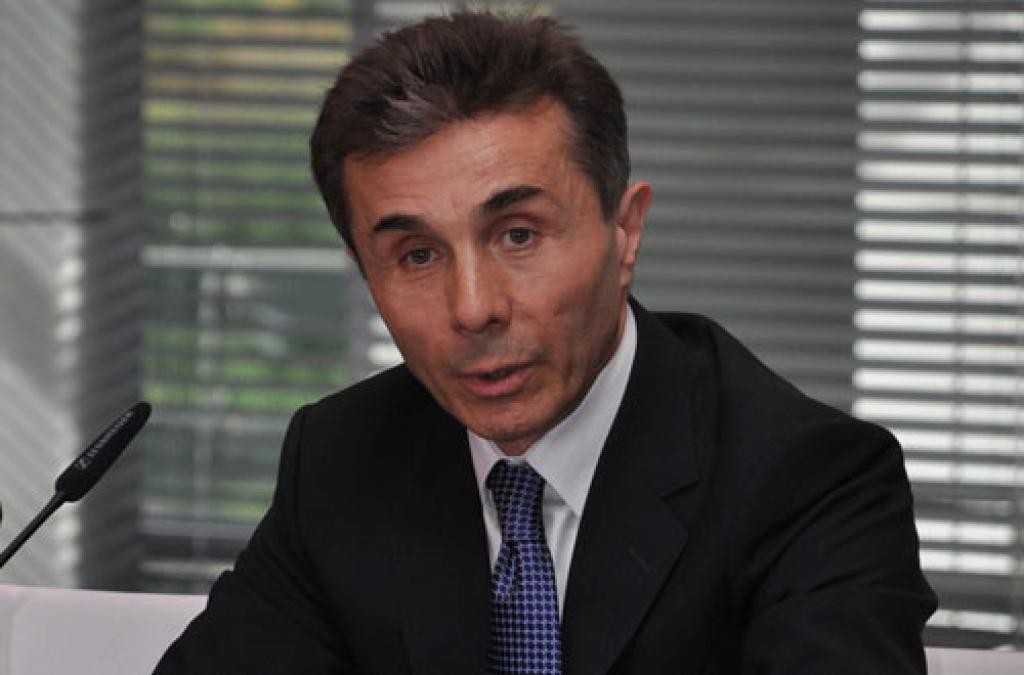
Georgian Prime Minister Bidzina Ivanishvili has nominated the country’s interior minister as his successor.

The nomination on Saturday of Irakli Gabriashvili comes a week after elections that chose Ivanishvili’s ally Giorgi Margvelashvili as the country’s new president.

Billionaire Ivanishvili, whose Georgian Dream coalition routed President Mikhail Saakashvili’s party in parliamentary elections a year ago, had previously announced his intention to step down as premier after the presidential vote. He is expected to remain highly influential even without a formal post.

Ivanishvili is expected to step down directly after the Nov. 17 presidential inauguration, after which parliament is to vote for a new prime minister. The 31-year-old Gabriashvili has headed the ministry that controls the country’s police since October 2012.


Iran Launches Its First Submarine for Tourists

Իրան,զբոսաշրջիկներ,սուզանավ

Iran has launched its first submarine for tourists in the Persian Gulf waters, an all-Iranian-made undersea vehicle.

State TV says the sub has been dubbed Morvarid, or Pearl in Farsi, and has the capacity to carry four people per voyage. It says the vessel is four meters (13 feet) long and three meters (9.8 feet) in both width and height.

Friday’s report says the submarine will serve tourists in Kish Island, Iran’s prime tourist spot in the Gulf.

Morvarid has been entirely designed and manufactured by Iranian experts. The TV also says it has a speed of up to 12 knots, has a diesel generator but can be electrically-powered for up to six to 10 hours.


Turkey Returned Some Church Effects After the Genocide: We Demand the Rest

Հարութ-Սասունյան1By Harut Sassounian

Publisher, The California Courier

This is the amazing tale of the Turkish government handing over to Istanbul’s Armenian Patriarchate in the 1920’s some of the church effects looted during the Genocide.

According to attorney Loutfig Kouyoumjian’s book, Hay Hamankayin Antsoutartser: 1927-1950 [Armenian Community Happenings: 1927-1950], published in Istanbul in 1950, the Turkish government had turned over to the Armenian Patriarchate 64 large crates full of church effects. Kouyoumjian was a member of the Patriarchate’s Finance Committee.

The returned items included crowns inlaid with diamonds and pearls, vestments, garments with gold threads and silver crosses, a belt buckle from the famous Abousheikh Church with golden latches decorated by diamonds, emeralds and rubies, 72 rugs belonging to Sourp Garabed Monastery and Sourp Krikor Lousavorich Church of Gesaria, and churches in Talas and other regions, and a gold box covered with precious stones containing several saints’ relics. Another crate had the vestments of Gomidas Vartabed, his gold fountain pen, and valuable manuscripts of his musical arrangements of church liturgy. The Locum Tenens Archbishop Kevork Arslanian signed a receipt acknowledging his acceptance of these items and appointed Archpriest Drtad Boyajian as their guardian.

The list of the returned items prepared by the Patriarchate included “scrolls, manuscripts, and antique books. In keeping with the laws on antiquities, the books were delivered to the Istanbul Museum.”

These revelations raise several important questions. What happened to the returned church effects? Our investigation indicates that none of these items are currently in the custody of the Armenian Patriarchate. A few of them were handed to Armenian clergymen of Istanbul, while others were sent to Etchmiadzin. The overwhelming majority simply vanished several decades ago, most probably stolen and sold.

Mr. Kouyoumjian reported in his book that in the late 1920’s, Judge Haroutioun Mosdichian, Chairman of the Patriarchate’s Executive Committee, informed the Finance Committee that he had solid evidence that several of the returned silver pieces were sold at the Istanbul jewelry market. Mosdichian was a highly respected individual who had occupied important positions in the Turkish government.  The Finance Committee immediately sealed the room where the returned items were stored. The next day, Abp. Arslanian broke the seal and left the door of the storage room open. The Archbishop then dismissed the Committee members.

A special investigative committee, including Mr. Kouyoumjian, then conducted a thorough search and transmitted its findings to the Executive Committee. The latter blamed not only Mosdichian but also Abp. Arslanian of wrongdoings regarding the returned church effects. Abp. Arslanian in turn accused Patriarch Mesrob Naroyan of being responsible for the missing items. After Patriarch Naroyan formed a committee to update the list of the remaining church effects, he discovered that almost nothing was left of the contents of the 64 crates delivered earlier to the Patriarchate.

In his book, Kouyoumjian relates another strange tale regarding the rugs delivered to the Patriarchate by the Turkish government. On March 8, 1924, two Turks — Haje Ismail, the son of Molla Khalil of Gesaria, and Mehmet of Talas — presented to Abp. Arslanian a written demand, claiming that nine of the rugs had nothing to do with the Armenian Church and must be returned to them. When the Patriarchate rejected their request, the Turks filed a lawsuit against Abp. Arslanian, claiming that the nine rugs were worth 1,975 Ottoman gold pieces.

On June 26, 1924, attorney Kouyoumjian defended the Patriarchate’s interests in court. Strangely, the Patriarchate agreed to settle the lawsuit by paying 500 gold pieces to the two Turks. Several years later, when Mr. Kouyoumjian inquired about the disposition of those rugs, he was told that there were no such rugs at the Patriarchate.

In light of this newly found reference to the Turkish government’s return of church effects, the Armenian Patriarchate must now conduct a thorough investigation of its archives to review its records of the missing items.

More importantly, by having returned the 64 crates, the Turkish government had in effect admitted the theft of Armenian Church properties during the Genocide. A lawsuit must be filed not only against the Istanbul Museum for the antique books it improperly received in the 1920’s, but also against museums and libraries throughout Turkey for the return to the Armenian Patriarchate of the vast number of religious effects looted from several thousand Armenian churches!

International Observers Praise Georgia’s Election

Գիորգի Մարգվելաշվիլի


International observers gave their stamp of approval to Georgia’s presidential election on Monday, characterizing it as “clean” and “transparent.”

Sunday’s election was won easily by Giorgi Margvelashvili, a 44-year-old former university rector with limited political experience.

“In a positive and transparent election, the Georgian people have confirmed last year’s historic transfer of power,” Joao Soares who lead the Organization for Security and Cooperation in Europe observer mission, said in a statement. “This clean election following a political cohabitation tells me that Georgia’s democracy is maturing.”

Margvelashvili won Sunday’s election with 62 percent of the vote.

The presidential candidate from Saakashvili’s party, former parliament speaker David Bakradze, finished second with 22 percent.

In third place among the 23 candidates with 10 percent was Nino Burdzhanadze, a veteran politician who has called for Saakashvili to be jailed.


EU Resumes Membership Talks With Turkey

The European Union is resuming its long-running membership talks with Turkey.

Foreign ministers from the bloc’s 28 member nations on Tuesday decided at a meeting in Luxembourg to open a new chapter in the negotiations on Turkey’s EU accession.

Some EU states in June blocked the opening of new talks to protest Turkey’s heavy-handed response to the country’s protests.

The new chapter focuses on regional policy, one of 35 chapters aspiring members must address.

The EU started negotiations with NATO member Turkey in 2005 despite skepticism among some of its member states about a big Muslim nation joining the predominantly Christian bloc of around 500 million people.

Still, the talks have made relatively little progress because of Turkey’s territorial dispute with EU member Cyprus.


Executed twice: Iranian criminal rushed to hospital after he survives public hanging… so that he can be strung up again

Iran-murderer bieng hungedA death row prisoner in Iran is to be hanged for a second time once he ‘becomes well again’ after he survived an initial bungled execution.

The 37-year-old man named as Alireza M was ‘put to death’ in the Islamic regime’s Bojnourd prison last Wednesday for drugs offences.

After 12 minutes, he was certified as dead and taken to the prison morgue.

But when his family went to collect his body the following day, they noticed he was still breathing and rushed him to hospital.

Once officials were told Alireza M had survived, they put him under armed guard at the hospital to await a second execution.

A judiciary official told the state media: ‘The verdict was the death sentence, and it will be carried out once the man gets well again.’

Iran has executed an estimated 560 people this year – including around 200 that have been put to death since new ‘moderate’ president Hassan Rouhani came to power in June.


Thousands Protest Elections in Azerbaijan

Camil Hasali


Thousands gathered in the capital of Azerbaijan on Saturday to protest the re-election of President Ilham Aliyev in a vote widely criticized by international election monitors.

The protesters in Baku demanded that the election be nullified and that Aliyev resign. Aliyev succeeded his father to the presidency of this small oil-rich nation in 2003, extending decades of dynastic rule.

Leading the march was Jamil Hasanli, the historian who ran as the main opposition candidate but snagged less than 6 percent of the vote to Aliyev’s 85 percent.

Police estimated that there were 1,500 at the rally, whereas the opposition put the number between 8,000 and 10,000. The protest was significantly smaller than in previous presidential elections in 2003 and 2008, when at least three to four times as many people gathered to contest the results.

“This government must go and it will go,” said Hasanli. He criticized Azerbaijani election officials, saying “they will all receive their punishment.”

Hasanli was forwarded as a candidate at the last minute after the opposition’s first choice was unable to register because he had Russian citizenship, and many observers said his campaign was poorly planned and lacked energy.


Yeni Azerbaijan party (YAP) announces the victory of Ilham Aliyev

100900052913

The ruling party “Yeni Azerbaijan” declared victory of its leaders, the current president Ilham Aliyev in the presidential election on October 9 of its leader, said at a press conference on Wednesday evening,   YAP deputy chairman, Ali Ahmadov. He did not give specific figures on the number of voters, and stated the complete victory of Aliyev.

According to Ahmadov, the elections were held in a democratic atmosphere, and there were   not serious violations.–06D–

Iran passes a law allowing men to marry their 13-year-old adopted daughters just as the country’s new president touts himself as a moderate

iran-children


A new law in Iran that allows men to marry their adopted daughters at the age of 13 has caused major concern that the country’s new president is not as progressive as originally thought.

President Hassan Rouhani has been hailed as a new moderate voice in the controversial Middle Eastern government but the approval of the new law shows that the extreme beliefs in the intolerant country have not evaporated.

The law was approved by the Iranian members of parliament and maintains that girls can marry with the permission of their father at the age of 13 and young boys at the age of 15.

The law in question pertains to the legal marriage age, but the concern about incest is an additional factor for human rights advocates.

‘This bill is legalizing pedophilia,’ lawyer Shadi Sadr, who works for the group Justice for Iran, told the paper.

‘It’s not part of the Iranian culture to marry your adopted child’

There is some question whether the law will get the final stamp of approval by the country’s Governing Council, but the prospect has activists outraged.


‘Death to America!’ Shoes thrown at Iran’s President Rouhani as country is split over historic call with Obama

Hassan Rouhani


Iran’s President Hassan Rouhani arrived home today to shouts of ‘death to America’ from hardline protesters.

While hundreds of Iranians gathered at the airport to cheer his return to the country after a week of UN talks, around 100 others gathered outside to throw eggs and shoes at his car.

The hardline activists also waved a banner and some threw stones, according to Iran’s news agency.

They appeared to be protesting against Rouhani softening relations with the West, and particularly a 15 minute phone call he shared with Barack Obama yesterday.

They spoke through an interpreter in the first direct contact between a U.S. and Iranian President in more than 30 years.

Rouhani has said he wants to end the stand-off between Iran and America over his country’s nuclear programme, which Ian claims is for peaceful purposes but the West has long suspected will be used to make atomic bombs.

Addressing a UN summit on the issue, Rouhani said he would like the dispute to be resolved in ‘months rather than years’ and called for Israel to sign up to a treaty on nuclear weapons.

In return Rouhani has said that he expects all sanctions on his country to be lifted, which have cut oil exports in half, devalued the Iranian currency and crippled the economy.


President Rouhani says Iran won’t develop nuclear weapons

hassan-rouhaniIranian President Hassan Rouhani vowed Wednesday that his country will never develop nuclear weapons, telling NBC News that he is open to diplomatically resolving issues surrounding his country’s controversial nuclear program.

In an interview with NBC’s Ann Curry, Rouhani said that — even with Supreme Leader Ayatollah Ali Khamenei, a looming presence in Iranian society — he has “full power and has complete authority” to make a deal with others on nuclear matters.

Yet Rouhani appeared relatively optimistic Wednesday. He spoke about getting a letter from U.S. President Barack Obama after his recent election and inauguration, saying the U.S. president congratulated him and raised certain issues. Rouhani said he wrote back offering Iran’s viewpoint, describing the tone of the exchange as “positive and constructive.”

If they do and there are “negotiations without threats,” Rouhani added, then “the way for interaction is open.”


A Call by Iranian Economists, Lawyers, and Journalists to their Colleagues across the Globe for Support of the Campaign against Sanctions on Iran

ԻրանDear Colleagues,

Our purpose in writing this open letter is to highlight the disastrous effects of the economic and financial sanctions passed against the people of Iran. These sanctions are by no means helping the cause of international peace and, indeed, their catastrophic humanitarian consequences are contributing to worsening international tensions.

The United States of America and its European allies have publicly announced that the goal of economic and financial sanctions is to control and make transparent Iran’s nuclear activities.  Judging the content of the dispute over Iran’s nuclear program requires technical knowledge and assessments that go beyond the expertise of signatories to this letter. However, we are voicing our concerns regarding the means being employed to achieve the declared goals of the international sanctions.

Through the suspension of financial transactions and transportation of goods, the basic human needs of Iranians – specifically those of more vulnerable groups such as children, the sick and the elderly – have been taken hostage. As such, sanctions take the basic human needs of the people of a country hostage and cause them definite and irreparable harm in order to deal with the alleged potential threats that are yet to be examined. Continuation of the current state of affairs will result in a human tragedy of substantial scale, whose outcome will undoubtedly be neither forgiven nor forgotten. While this letter cannot address all relevant cases, we would like to point out widespread harms, which in the past few months have included the worsening situation of surgical procedures in hospitals and the increased hardship in obtainment of medicine for critically ill patients.

In today’s globalized world where markets can be reached in many different ways, the imposition of sanctions leads to the proliferation of black markets, reduced transparency, increased corruption, and unsound and inefficient resource allocation. This is quite contrary to the global efforts to improve transparency, accountability, and governance and to ensure free and fair access to resources and information. Indeed, sanctions undermine international law and encourage rent-seeking and corruption at the cost of productive entrepreneurship and fair trade. Such maladies are not just problems limited to the sanctioned country; they also easily spread to other countries. The experience of at least the past year clearly shows that instead of giving up their transactions, many enterprises doing business with Iran resort to black market practices that are becoming entrenched and it may take many long years before this undesirable phenomenon can be eradicated from the economy of region and beyond.

A look at the history of sanctions reveals that the countries imposing sanctions have seldom reached any of their stated goals and in many cases, the end results have been military conflict and colossal human tragedy. There is no rationale in repeating such bitter experiences, especially in the current state of affairs in which the Middle East is experiencing one of the most turbulent periods of its history. Under such conditions, how can sanctions against Iran possibly contribute to world peace?

Historical precedent shows this laudatory reality that the people of Iran are peace-loving and have always resisted all types of force and aggression. A notable fallacy of those enforcing sanctions, at least in the case of Iran, is that in doing so, i.e. by adopting an aggressive approach towards the Iranian population, the civilizational and cultural capacities of Iran in solving this standoff are ignored. The jubilant atmosphere after the Iranian presidential elections on the 14th June of this year has provided a special opportunity for the countries that have been imposing sanctions against Iran to revisit their policies and adopt a new and peaceful approach, so that calm and tranquility can return to the people of this country and the region in general; an approach is needed that aims to lift sanctions and resolve international differences.

We therefore call on the global elite—especially the eminent economists, lawyers, and journalists—to support the peaceful and humanitarian campaign against sanctions and to persuade the leaders of their respective countries to take the first steps towards an innovative and effective resolution of this complex dispute.