Islamic State offering HONEYMOON bus tours across Syria and Iraq after opening ‘marriage bureau’ for women looking to marry the jihadist of their dreams

Islamic State's buses


Extremist Islamists may well have wondered how they could possibly celebrate the happiest day of their lives – their wedding – while at the same time re-affirming their commitment to violent jihad.

Or they may not have. In any case, the gap in the market has now been filled by the Islamic State, which is offering honeymoon bus tours across its self-declared caliphate spanning Iraq and Syria.

The move into tourism comes after the group, formerly known as the Islamic State of Iraq and Syria, or ISIS, opened a marriage bureau for women who want to meet the jihadi of their dreams.

The matchmaking service is operating from Al-Bab, in Syria’s Aleppo province, for ‘single women and widows who would like to marry IS fighters,’ said the Syrian Observatory for Human Rights.

Newlywed couples can then join other civilians on Islamic State’s bus tours around the various parts of the newly declared Muslim theocracy.

Running twice a week from Raqa in Syria to Anbar, Iraq, IS buses fly the group’s distinctive black flag and play jihadist songs throughout the journey, reports AFP.

It is not known whether tourists are invited to sing along.

Islamic State now controls massive swathes of northern and eastern Syria, the Iraq-Syria border, and parts of northern and western Iraq.


More than 50 bodies, including 2 children, found in Iraq

Լարվածություն Իրաքում

Iraq witnessed another violent day Wednesday as the country’s security and political crises deepen.

More than 50 unidentified bodies were found in the predominantly Shiite town of Alexandria on Wednesday, Iraqi security officials said.

The bodies of two children were among the dozens found in different parts of the town.

Details about the circumstances of the deaths were not immediately available, and officials did not say when the people may have been killed.

The discoveries follow weeks of carnage across the country as Iraqi forces battle radical Sunni militants from the Լարվածություն Իրաքում.

6 chemical weapons inspectors reported kidnapped in Syria now safe

սիրիա, ավերակներ

A group of chemical weapons inspectors who were reported kidnapped in Syria Tuesday are safe and were returning to their operating base, the Organisation for the Prohibition of Chemical Weapons (OPCW) said in a statement.

Earlier Tuesday, the Syrian Foreign Ministry said six chemical weapons inspectors and five Syrian drivers had been kidnapped in Hama province. The inspectors were investigating claims that the Syrian regime used chlorine gas on the rebel-held village of Kafr Zita in April.


 Անկախ

More than 100 children and babies rescued from Sicily-bound fishing boat in middle of Mediterranean crammed with nearly 500 migrants from Syria, Egypt and Bangladesh

միգրանտներ


The Italian navy rescued nearly 500 people, including more than 100 children, in an all-night operation yesterday as the immigrants tried to cross from Africa into Europe.

The operation began as 133 children along with 74 women were brought aboard two navy vessels Monday evening from two fishing boats tethered together off Sicily.

The rescue then had to be suspended due to rough waters, the navy said. The remaining migrants, 281 men, were thrown life preservers and rescued on Tuesday.

Most were from Syria, Egypt and Bangladesh, the navy said.

There has been an enormous jump this year in the number of migrants trying to cross the Mediterranean Sea to Europe.

Of the 26,644 migrants who arrived in Italy through April 30 this year, 3,848 were children and 2,744 of those were unaccompanied.

That compares with 3,362 arrivals in the same period last year, including 522 unaccompanied minors and 58 children with families.

The U.N. estimates that over 170 people have died at sea trying to reach Europe so far this year.


 Անկախ

What Should Armenians Learn From Prime Minister Erdogan?

Հարութ-Սասունյան1


By Harut Sassounian


Publisher, The California Courier


The purpose of this column is to draw lessons from the recent attacks on the Armenian town of Kessab in Syria.


Last week, Turkish Prime Minister Recep Tayyip Erdogan took two bold actions: 1) he blocked Twitter, a social media site with 12 million users in Turkey, to cover up revelations of corruption about himself and his inner circle; and 2) he aided and abetted the Jihadist fighters’ invasion of Kessab, located in the Northwest corner of Syria, bordering Turkey!


What do these two seemingly unrelated events have in common?


Erdogan himself indirectly answered this question, during a campaign rally on March 20: “we will wipe out Twitter. I don’t care at all what the international community says. Everyone will see the power of the Turkish Republic.”


Clearly, the Prime Minister does not care that he would be criticized for violating the democratic principle of freedom of expression and acting as an autocratic thug. He says and does whatever he thinks is in Turkey’s or his own best interest!


US officials reacted by paying mere lip service to Erdogan’s internet crackdown. Samantha Power, US Ambassador to the United Nations, tweeted the following message: “Deeply troubling that Turkey blocked Twitter. Shutting down free access to info inconsistent with democracy; support citizens’ call to unblock.” Douglas Frantz, Assistant Secretary of State for Public Affairs and former managing editor of the Los Angeles Times, who was forced to resign after blocking publication of an article on the Armenian Genocide, described Erdogan’s anti-Twitter action as: “21st century book burning.” Similar benign criticisms were voiced by State Department spokeswoman Jen Psaki, White House Press Secretary Jay Carney, and European Union Digital Agenda Commissioner Neelie Kroes.


Did Erdogan care about these verbal lashings? Absolutely not! He didn’t give a damn! He had already blocked YouTube for two years, because the website carried videos deemed insulting to Kemal Ataturk. The Turkish Prime Minister now threatens to ban both facebook and YouTube after the March 30 elections.


Why don’t Armenian leaders — in Armenia and Diaspora — act more boldly, similar to Erdogan, especially when the survival of Armenians is at stake? It is most appropriate to raise such a question after the invasion of Kessab byJihadists, taking Armenian hostages, pillaging their homes, and desecrating their churches.


Regrettably, repeated pleas by Armenian-American organizations to US officials, to help protect Armenians and other Syrian Christians, have fallen on deaf ears. On March 24, the ANCA sent another strongly-worded letter to Pres. Obama, demanding immediate White House and congressional intervention to stop the attacks on Kessab. The US government does not seem interested in the tragic fate of Syrian-Armenians and other minorities, since Washington is hell-bent on toppling Bashar al-Assad’s regime, ignoring the loss of innocent lives.


Armenians should not be content by merely shaking their heads and complaining to each other about the tragic news emanating from Syria. They must wake up from their collective coma and take bold action. Daily demonstrations must be held in major U.S. cities and in front of American, British, French, Saudi, and Turkish embassies and consulates around the world to protest their arming of so-called rebels who are kidnapping and murdering Syrian Armenians, among many others.


Urgent meetings should be held with top US, British and French officials, demanding that they immediately halt deliveries of all weapons and financial assistance to ‘rebels’ in Syria, until they cease attacks on civilians!


I wrote a column back in 2002 with the following headline: “The Armenian ‘Mouse’ Needs to Roar More Often.” Basically, it was a call for bolder action. I had referred to the short story written by William Saroyan, titled: “The Armenian Mouse,” in which a brave mouse, by its aggressive behavior, manages to defend itself from more ferocious beasts.


Remaining silent and inactive are no longer viable options, while our compatriots are getting slaughtered in Syria. Sheepish behavior only serves to embolden the enemies of the Armenian nation.


Armenians need to be proactive rather than reactive. On the eve of the Genocide Centennial, they cannot be silent bystanders while the Turkish government and its allies are directly or indirectly embarking on a new campaign of exterminating Armenians in Syria.


Armenians must speak up, protest, and take effective action to defend their countrymen in all corners of the world. They need to become the ‘mouse’ that ROARS!


Անկախ

Syria ‘to ship toxic agents overseas’

Սիրիան քիմիական նյութերը նավերով կուղարկի բաց օվկիանոս


Syria plans to send a large shipment of toxic agents out of the country this month, Russia’s Deputy Foreign Minister Mikhail Bogdanov told Russian state-run news agency Ria Novosti.

Syria intends to finish the process by March 1, which would be in line with deadlines set by the Organisation for the Prohibition of Chemical Weapons (OPCW), he said.

Սիրիան քիմիական նյութերը նավերով կուղարկի բաց օվկիանոս


The head of the OPCW urged Syria last week to speed up the process of removing the chemicals earmarked for destruction outside its territory.


The chemicals were loaded onto ships at the Syrian port of Latakia and taken into international waters for destruction.


The OPCW has set a target of destroying Syria’s “priority” chemicals by March 31 and its entire chemical weapons stockpile by the end of June.

 Անկախ

Abducted Swedish Journalists Released in Syria

Սիրիա,առևանգված, երկու լրագրողները ազատ են արձակվել

Abducted Swedish Journalists Released in Syria

Two Swedish journalists who were abducted in Syria in November have been released, Swedish and Red Cross officials said Wednesday.

Sweden’s Foreign Ministry confirmed the release of writer Magnus Falkehed and photographer Niclas Hammarstrom, and said both were receiving assistance from Swedish diplomats in Beirut.

The two freelance journalists were abducted as they were on their way out of Syria in November.

Swedish authorities wouldn’t say who abducted them or how they were set free. But national police spokeswoman Jessica Krasser Fremnell said Swedish police had worked closely with other authorities to secure their release.

Their state of health was not immediately clear.

Press advocacy groups say Syria has become the most dangerous country in the world for reporters over the past two years, with kidnappings becoming a major threat.


Syria peace conference set for January 22, U.N. says

ՄԱԿ,Սիրիա, խաղաղության կոնֆերանս


After months of delays, a “Geneva II” conference meant to broker an end to the Syrian civil war has been scheduled to begin on January 22 in Geneva, Switzerland, the United Nations said Monday morning.

“At long last and for the first time, the Syrian government and opposition will meet at the negotiation table rather than the battlefield,” U.N. Secretary-General Ban Ki-moon said during a news conference.

While he called the U.N.-brokered meeting a “mission of hope” and called on both sides to cease violence and release detainees in preparation for the talks, he did not say which parties will attend — a subject that helped push back the conference for months.

While he called the U.N.-brokered meeting a “mission of hope” and called on both sides to cease violence and release detainees in preparation for the talks, he did not say which parties will attend — a subject that helped push back the conference for months.

The conference would bring representatives from Syria’s government and elements of the opposition to negotiate an end to the fighting that has wracked Syria since March 2011.

Yet the opposition is hardly a single group; it consists of numerous factions that often oppose each other.

The conference had been held up in part because many branches of the Syrian opposition said they wouldn’t attend, or wouldn’t participate without preconditions.

Geneva II is a successor to Geneva I, a June 2012 meeting in which international parties laid out a peace plan for Syria that calls for a transitional governing body. It left open the question of whether al-Assad must leave power.


Turkey Seizes 1,200 Rocket Heads Near Syria

Թուրքիա,Սիրիա, Թայիփ Էրդողան


Turkish authorities have seized 1,200 rocket heads after searching a truck in a region close to the Syrian border.

The weapons were discovered in Adana, 200 kilometers (125 miles) from the Turkish-Syrian border, by officials looking to cut down on drug smuggling, provincial Gov. Huseyin Avni Cos told reporters Thursday.

Cos said an investigation into the weapons has been launched. The weapons are believed to be going to neighboring Syria, which has a three-year-old civil war that the U.N. says has left at least 100,000 people dead and forced millions of Syrians from their homes.

Turkey, which shares a 910-kilometer (566-mile) border with Syria, is a major hub for rebels fighting against Syrian President Bashar Assad’s regime. Turkey has also been accused of harboring rebels associated with al-Qaida who operate across the border in Syria, including the Nusra Front.

At a news conference in Stockholm on Thursday, Turkish Prime Minister Recep Tayyip Erdogan insisted his country had no tolerance for extremists.

“Organizations like Nusra, al-Qaida cannot find shelter in Turkey,” Erdogan said. “We would fight


Inspectors Can’t Access 2 Syria Chemical Sites

UN inspectors in Syria


The global chemical weapons watchdog says its inspectors in Syria have not been able to reach two sites because of security concerns, meaning that one of the first in a series of tight deadlines on the path toward destroying the country’s poison gas stockpile by mid-2014 has been missed.

The Organization for the Prohibition of Chemical Weapons said Monday that as of Sunday its inspectors in Syria have checked 21 out of 23 sites declared by Damascus to be part of its poison gas and nerve agent program.

The mission update didn’t say who was responsible for the security problem, but that negotiations “to ensure the conditions necessary for safe access” to the two remaining sites will continue.

Officials have said cease-fires may be needed to reach some sites.


Seven Red Cross workers kidnapped in Syria after gunmen attacked their convoy in north of the country

syria-red cross workers


Seven members of the Red Cross have been kidnapped by gunmen in Syria today.

The six workers and one volunteer were travelling in a four-vehicle convoy in the north of the country when the attackers blocked their path and opened fire, according to Syria state media.

They had been delivering medical supplies in the Idlib province when the abduction took place near the town of Saraqeb, at around 11.30am local time.

The Syrian media reports blamed the attack on ‘terrorists’ – a term often used to describe the rebels fighting President Bashar Assad. The Idlib area has been largely under rebel control for the past year.

A spokesman for the International Committee of the Red Cross today confirmed that the people had been kidnapped, but that they had not been contacted by anybody claiming responsibility. The organisation has called for their immediate release.

Officials say a Syrian Arab Red Crescent volunteer and three of six Red Cross staffers taken hostage in Syria are free and safe.

The Red Cross has not offered any information about the gender of nationality of the six employees who were captured.

However, a spokesman said that the team had been in the field since 10 October to assess the medical situation in the area and to look at how to provide medical aid in the province, which is said to be: ‘by definition is a difficult area to go in.’


U.S. HOUSE SUBCOMMITTEE URGES AID TO SYRIA REFUGEES

kirk_anca_072313
— Draft Report Silent on Specific Aid Levels to Caucasus Countries
WASHINGTON, DC – The U.S. House Subcommittee responsible for drafting the Fiscal Year 2014 (FY14) foreign aid bill has prioritized humanitarian assistance for populations affected by the Syria conflict, but, for the first time in over two decades, the draft report accompanying the measure failed to cite specific dollar levels for aid to any of the Caucasus countries, reported the Armenian National Committee of America (ANCA).
The ANCA reported last week that the House Foreign Operations Subcommittee has proposed sharp, overall reductions in foreign aid spending for FY14, cutting nearly 20% from both last year’s figures and the Obama Administration’s budget request.  This year’s proposed legislation was largely quiet on specific country allocations across the globe. The Subcommittee’s version of this measure will be considered by the full House Appropriation Committee on Wednesday, July 24th, when individual Members will have an opportunity to seek changes and clarifications regarding the bill’s assistance priorities and levels.   The date for full House consideration of the measure has not yet been set.
Plight of Christians and Minorities in Middle East Spotlighted
In the draft report accompanying the Subcommittee’s version of the foreign aid bill, made public earlier today, appropriators devoted considerable attention to the humanitarian crisis in the Middle East, stating that the “events in the Middle East, from the Arab Spring and the conflict in Syria to the continuing transition in Iraq, have intensified the challenges facing minority communities, including Christian populations, within these areas of conflict, instability, and transition. The Committee urges the Secretary of State to continue humanitarian and resettlement assistance for members of these vulnerable communities, both inside and outside their countries of origin.”
The report specifically focuses on the Syrian crisis, noting that “the Committee understands that a majority of Syrian refugees live outside of formal camps, which adds considerably to the strain on the resources of countries hosting them. The Committee recognizes the urgent need to assist in the following ways: (1) help host countries expand their national systems to accommodate refugee needs, such as in the health and education sector, (2) ensure that host countries can continue to deliver basic services to their own citizens, (3) strengthen the capacity of local authorities to respond to the refugee influx, and (4) maintain refugees’ freedom of movement, right to settle in local communities, and access to economic opportunities. The Committee encourages the Department of State and USAID to, where appropriate, assist its partners and the affected host governments in the humanitarian response to the growing number of Syrians who have sought refuge in nearby countries and requested assistance.”
References to humanitarian aid efforts in the Middle East are of particular importance to the Armenian American community, which is actively engaged with the Obama Administration and the Congress regarding the plight of Armenians and other at-risk populations caught in the cross-fire of the Syrian conflict.  While the Armenian presence in Syria has a very long history, the majority of Syrian Armenians are descendants of those who found shelter, safety, and a new life in Syria after the Armenian Genocide of 1915-1923. The Armenian community numbered approximately 100,000 at the start of the present conflict. Estimates today are that as many as half of the community has left Syria, some permanently, others with the hope that they will be able to return. More than 10,000 Syrian Armenians have already fled to the Republic of Armenia, and another 10,000 or more have found refuge in Lebanon.
Last week, the ANCA brought together Armenian American civic, church, and charitable organization leaders from across the United States to take part in a U.S. government briefing on Syria humanitarian assistance efforts by the State Department and U.S. Agency for International Development.  Among the Armenian American community’s publicly-stated humanitarian priorities, going into this meeting, were:
1) Ensuring the balanced and needs-based distribution of U.S. humanitarian aid to all areas of Syria, including those like Aleppo with large Armenian and other Christian populations;
2) Preventing humanitarian blockades of civilian populations, such as those creating crises in Aleppo;
3) Providing additional assistance to the Armenian government and NGO’s supporting and helping to settle Syrians who have fled to Armenia, and
4) Assisting the Armenian Church and charitable groups in Lebanon as they support the very considerable humanitarian needs of refugees from Syria.
Senate Appropriations Committee Begins its Consideration of Foreign Aid Bill
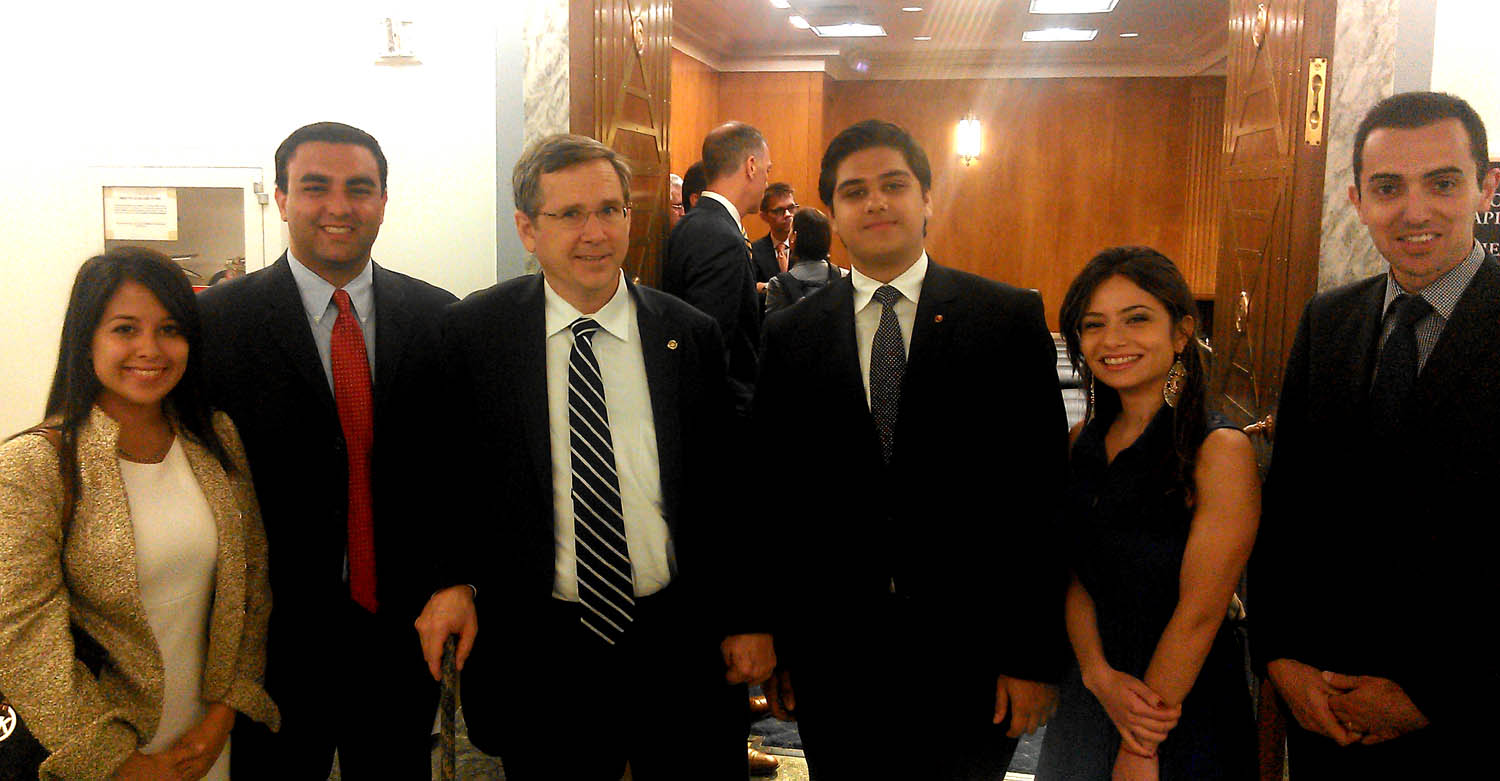
On the Senate side, the Appropriations Subcommittee on State Foreign Operations presented and approved its version of the FY2014 foreign aid bill, with specific country allocations to be made available to the public over the next several days.  Full Appropriations Committee consideration of the Senate version of the bill is set for Thursday, July 25.  ANCA Leo Sarkisian Program interns were joined by ANCA Legislative Affairs Director Raffi Karakashian at the Subcommittee “markup” of the bill earlier today.  ANCA offices, chapters, and activists have been reaching out to constituents in key Senate and House districts over the past several weeks, urging action in support of Armenian American foreign aid priorities including:
— At least $5 million in U.S. assistance to Nagorno Karabakh
— At least $50 million in U.S. assistance to Armenia
— At least 10% of U.S. assistance to Georgia to be earmarked for job creation programs in the Samtskhe-Javakheti region of that country.
— Funds for humanitarian and resettlement assistance specifically targeted to Armenian and other Christian populations as well as other minority communities affected by the recent unrest in the Middle East.
— Language strengthening Section 907 restrictions on U.S. aid to Azerbaijan.
— Removal of barriers to contact and communication with representatives of the Nagorno Karabakh Republic.
— Language calling for the participation of Nagorno Karabakh leaders in the OSCE Minsk Group negotiations
The full ANCA Congressional testimony offered in support of Armenian American foreign aid priorities is available at:http://www.anca.org/press_releases/press_releases.php?prid=2244

Syria ‘agrees to Geneva peace talks’ in first confirmation that Assad is prepared to meet with opposition

s1The Syrian government has agreed to a conference on the country’s future proposed by Russia and the United States, Russia’s foreign ministry said today.

The Syrian government had ‘agreed in principle’ to participate in the conference in Geneva which is expected within two weeks, Foreign Ministry spokesman Alexander Lukashevich said in televised remarks.

Mr Lukashevich, however, said that it was impossible to set the date for the conference at this point because there is ‘no clarity about who will speak on behalf of the opposition and what powers they will have’.

Russia and the US joined efforts earlier this month to convene an international conference to bring representatives of Assad’s regime and the opposition to the negotiating table. The aim of the talks would be to establish the outlines of a transitional government as a way out of the crisis.

The Moscow announcement came after days of talks there between Syria’s Deputy Foreign Minister Faysal Mekdad and Russian officials.


Russia: Plane’s Safety ‘Threatened’ Over Syria

A350_-_800_AirbusRussia’s transportation ministry says a Russian civilian airliner came under threat from fighting in Syria while flying over the country, but there were no injuries or damage to the plane.

The state news agency RIA-Novosti quoted the press service of Rosturism, the Russian state tourism authority, as saying the plane came under rocket fire Monday. But a statement on the ministry’s website did not give details, saying the plane’s crew saw “signs of war activity which, in the crew’s opinion, threatened the safety of the plane.”

Foreign Ministry spokesman Alexander Lukashevich told the ITAR-Tass news agency that the plane was carrying 159 people.

The transportation ministry said the plane, belonging to the NordWind charter airline, was flying from the Egyptian resort of Sharm-al-Sheikh to Kazan, where it landed safely.


Israel says Syria used chemical arms, probably nerve gas

A general view shows Khan al-Assal area near the northern city of Aleppo, near the site where forces loyal to Syria's President Bashar al-Assad say was Tuesday's chemical weapon attackSyrian government forces have used chemical weapons – probably nerve gas – in their fight against rebels waging a two-year-old uprising, the Israeli military’s top intelligence analyst said on Tuesday.

Brigadier-General Itai Brun told a security conference photos of victims showing foam coming out of their mouths and contracted pupils were signs deadly gas had been used.

“To the best of our understanding, there was use of lethal chemical weapons. Which chemical weapons? Probably Sarin,” Brigadier-General Itai Brun said in remarks broadcast on Army Radio.

The Syrian government and rebels last month accused each other of launching a chemical attack near the northern city of Aleppo.

On Monday, Defense Secretary Chuck Hagel, who is visiting Israel, said U.S. intelligence agencies were still assessing whether chemical weapons may have been used in Syria’s civil war.