Pucker up! The Australian coffee shop that lets their customers pay with KISSES

s1Forget cash, cheques or credit cards, one cafe has a different way of charging its customers for a cup of coffee.

Metro St. James, a French style cafe in Sydney, is running a unique and romantic promotion this month.

Between the hours of 9 and 11am, the cafe is letting customers pay their bill by giving each other a kiss.

While some may find this concept somewhat creepy, the French-themed shop, which opened its doors three months ago, has included a video featuring several couples earning their cups of coffee by way of their lips.

‘We’ll watch you. It has to be a real kiss, I can see if it’s a fake kiss,’ the proprietor says in the video as he hands over the coffees.

He adds that if they try to fake a kiss, he’ll know because he’s ‘kind of a specialist.’


66-year-old man discovers he is actually a WOMAN after visit to doctor in Hong Kong

ch1A Chinese man who went to the doctors with a swollen stomach was told that he is actually a woman.

The 66-year-old, who even has a beard, had lived his entire life as a man but was told by doctors in Hong Kong that his enlarged abdomen was caused by an ovarian cyst.

Tests revealed the patient suffered two rare genetic disorders that had gone undiagnosed.

They showed the patient had Turner Syndrome, a genetic condition that affects about one in 2,000 baby girls, and congenital adrenal hyperplasia, which increases male hormones.

The Hong Kong Medical Journal, which published the information yesterday, said only six cases of people with both disorders had ever been reported in medical literature.

The patient had grown up an orphan and stopped growing after puberty at the age of 10 and was just 4.5ft tall.

Girls with the disorder have normal female reproductive organs but can suffer with fertility problems.


Queen marks 60th anniversary of coronation

3Թագուհին տոնում է թագադրման 60-ամյակըQueen Elizabeth II marked the 60th anniversary of her coronation on Tuesday with a service at Westminster Abbey filled with references to the rainy day in 1953 when she was crowned.

More than 2,000 guests crammed into the abbey for the service, attended by all the senior members of the royal family including Prince William and his heavily pregnant wife Catherine.
The 86-year-old monarch, in an oyster-coloured outfit by Angela Kelly, was accompanied by her husband Prince Philip, 91, who was at her side despite pulling out of a public engagement on Monday because of ill health.
Prince Charles, the heir to the throne who was just four when his mother was crowned, sat next to his parents on the front row, alongside his second wife Camilla.
Next to them sat William and Catherine, who wore a daisy lace dress and a peach silk jacket by British designer Jenny Packham.
Charles recalled last year that the queen practised wearing the crown around Buckingham Palace in the weeks before her coronation, even popping in to say hello to her children during their bath time.

Salvadoran doctors perform C-section in risky pregnancy

2Սալվադորցի բժիշկները ռիսկային հղիությունից հետո կատարել են կեսարյաÕDoctors performed a C-section on a chronically ill Salvadoran woman who was denied an abortion despite her high-risk pregnancy, the head of a support group said.

“What we have been told is that Beatriz is well. She had a girl but we are told it is very painful to see her,” said Morena Herrera, the head of a group that advocates the decriminalization of abortion.
El Salvador’s Supreme Court rejected the request, however, saying the rights of the mother cannot take precedence over those of the unborn child.
With the approval of Health Minister Maria Isabel Rodriguez, doctors then proceeded to deliver the baby prematurely by C-section after 26 weeks of gestation.
“It is very clear at this time that the pregnancy intervention is not an abortion, it is an induced birth, which is something else,” Rodriguez told a news conference last week.

NATO takes up cyber-defence as threat grows

1ՆԱՏՕ -ն կքննարկի  կիբեռ-պաշտպանության հարցերDefence ministers from NATO’s 28 member states meet on Tuesday with cyber-defence top of the agenda, amid concerns about the threat posed by increasing cyber-attacks, many blamed on China.

“The challenge evolves all the time, probably (much faster) than any other type of threat we face at the moment,” said one senior NATO official who asked not to be named.
Newly appointed US Secretary of Defense Chuck Hagel, who will be attending his first NATO meeting since taking office, has made the issue a priority.
In Singapore on Saturday he accused China of waging cyber-espionage against the US after a US report found evidence of a broad Chinese spying campaign against top US defence contractors and government agencies.
“The United States has expressed our concerns about the growing threat of cyber intrusions, some of which appear to be tied to the Chinese government and military,” he told an annual conference known as the Shangri-La Dialogue.
Hagel pressed Beijing to adhere to “international norms of responsible behaviour in cyberspace”, while acknowledging that the establishment of a joint cyber security working group was a positive step in fostering dialogue.
NATO head Anders Fogh Rasmussen made clear earlier this year that cyber-security is a key issue.
The US-led military alliance had been forced to upgrade its defences after several attacks, among them by Anonymous, the hacker group, he said.

Unions join forces with Turkish protesters

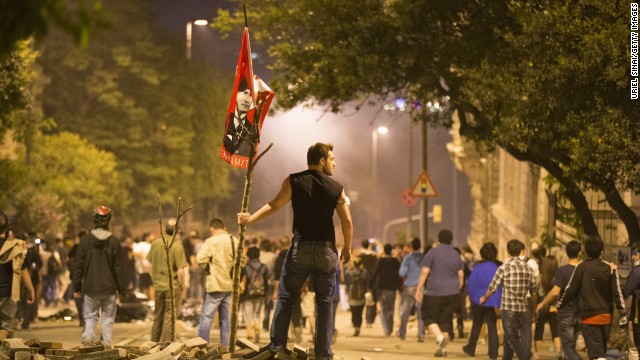
130603192324-pkg-walsh-turkey-ankara-protests-00002308-story-topIstanbul (CNN) — Trade unions claiming 240,000 members are throwing their weight behind anti-government demonstrations across Turkey.

The KESK confederation of public sector workers was calling a two-day strike starting Tuesday to protest what it called the “fascism” of the governing party of Prime Minister Recep Tayyip Erdogan, who has become one of the focal points of demonstrators’ anger.

They have united demonstrators from across the political spectrum against a common foe: security forces who unleashed tear gas and water cannon on them in response to what had been largely peaceful protests against Erdogan’s government.

Read more: Turkish protesters decry ‘unprecedented violence’
Anti-government riots erupt in TurkeyAnti-government riots erupt in Turkey

Turkey’s political situation deteriorates

Turkish protesters target prime minister
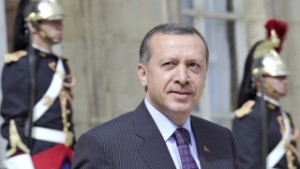
Erdogan: Powerful, popular, polarizing

Turkish Deputy Prime Minister Bulent Arinc on Tuesday apologized “for the police aggression against our citizens who were involved in the initial protests and acted with environmental concern,” Turkey’s semiofficial Anadolu news agency reported. But, Arinc said, “I don’t think we owe an apology to those who caused destruction on the streets and who interfered with people’s freedom.”

The Turkish Medical Association said that at least 3,195 people were injured in clashes Sunday and Monday. Of them, 26 were in serious or critical condition, it said.

One protester, Mehmet Ayvalitas, died of his injuries, the association said. And the governor of Hatay in southeastern Turkey said that a 22-year-old man, Abdulah Comert, was killed with a firearm by unknown people during demonstrations late Monday, Anadolu reported.

The medical association reported that the bulk of the injuries occurred in Istanbul, where the protests began before spreading to Ankara, Izmir, Adana and other places.

What’s driving unrest and protests in Turkey?

Relative calm

After chaotic scenes in the streets Monday that continued late into the night and sent tear gas wafting through the air, the situation was relatively calm Tuesday morning in Istanbul’s central Taksim Square, near the park where the protest movement began.

Barricades remain up around the square, and Erdogan’s opponents appear determined to continue the demonstrations despite the prime minister’s comment Monday that he expects the situation to return to normal “within a few days.”

The protests began after plans were made to raze Gezi Park, the last green space in central Istanbul, and replace it with a replica of 19th-century Ottoman barracks. The development would contain a shopping mall.

What began as a sit-in by a handful of angry residents quickly grew into a larger protest. Riot police moved in, using tear gas and pepper spray. Protesters responded by hurling bottles, setting up barricades, blocking bulldozers and burning trash in the middle of the street.

Then, outraged by the behavior of security forces, demonstrators began attacking police. The protests have since morphed into larger complaints against Erdogan, whom protesters call paternalistic and authoritarian.

Despite economic boom, Erdogan targeted by protests

Police criticized

Park protest triggers national response

Update on Turkey’s unrest

Turkish citizens want PM to resign

International groups including Amnesty International have criticized the police response as excessive. In Ankara on Sunday night, a CNN crew witnessed authorities roughing up at least one protester. One police officer kicked a CNN videographer, CNN’s Nick Paton Walsh reported, and a CNN crew in Istanbul on Sunday also witnessed bloodied protesters.

Erdogan, who left the country Monday on a four-day trip to North Africa, has responded by dismissing the demonstrations as the work of “extreme elements” and marginal groups.

“My smart citizens will recognize this, then they will give them the right lesson,” he said.

But Turkey’s president, Abdullah Gul, took a somewhat more conciliatory tone Monday, saying “the messages sent in good faith have been received.”

In Istanbul, the crowds have been chanting “Tayyip resign” — referring to Erdogan — and “Shoulder to shoulder against fascism.”

The protests have spread to 67 of Turkey’s 81 provinces, according to Anadolu.

Opinion: Is Turkey on the verge of a meltdown?

Opposition pushing back

Hugh Pope, a senior Turkey analyst with the International Crisis Group, called the protests “completely unprecedented” and said Erdogan was caught off guard. Most demonstrators, Pope said, are “overwhelmingly ordinary people” who simply want their voices heard.

“However, there are other demonstrators who are somewhat more opportunistic in the left-wing factions who normally don’t get much in the way of airtime in Turkey and are camped on Taksim Square,” Pope said.

Erdogan has defiantly praised his government’s accomplishments in overseeing a decade of strong economic growth in Turkey.

His party has won the past three elections, most recently securing 49.95% of the vote in 2011.

“What you have is essentially a large group of Turks who feel alienated from this government, in power for 10 years,” said Richard Haass, a Middle East analyst at the Council on Foreign Relations in Washington.

“It’s increasingly a one-party country. All the politics happen within it. The opposition is weak, divided, feckless,” he said. “You have a lot of people in Turkey who feel both alienated and intimidated by the government, and this is the way they decided to push back.”

CNN’s Ivan Watson and Talia Kayali contributed to this report.

The newly appointed Ambassador of Croatia presented his credentials to President Serzh Sargsyan

3177


Today, the newly appointed Ambassador of the Republic Croatia to the Republic Armenia Ivan Starcevic (residence in Athens) presented his credentials to President Serzh Sargsyan.

The President of Armenia congratulated the Ambassador on his appointment and wished him success in the fulfillment of his diplomatic mission in our country. Speaking about the almost twenty-year long history of the Armenian-Croatian cooperation which started since the establishment of the diplomatic relations, Serzh Sargsyan noted with satisfaction that relations between the two countries are developing steadily and there is mutual interest to further and diversify them.

At the meeting, the parties stressed the importance of cooperation of the two friendly countries also in the framework of international structures.

Ambassador Starcevic assured that he would do his best to further strengthen and deepen the Armenian-Croatian relations.


Baku police prevents a rally in support of demonstrations in Istanbul

1On Monday at 4 o’clock, police prevented a group of young people trying to hold a rally of solidarity with the protesters in Istanbul. About 50 people gathered in front of the Turkish Embassy in Baku, calling to meet the demands of demonstrators in Istanbul. They called on the Turkish government to stop pressure on the protesters, and to abandon plans for the restructuring of Taksim Square, according to correspondents from the scene.

The police pushed the crowd away from the embassy. Young people told reporters they continue to hold solidarity actions in other locations in central Baku, without naming specific addresses. -03В-

U.N. nuclear chief: Iran talks ‘going round in circles’

3ՄԱԳԱՏԷ-ի ղեկավարը գոհ չէ Իրանի հետ բանակցությունների արդյունքիցThe U.N. nuclear watchdog chief said on Monday talks with Iran have been “going around in circles” – unusually blunt criticism pointing to rising tension over suspected nuclear arms research by Tehran that has increased fears of a new Middle East war.

Yukiya Amano, director general of the International Atomic Energy Agency, vented growing frustration at the lack of results in getting Iran to address suspicions of military dimensions to its atomic energy program. Tehran denies the accusations.
In hard-hitting comments to the IAEA’s 35-nation Board of Governors, he also said Iranian advances in building a heavy-water research reactor and in its uranium enrichment work were in “clear contravention” of U.N. Security Council resolutions, dating to 2006, calling for a suspension in such activities.
The IAEA has been trying since early 2012 to engage with the Islamic state over what the Vienna-based U.N. agency calls the “possible military dimensions” to Iran’s nuclear program.
But ten rounds of negotiations in the last 17 months have failed to achieve any breakthrough. Western diplomats accuse Iran of stonewalling the IAEA, an allegation Tehran rejects.