Opening Statement by H.E. Mr. Edward Nalbandian Minister of Foreign Affairs of the Republic of Armenia High Level Panel Discussion dedicated to the sixty-fifth anniversary of the Convention on the Prevention and Punishment of the Crime of Genocide 25th Session of the Human Rights Council

90. Minister Nalbandian participated in Genocide prevention High Level pannel in Geneve - 07.03.2014


Mr. President of the Human Rights Council,

Ladies and Gentlemen,

First I would like to thank Madam Navi Pillay, UN High Commissioner for Human Rights and her Office for holding this High Level Panel Discussion dedicated to the sixty-fifth anniversary of the Convention on the Prevention and Punishment of the Crime of Genocide.

I would like also to thank all panelists for their willingness to shape result oriented discussion on genocide prevention. I want to particularly thank Madam Esther Mujawayo, a survivor of the Rwandan genocide, the 20th anniversary of which will be marked in an international conference in Brussels in three weeks.

Armenian people, as a nation that survived the first genocide of the 20th century, feels a strong moral responsibility to bring its contribution to international efforts in prevention of crimes against humanity. I should acknowledge the readiness with which many member states lent their support to our various initiatives for this noble goal. I would like to take this opportunity to thank all co-sponsors of the Human Rights Council Resolution on Genocide Prevention that was adopted by this august body last year.

Through its various actors, the United Nations plays a central role in Genocide Prevention. I would like to mention the personal involvement of Mr. Ban Ki-moon, UN Secretary General, who gives guidance to this ongoing cooperation. We are encouraged to see the determined work of the Human Rights Council, and other UN bodies together with the member states. I would like to stress the valuable contribution of Mr. Adama Dieng, Special Advisor to the Secretary General on the Prevention of Genocide, who is with us today.

Despite the fact that the Genocide Prevention Convention was adopted in 1948, unfortunately, new genocides, new crimes against humanity have been committed over the ensuing decades, including recent years. From Cambodia to Rwanda to Darfur the terrible phenomenon of genocide has continued seeming unabated.


This means that we need not only debates, resolutions, declarations, conventions, but effective mechanisms and actions to prevent their recurrence.


Genocide is a complex phenomenon and does not occur according to a single model. Prevention must be based on an accurate understanding of the history of genocides. This includes a thorough analysis of all modern cases. We must understand not only what happened in each case, but also the causes. We must be ready to learn from past failures and be open to new ideas.


Genocide prevention requires the development of both enforcement and preventive measures. If genocide is committed, the perpetrators should not stay in doubt that they will definitely be held responsible. On May 24th, 1915 in a special declaration the Allied Powers – Russia, France and Great Britain, warned the perpetrators of the atrocities against the Armenian people that they would be held personally responsible for “these new crimes of Turkey against humanity and civilization,” from which the modern concept of Crimes against Humanity entered the international legal system.


The prehistory of the Convention on the Prevention and Punishment of the Crime of Genocide is related to the most tragic page in the history of the Armenian people. Raphael Lemkin, the author of the term “genocide,” while defining the crime of genocide, referred to the very policy of mass extermination perpetrated against Armenians. Lemkin dedicated his life to the study of crimes against humanity, which, among others, paved the way for the adoption of the 1948 Convention.

The measures foreseen in the Human Rights Council Resolution of 22nd of March 2013 envisages the necessary preventive measures. We are all unanimous on three pillars of genocide prevention: early warning, human rights protection, and public campaign of education and awareness.


First, in order for the international community to react promptly, we must be aware of the risk of genocide as early as possible and make the necessary preventive steps. Usually perpetrators of genocide try to hide their intentions as long as possible. The international community should evaluate the origins of genocidal atmosphere leading to this heinous crime and prevent it as early as possible.


Over the course of the past decade, both the United Nations and the regional bodies have made much progress in improving early warning and assessment systems. We should do our utmost to ensure that these advances continue in the years ahead. Early identification and warning by themselves will not be effective unless they are followed by concrete forms of deterrence.


Second, genocide prevention is a part of the complex international mechanisms of the human rights protection. Moral values stand on the most important defense line against these horrible crimes. Genocide is an unthinkable crime for a society which is founded on the protection of human rights, on the values of mutual respect, tolerance and non-violence.


Third, one of our goals is to reinforce in the public these values through education and remembrance. Generations should get knowledge of the history of past tragedies, past genocides. The acknowledgement and condemnation of committed genocides are one of the most effective tools for their prevention in the future. Unacknowledged or preferred ignorance of genocide, which is otherwise called denial, along with impunity pave the way for the repetition of new crimes against humanity. Independent of geopolitical or other interests, the international community should stand together in the recognition, condemnation and punishment of past genocides, especially in light of the 1968 Convention on the Non-applicability of Statutory Limitations, in their efforts towards its prevention in the future.


The remembrance days of the victims of genocides, Mets Yeghern, Shoah, remembrance days in Cambodia, Rwanda, Darfur and other genocides should be days of mourning not only for the descendents of victims, but for the descendents of the perpetrators. These days should be approached with willingness to move towards recognition and reconciliation. True reconciliation does not mean forgetting the past or feeding younger generations with tales of denial.

The civilized world resolutely rejects the incitement of hatred, racism, dissemination of intolerance, the denial of genocide, crimes against humanity under the guise of freedom of expression. The prevailing opinion of the international genocide scholars is that denial itself is a continuation of genocide.

Ladies and gentlemen,

While commemorating the 65th anniversary of the Convention on Prevention and Punishment of the Crime of Genocide we understand that the effectiveness of each treaty should be evaluated based on its implementation. This panel discussion is a good opportunity for sharing best practices in the implementation of this Convention.

Taking this opportunity, I would like to call upon those states that have not yet acceded to the Convention, to do so in the nearest future and to wish every success to those who spare no effort in genocide prevention.


Thank you!

Անկախ


Peugeot’s new ‘posh’ 308 small family hatchback crowned European Car of the Year 2014

Geneva Motor Show


Peugeot’s new 308 small family hatchback designed to make the French car-maker more upmarket has been named European Car of the Year.

The crowning of the ‘posh’ Peugeot  was made on the eve of the Geneva Motor Show in Switzerland, where the world’s car makers are gathering.

The Peugeot 308 received a winning 307 points from an international jury of 58 motoring writers – with top points awarded by 22 of them.

The French hatchback beat six other rivals including two electric cars the BMW i3 (with 223 points), the Tesla S (216), Citroen C4 Picasso (182), Mazda3 (180), Skoda Octavia (170), and Mercedes-Benz S-Class.
Built in Sochaux, Peugeot’s historic home in Eastern France, the new 308 was launched in mainland  Europe during the last four months of 2013 and in the UK in January this year, where already more than 4,000 orders have been taken for the car priced from £14,495  to £24,345 .
Production and sales of the 308 in China, the biggest car market in the world, will start early in 2015.
From the start of Spring, the new 308 range will be expanded by the introduction of a second body style: the 308 SW estate.


Անկախ

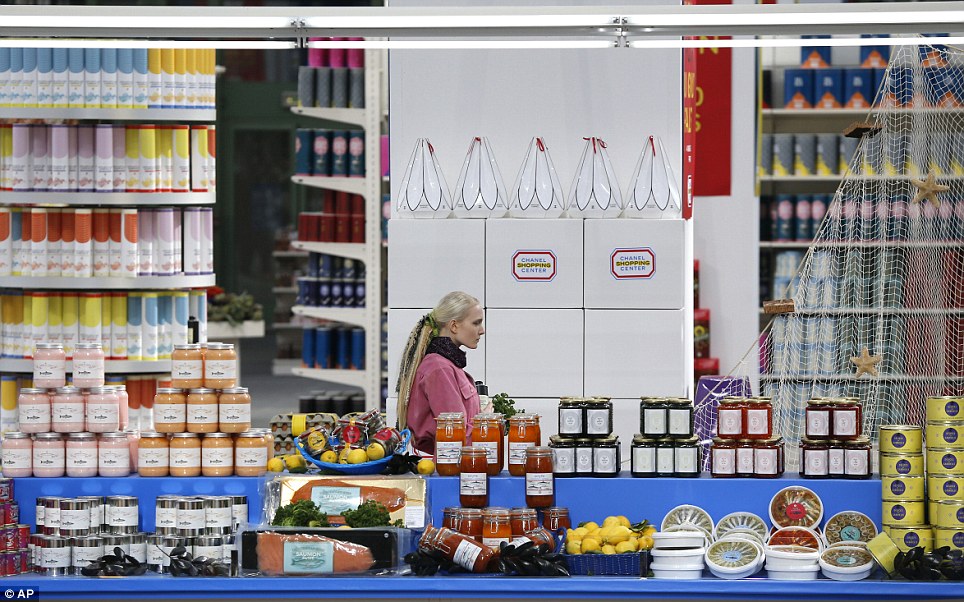
Chanel makes the supermarket chic! Runway turns into a shopping centre as muses Cara Delevingne and Kendall Jenner take to the catwalk in tracksuits

Karl Lagerfeld - Cara Delevingne


Move over Harrods, there’s a new luxury shopping centre in town and Chanel kaiser Karl Lagerfeld is at the helm.

The Chanel creative director today transformed his catwalk into a high-end supermarket all in the name of fashion at his AW14 show in Paris.

Cara Delevingne, a favourite of the French fashion house, was joined by Chanel newcomer and fashion’s new darling (and little sister of Kim Kardashian) Kendall Jenner on the catwalk.

Karl, well known for his theatrical shows – which have previously featured giant icebergs and even an underwater kingdom – transformed the French capital’s Grand Palais into the world’s chicest and most luxurious grocery store.

Շանելի նորաձևության շոու

Shopping ‘baskets’ were adorned with the label’s famous chains, as seen on their luxury handbags, and models pushed trollies around the ‘supermarket’ as they perused the Chanel-branded food – such as haute Ketchup, eau de Chanel and Jambon Cambon, named after the location of Chanel’s original store.


 Անկախ

NASA discovers 715 new planets

 մոլորակ


Our galactic neighborhood just got a lot bigger. NASA on Wednesday announced the discovery of 715 new planets, by far the biggest batch of planets ever unveiled at once.


By way of comparison, about 1,000 planets total had been identified in our galaxy before Wednesday.


Four of those planets are in what NASA calls the “habitable zone,” meaning they have the makeup to potentially support life.


The planets, which orbit 305 different stars, were discovered by the Kepler space telescope and were verified using a new technique that scientists expect to make new planetary discoveries more frequent and more detailed.


NASA says 95% of the planets discovered by Kepler are smaller than Neptune, which is four times as big as Earth.


One of them is about twice the size of Earth and orbits a star half the size of Earth’s sun in a 30-day cycle.


Անկախ

Embassy of the Republic of Poland in Yerevan will represent the Swiss Confederation in Visa Matters

The Embassies of the Republic of Poland and the Swiss Confederation in Armenia have the honor to inform that as from March 1, 2014 the Embassy of the Republic of Poland in Yerevan will represent the Swiss Confederation regarding visa issuance for Armenian nationals, as well as third country citizens legally residing in Armenia.

The representation concerns only Schengen visas (type C) enabling maximum 90-day stay within 180-day period, excluding national visas (type D).

Accordingly, as from March 1, 2014 Armenian nationals intending to travel to the Swiss Confederation up to 90 days should apply for visas at the Embassy of the Republic of Poland in Yerevan but not at the Embassy of the Swiss Confederation in Tbilisi.

On January 27, 2014 in Warsaw Foreign Minister of Poland Radoslaw Sikorski and President of the Swiss Confederation Didier Burkhalter signed the Agreement between the Government of the Republic of Poland and the Federal Council of the Swiss Confederation on Mutual Representation in the Process of Examining Visa Applications and Issuing Visas.

For more information please consult “Consular Information” section.

Inside India’s rat temple where 20,000 of them are worshipped, fed and protected as they scurry between the feet of tourists

հնդկաստան,տաճար


An Indian temple is overrun with more than 20,000 rats – and the devotees couldn’t be happier.

հնդկաստան,  առնետներ

The Karni Mata Temple in Rajasthan, India, is known for its devotion to the furry animals, often seen as the scourge of urban areas.

Rats scurry throughout the temple, where they are worshipped, fed and protected.

Devotees have even gone to extreme lengths to protect the species by building netting and grills to keep out predators such as raptors.

The rodents move freely within the temple and can be seen eating from a huge metal bowl of milk and grains, placed there daily by devotees.

Small children can be seen playing and interacting with the rats – while scores of tourists flock there each day to catch a glimpse of the unique spectacle.

The food nibbled by the rats is also considered holy and is sometimes consumed by a devotee – even if it has been half eaten by rodents.

While black and brown rats are easily spotted in the temple courtyard, devotees believe sighting a white rat is a blessing.

Priests at the temple treat the furry inhabitants with serious devotion and warn visitors to walk carefully within the temple premises to avoid trampling them.

According to the temple rules, stepping accidentally on rat and killing it is a sin.


 Անկախ

Setcreasea pallida ‘Purple Heart’

setcreasea1Botanical Name: Setcreasea pallida ‘Purple Heart’set-KREE-see-ah PAL-ih-duhSynonyms: Setcreasea purpurea ‘Purple Heart’, Tradescantia pallida ‘Purpurea’, T. pallida ‘Purple Heart’
‘Purple Heart’ is a trailing, tender perennial with purple stems and violet-purple leaves that produces pink flowers in summer. This plant is mainly grown for its foliage (leaves can reach 7 inches in length); best color is achieved in bright sunlight and a dry, cramped root zone. It is excellent as a groundcover or in containers or hanging baskets. It grows 8-12 inches tall and 16 inches wide.
Noteworthy characteristics: Foliage may irritate skin.
Care: Provide moist soil in part to full sun. Pinch to encourage bushiness and cut back flowering stems after blooming. Water moderately and fertilize monthly during active growth.
Propagation: Insert 2- to 3-inch-long stem-tip cuttings in soil mix or water and pot up in soil-based mix.
Problems: Viruses, aphids, spider mites.

Former Grit Cabinet ministers could run in next election

Sarkis AssadourianBy ABBAS RANA |

Published: Monday, 01/27/2014 12:00 am EST
(Page 2 of 2)

“As you know, there is an open nominations process. We are surely noticing a lot of interest from people to run for the Liberal Party and are looking forward to the beginning of the nomination process,” wrote Ms. Lyne-Hallé.
“This also shows that the interest of Canadians for the Liberal Party and its leader Justin Trudeau across the country is strong and increasing and that Canadians are looking for a change in politics.”
Meanwhile, three-term former Liberal MP Sarkis Assadourian, who did not seek re-election in the 2004 federal election and has since been out of federal politics, is already running a nomination campaign in the Ontario riding of Richmond Hill against Elizabeth Wilfert, wife of former Liberal MP Bryon Wilfert.
Mr. Assadourian, 66, is seeking the Liberal nomination in the Ontario riding of Richmond Hill. Currently represented by Conservative MP Costas Menegakis, the riding was previously represented by five-term former Liberal MP Bryon Wilfert. He lost the last federal election and is now working for Tactix, a government relations and public affairs firm in Ottawa as a strategic adviser.
Mr. Wilfert told The Hill Times last week that he decided not to seek re-election because he’s in the process of receiving an honorary diplomatic appointment from a foreign country in Canada, which restricts him from seeking any political office in the country.
Mr. Assadourian served as an MP from 1993 until 2004. He was first elected in the riding of Don Valley North and then twice in Brampton Centre. Prior to the 2004 federal election, then-party leader Paul Martin appointed Ruby Dhalla as a “star” Liberal candidate who served until the last election when she was defeated by Conservative MP Parm Gill.
The Martin government appointed Mr. Assadourian as a citizenship judge in 2005. Currently, he’s a member of the Ontario Deputy Judges Council.
Mr. Assadourian ran unsuccessfully in the 2010 Richmond Hill municipal election, finishing fifth out of seven candidates for a council seat.
Ms. Wilfert is currently the president of the College of Dieticians of Ontario.
As of last week, no nomination date had been fixed but already potential candidates have been campaigning.
[email protected]
The Hill Times

The statement of President Serzh Sargsyan at the joint press Conference with the President of the Czech Republic Miloš Zeman

Սերժ Սարգսյան,Չեխիա

President Serzh Sargsyan met the President of the Czech Republic Miloš Zeman

Today, President Serzh Sargsyan, who pays a state visit to the Czech Republic, held a meeting with President Miloš Zeman. At the end of the two Presidents’ negotiations, a signing ceremony of bilateral documents took place aimed at fostering and expanding cooperation in a number of areas. In particular, Agreements were signed on Cooperation in Fight Against Crime between the Government of the Republic of Armenian and the Government of the Czech Republic, On Economic and Industrial Cooperation between the Government of the Republic of Armenian and the Government of the Czech Republic, On Cooperation in Healthcare and Medical Science between the Ministry of Health of the Republic of Armenian and the Ministry of Health of the Czech Republic, Memorandum of Understanding on Disaster Prevention and Elimination of Consequences, Fire Service and Public Protection between the Ministry of Emergency Situations of the Republic of Armenia and the Ministry of Internal Affairs of the Czech Republic, Joint Declaration on Cooperation in the Area of Environment Protection between the Ministry of Nature Protection of the Republic of Armenia and the Ministry of Environment of the Czech Republic, Memorandum of Understanding on Cooperation between the State Revenue Committee under the Government of the Republic of Armenia and the Customs Service General Directorate of the Czech Republic.

Presidents Serzh Sargsyan and Miloš Zeman summed up the results of their negotiations in a joint press conference.


***


սերժ սարգսյան


The statement of President Serzh Sargsyan at the joint press Conference with the President of the Czech Republic Miloš Zeman


Your Excellency Mr. President,
Ladies and Gentlemen,

I am pleased to pay my first state visit to the Czech Republic at the invitation of the President of the Czech Republic.

We just held substantive and productive talks with President Zeman in the atmosphere of complete mutual understanding. We discussed both issues of our bilateral agenda as well as current regional and international topics.

We noted with satisfaction that since the establishment of diplomatic relations between our countries we have registered prominent progress in interstate affairs. A dozen of documents on different fields signed today and to be signed tomorrow attest to it. We outlined healthcare, environment, decentralized collaboration, trade, economic and cultural cooperation as the areas of prospective cooperation. We stressed the necessity of widening business connections and stimulating investments, promoting people-to-people contacts and developing tourism. The direct flights under operation between our capitals serve as an important prerequisite for that. We attached importance to the ongoing Armenian-Czech business forum within the current visit.

We mutually highlighted the importance of the inter-parliamentary cooperation supported by the friendship groups established within the two parliaments.

We underlined the necessity of consistent development of cultural, educational and scientific ties. This year Yerevan and in 2015 Prague will respectively host Days of Czech and Armenian cultures. Mr. President proposed us to more actively encourage our youth to study in the Czech Republic, and I am surely grateful for that.

We reaffirmed the mutual will to deepen cooperation between our states within the framework of such international platforms as the UN institutions, OSCE, Council of Europe as well as the EU Eastern Partnership.

Prague stands high on Armenia’s European agenda, which is a priority in our foreign policy. About five years ago it was precisely in Prague, where Armenia undertook a commitment to enhance closer cooperation with the EU upon the start of the Eastern Partnership. This commitment was reaffirmed at the Vilnius summit last November. We are determined to continuously enhance and expand our relations with the EU. In this respect, we expect the support of friendly nations, especially the Czech comprehensive support.

We are convinced that different integration processes may certainly be developed based on compatibility and cooperation rather than controversy. In this sense the Eastern Partnership might serve as a natural bridge fostering economic integration from the Atlantic to the Pacific Ocean. We are committed to make consistent efforts toward constructing more inclusive Europe, free from dividing lines. I am thankful to Mr. President for his understanding toward our decision to join the Customs Union. I am also thankful to the President of the Czech Republic for the invitation to the Eastern Partnership Summit that will take place on April 24, in Prague and I am particularly thankful for appreciating my visit to Prague on the 24th of April, bearing in mind that on the 24th of April Armenians across the world pay their tribute to the victims of the Genocide.

We highly appreciate the constructive position of the Czech Republic in support to the efforts of the OSCE Minsk group co-chairs to find a peaceful resolution to the Nagorno-Karabakh conflict. In November 2013, after a two-year interval the meeting of the Presidents of Armenia and Azerbaijan took place in Vienna, which by itself is a positive step in the negotiation process. The direct contacts on the presidential level are important stimulus to the ongoing negotiations under the auspices of the OSCE Minsk Group, which is the only format of the Nagorno-Karabakh conflict resolution. The principles and provisions embedded in the Presidents’ statements of the OSCE Minsk Group co-chair countries – Russia, the USA and France – provide appropriate ground for the just and enduring settlement of the conflict. We share the stance of the co-chair countries that those principles and provisions should be viewed as a whole and the attempts to prioritize one over the other will make consensus and conflict settlement impossible.


Միլոշ Զեման,Սերժ Սարգսյան, Չեխիայի Հանրապետություն

Nevertheless, the settlement of the problem is not realistic unless Azerbaijan abandons the malicious policy of bellicose propaganda, incitement of arms race and provocative actions along the line of contact. It’s high time for Azerbaijan to adopt a constructive stance on the exclusively peaceful settlement of the conflict. Here let me make a very important emphasis, Mr. President: we expect from the international community to show impartial approach or at least to be guided by the principle of not harming the process.

I completely shared the view of President Zeman that the regional conflicts shall be resolved through exclusively peaceful means and negotiations.

I assess our meeting as productive and hope that the Armenian-Czech dialogue and cooperation will develop and widen in different fields by mutual efforts and based on already existing grounds.

I thanked President Zeman for warm hospitality and invited him to pay a state visit to Armenia and I am thankful that he was pleased to accept the invitation.

Անկախ


Syrian President Finally RecognizesThe Armenian Genocide

հարութ


By Harut Sassounian

Publisher, The California Courier


In a lengthy interview last week with Agence France Presse (AFP) on the tragic situation in Syria, Pres. Bashar al-Assad made an unexpected reference to the massacres of 1.5 million Armenians. This is the first time that any Syrian head of state has acknowledged the Armenian mass murders and identified the perpetrator as Ottoman Turkey.

During the interview, Pres. Assad compared the Armenian Genocide of 1915 to the brutal killings of civilians by foreign fighters nowadays in Syria: “The degree of savagery and inhumanity that the terrorists have reached reminds us of what happened in the Middle Ages in Europe over 500 years ago. In more recent modern times, it reminds us of the massacres perpetrated by the Ottomans against the Armenians when they killed a million and a half Armenians and half a million Orthodox Syriacs in Syria and in Turkish territory.”

Not surprisingly, two days later, Bashar Jaafari, Syria’s Ambassador to the United Nations in Geneva, made a similar remark: “How about the Armenian Genocide where 1.5 million people were killed?”

The only other high ranking Syrian official who has acknowledged the Armenian Genocide was Abd al-Qader Qaddura, Speaker of the Syrian Parliament, when he inscribed a poignant statement in the Book of Remembrance of the Armenian Genocide Monument and Museum in Yerevan on July 16, 2001: “As we visit the Memorial and Museum of the Genocide that the Armenian nation suffered in 1915, we stand in full admiration and respect in front of those heroes that faced death with courage and heroism. Their children and grandchildren continued after them to immortalize their courage and struggle…. With great respect we bow our heads in memory of the martyrs of the Armenian nation — our friends — and hail their ability for resoluteness and triumph. We will work together to liberate every human being from aggression and oppression.”

While the Parliament Speaker’s 2001 statement was a candid and heartfelt message with no political overtones, the same cannot be said about Pres. Assad’s words on the Armenian Genocide as he clearly intended to lash back at the Turkish government’s hostile actions against the Syrian regime. It is well known that Turkey has played a major role in the concerted international effort to topple Pres. Assad, by dispatching heavy weapons and arranging the infiltration of foreign radical Islamist fighters into Syria.

Relations between Syria and Turkey were not always hostile. Before the start of the Syrian crisis in 2011, the two countries were such close political and economic allies that the Assad regime banned the sale of books on the Armenian Genocide, and did not permit foreign film crews to visit Der Zor, the killing fields of thousands of Armenians during the Genocide. Mindful of possible Turkish backlash, Pres. Assad’s staff cancelled my courtesy meeting with the President in 2009 after they discovered on the internet my countless critical articles on Turkey. Moreover, during the honeymoon period between the Syrian and Turkish governments, Pres. Assad advised the visiting Catholicos Aram I that Armenians should maintain good relations with Turkey and not dwell on the past!

In his recent interview with AFP, Pres. Assad also complained about the failure of Western leaders to comprehend developments in the Middle East: “They are always very late in realizing things, sometimes even after the situation has been overtaken by a new reality that is completely different.” Frankly, one could make the same criticism about Pres. Assad for realizing at his own detriment only too late the dishonesty and duplicity of Turkey’s leadership.

Regrettably, the Syrian President is not the only head of state who has failed to decipher the scheming mindset of Turkey’s rulers. Countless Middle Eastern, European, and American leaders have made the same mistake, trusting Turkey’s feigned friendship, only to be let down when the time came for Turkey to keep its end of the bargain.

In recent months, with the increasing dissatisfaction of the international community with Prime Minister Erdogan’s autocratic policies and belligerent statements, it has become crystal clear that no one knows the true face of Turkey better than Armenians, Assyrians, Greeks and Kurds, who have suffered countless brutalities, massacres and even genocide under despotic Turkish rule.

Despite Pres. Assad’s political motivations, Armenians should welcome his belated statement on the Armenian Genocide. After refraining from acknowledging the Genocide for all the wrong reasons for so long, at least now the Syrian President is on record telling the truth about past and present Turkish atrocities!

Անկախ


Pakistani mother gives birth to sextuplet siblings of four girls and two boys

Պակիստան,վեցնյակ

Six of the best! 

A woman in Pakistan has given birth to six healthy babies after attending a private medical clinic for a routine check-up.

The woman gave birth to four girls and two boys at the hospital in the Bannu district of Khyber Pakhtunkhwa.

Doctors said the sextuplets and their mother, who has not been named, were healthy and in a stable condition after their birth on Friday.


Պակիստան, վեցնյակThe woman had gone to the clinic for a routine appointment to see how her pregnancy was progressing, although she later gave birth to her six children.
Earlier this month, another mother gave birth to quadruplets in the Bhakkar district of Punjab, India.

Անկախ

The Secretary-General’s Message on The International Day of Commemoration in Memory of the Victims of the Holocaust

պանգի մուն


Every year on the anniversary of the liberation of the Auschwitz concentration camp, we commemorate the victims of the Holocaust.  We recall the suffering of millions of innocent people, and highlight the perils of anti-Semitism and hatred of any kind.


This year we focus on journeys through the Holocaust — and I recall a recent journey of my own.


Last November, I walked through the infamous “arbeit macht frei” gate at Auschwitz-Birkenau.  I will never forget my visit.


I saw the horrific remnants of the machinery of genocide, as well as moving images of European Jewish life in the 1930s — weddings, family meals, rituals, other scenes of simple daily life — all extinguished through systematic murder unique in human history.


I saw the barracks where Jews, Roma, Sinti, homosexuals, dissidents, prisoners of war and persons with disabilities spent their final days in the most brutal conditions.


The United Nations was founded to prevent any such horror from happening again.  Yet tragedies from Cambodia to Rwanda to Srebrenica show that the poison of genocide still flows.


We must be ever vigilant against bigotry, extremist ideologies, communal tensions and discrimination against minorities.  And we must teach our children well.  The Holocaust and the United Nations Outreach Programme has developed effective educational materials and strong partnerships that help convey these lessons to students around the world.


Standing near the crematorium at Auschwitz, I felt deeply saddened by all that had happened within.  But I was also inspired by all those who liberated the death camps for all humanity.  Let us join forces today on a shared journey to a world of equality and dignity for all.

Անկախ

“A Visit To Auschwitz” Op-Ed Article of UN the Secretary-General

պանգի մուն

This year’s observance of the International Remembrance Day on January 27th — the anniversary of the liberation of the Auschwitz concentration camp — falls at a time when there are reminders all around us of the dangers of forgetting.  This year marks two decades since the genocide in Rwanda.  Conflicts in Syria, South Sudan and the Central African Republic have taken on dangerous communal dimensions.  Bigotry still courses through our societies and our politics.  The world can and must do more to eliminate the poison that led to the camps.


I visited Auschwitz-Birkenau last November.  A chill wind was blowing that day; the ground was rocky underfoot.  But I had an overcoat and sturdy shoes; my thoughts went to those who had had neither: the Jews and other prisoners who once populated the camp.  I thought of those captives standing naked for hours in icy weather, torn from their families and shorn of their hair as they were readied for the gas chambers.  I thought of those who were kept alive only to be worked to death.  Above all, I reflected on how unfathomable the Holocaust remains even today.  The cruelty was so profound; the scale so large; the Nazi worldview so warped and extreme; the killing so organized and calculated nature.


The barracks at Birkenau seemed to stretch to the horizon in every direction – a vast factory of death.  The “Book of Names” identifying millions of Jewish victims filled a room yet contained just a fraction of the toll, which also encompassed Poles, Roma, Sinti, Soviet prisoners of war, dissidents, homosexuals, people with disabilities and others.  I was especially moved by a video showing European Jewish life in the 1930s – scenes of family meals and visits to the beach, musical and theatre performances, weddings and other rituals, all savagely extinguished through systematic murder unique in human history.


Marian Turski, a Polish Jew who survived Auschwitz and is today the Vice-President of the International Auschwitz Committee, walked me through the infamous “Arbeit Macht Frei” gate — this time in freedom.  Rabbi Yisrael Meir Lau, a survivor of Buchenwald and now the Chief Rabbi of Tel Aviv, stood with me on the ramp where the transport trains unloaded their human cargo, and recounted the traumatic moment when the swift flick of an SS commander’s index finger meant the difference between life and death.  I grieve for those who died in the camps, and I am awed by those who lived — who bear sorrowful memories yet have shown the strength of the human spirit.


I was also accompanied by students from the International Youth Meeting Centre in Oswiecim, who work to build bridges among people and nations.  L’dor v’dor, Marian Turski said to me – Hebrew for “from generation to generation”, the passing on of wisdom.  It is for this reason that Auschwitz-Birkenau is on UNESCO’s World Heritage List.  We cannot build the future without remembering the past; what happened once can recur.


Combatting hatred is among the cardinal missions of The United Nations.  Our human rights mechanisms work to protect people.  Our special courts and tribunals strive to combat impunity, deliver justice and deter violations.  UN special advisers on Genocide Prevention and the Responsibility to Protect scan the world for the precursors of atrocity crimes.  The Alliance of Civilizations initiative seeks to counter manifestations of hatred, from anti-Semitism and Islamophobia to ultra-nationalism and bias against minorities.  Our new “Rights Up Front” effort seeks to strengthen early action to prevent grave abuses of human rights.


For almost a decade, the “United Nations and the Holocaust Outreach Programme” has been working with teachers and students on all continents to to promote tolerance and universal values.  The programme’s newest educational package, produced in partnership with the United States Holocaust Memorial Museum, will help to introduce Holocaust studies into classrooms in countries ranging from Brazil and Nigeria to Russia and Japan.  At this year’s remembrance ceremony at UN Headquarters, the featured speaker will be Steven Spielberg, whose Shoah Institute for Visual History and Education was a landmark in preserving survivor testimony.


A few steps from the crematorium at Auschwitz, I took a moment to myself for reflection.  I touched a barbed wire fence — no longer electrified but still sharp and intimidating.  I felt overwhelmed by the enormity of what had happened within, and humbled by the courage and sacrifice of the soldiers and leaders of many nations who defeated the Nazi menace.  My hope is that our generation, and those to come, will summon that same sense of collective purpose to prevent such horror from happening again anywhere, to anyone or any group, and build a world of equality for all.


 Անկախ

Lady Thatcher’s London home to go on sale for £12million after restoration of Georgian features removed by previous owner Former prime minister Margaret Thatcher’s London home is going on the market for an estimated £12million. The five-bedroom property, in the exclusive Chester Square in Belgravia, is being restored to reinstate its Georgian features. The renovation aims to get rid of new features that are ‘not fitting’ with the home’s character. Baroness Thatcher, who died aged 87 last April, had lived in the property since 1991. It is not known whether the property formed part of Baroness Thatcher’s will.

Thatcher's London home

Lady Thatcher’s London home to go on sale for £12million after restoration of Georgian features removed by previous owner

Former prime minister Margaret Thatcher’s London home is going on the market for an estimated £12million.

The five-bedroom property, in the exclusive Chester Square in Belgravia, is being restored to reinstate its Georgian features.

The renovation aims to get rid of new features that are ‘not fitting’ with the home’s character.

Baroness Thatcher, who died aged 87 last April, had lived in the property since 1991.

It is not known whether the property formed part of Baroness Thatcher’s will.


Անկախ


Campfire blamed and three men charged over 1,700 ACRE wildfire still burning out of control north of Los Angeles causing thousands to be evacuated

wildfire- Los Angeles


Authorities say up to 2,000 people have been evacuated due to a wildfire that burned two homes and threatened neighborhoods in dangerously dry foothills of Southern California’s San Gabriel Mountains wildfire.

Police say the fire was started by three people throwing paper in a campfire. They were booked on charges of recklessly starting a fire.The suspects were identified as Clifford Eugene Henry, 22, of Glendora; Jonathan Carl Jarrell, 23, of Irwindale; and Steven Robert Aguirre, 21, a Los Angeles transient.

At least two-and-a-half square miles of dry brush were charred in the wilderness area about 25 miles northeast of downtown Los Angeles.
The Los Angeles County Fire Department deployed seven engines and three helicopters to the fire, which was reported around 5:50 a.m. (PST) and was growing rapidly.


Անկախ

Shant could never imagine that this hobby would one day become his main source of income

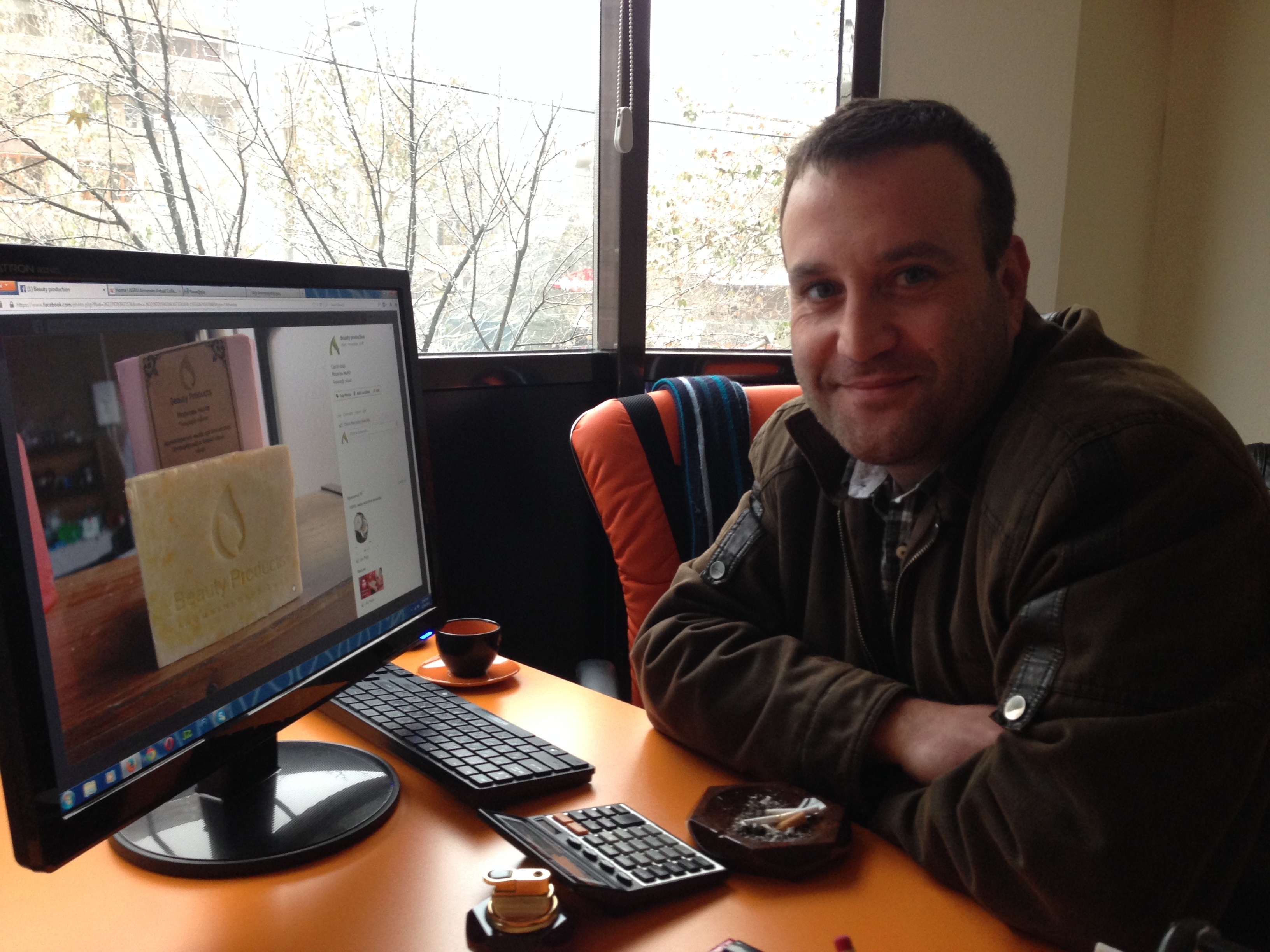
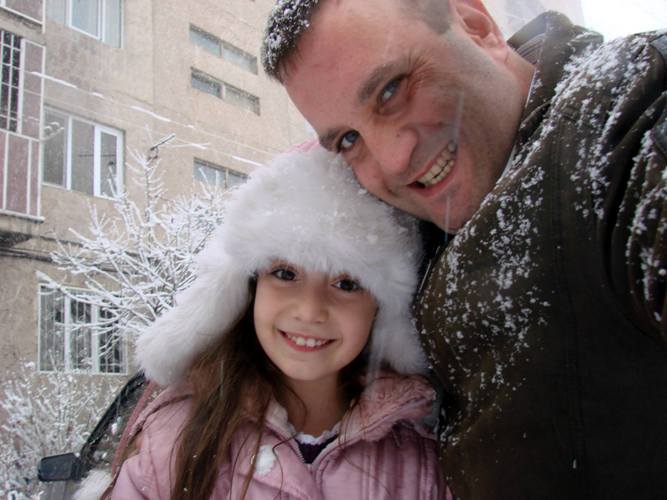
IMG_2203Shant Khayalian was born in Aleppo in 1976. He attended Armenian school there, and continued his education in England attaining a degree in Advertising and Marketing.

After returning to Syria, Shant established several of his own enterprises, each one different from the other – an automotive spare parts shop, olive oil production, an advertisement company and a car repair center. Shant struggles to recall all of his businesses. For curious, restless, and innovative Shant, even Sundays were boring, so he decided to fill this day of rest with something new and asked his friend, a chemist, to suggest something interesting for him to learn and practice. The friend suggested making soap and Shant liked the idea. He learnt how to make soap, and he started creating soap using the olive oil he produced.

Around three months later, Shant managed to produce his first soaps. He also developed his production and invented new kinds of soaps using milk, carrot juice, parsley, chamomile, honey and other items. “I would produce the soaps not to gain an income, but because I enjoyed doing it. It was like a hobby – I would make gifts for my relatives and friends”, says Shant.

շանթ

Shant could never imagine that this hobby would one day become his main source of income.

The organic soaps produced by Shant do not contain chemical colors or aromas. They are entirely natural. However, in Armenia organic products are not fully appreciated. Shant noticed that when buying soap, people in Armenia smell it and if they like how it smells they will buy it. Shant thinks that this is the wrong attitude, because a good smell does not mean good quality. Instead, it shows existence of additional chemicals.

In 2012, when the situation in Syria became critical, Shant left his birthplace and moved to Armenia with his wife and daughter. Luckily, years ago Shant had bought an apartment in Yerevan, with the thought that his children might live there one day. “When we left, it had already been a month since I had closed the shops, because it was impossible to work in those conditions. Even on the last day, when I went to work I witnessed terrible scenes – burnt bodies in the streets”. “Before that, my car had been shot at twice by a sniper trying to kill me. Once there was such a huge blast near our house which injured my back due to the pressure it created. Another time, when we were sleeping, the window of our house broke because of a bullet. So we understood that it was the time to leave the country.”

While arranging his family’s move to Armenia, Shant’s friend from Jordan suggested he move there to begin a soap production business, so Shant left for Jordan alone. “My friend’s wife had a business of non-natural cosmetics and soap. I suggested to them that I produce my own soaps and we develop the business together.”

“I participated in a charitable fair in Jordan where I presented my production. After a month, I received a call from the Royal Palace informing me that the Queen liked our soaps very much and had invited us to the palace for a dinner reception”. But there was not only a dinner invitation. The soap makers also received appreciation letters, royal souvenirs and badges. They tried to convince Shant to stay and develop their soap business in Jordan, but Shant was determined to move to Armenia.

Observing the soap market of Armenia, he has met many people who produce soap and discovered that they all work in house and kitchen conditions – they bring the material from abroad, melt it, add colors and aromas, shape the soap and sell them. “I do everything myself. I even make the essential oils myself. The glycerin is also natural, and as far as I understand no one produces glycerin in Armenia – I am the first to do so.”

As Shant left Syria without financial means and there was no money to start a business, he applied to Small and Medium Business Development Center for a loan. He introduced his business plan and it got approved. The money was transferred six months later, during which Shant could hardly bear the idleness – he tries to do different jobs: teaching at the Eurasia University, giving private English lessons, even driving a taxi with his own car. “Life is hard, you have to run here and there. If you sit back you’ll get nothing. There are people who had a good life in Syria, but after losing what they had, they are not able to adjust to the idea that they will earn less in Armenia. I used to live well – I would spend several thousands of dollars within a week, but now I cannot earn that money in months. What should I do? Get disappointed? Do nothing? On the contrary, one shouldn’t get disappointed, one should act, be flexible and adjust to new situation.”

933943_270904829727398_597397948_n

Shant’s first product in Armenia – the Beauty Products – is already out. It has 8 kinds of soaps with olive oil, lemon and glycerin, apricot and blackcurrant. In Armenia, doctors advised him to also use frankincense flower, which is very beneficial for skin.

The label of the soaps note that they are handmade. Indeed, doing everything by hand is very difficult, but Shant considers it to be the uniqueness of his produce. He uses the technologies of 1688, so everything is done by hand.

Despite the huge volume of work and high quality, Shant wants to make the price of his produce available for the consumers, so that many people can use them in Armenia. A 110 gram bar of soap will cost around 600 AMD.

This is indeed wonderful. But Shant has not made it to the market yet. Currently he is looking for specialists to help him with marketing because he will not be able to manage it on his own. If his business is well established in Armenia, then Shant will seriously consider exporting his produce to external markets. Currently he has exported his products to Norway, France, Korea, China, Ukraine and other countries, where he received positive responses.

Despite the fact that the social and economic situation is not wonderful in Armenia, and starting things from scratch is very difficult, Shant still does not want to move to another country. He doesn’t want to return to Syria either, because he thinks that even if the war stops and businesses re-open, the situation and the atmosphere will not be the same as before. “I have chosen my path. I don’t need much. If I can provide for my family to a decent level, then I will not leave Armenia”, he says.

Shant thinks that the Syrian crisis has given him an opportunity to return to the homeland and live there. “History teaches us lessons, but we still don’t take them into consideration. After the massacres of 1915, we were scattered and during the 1988 events we scattered again. Then, with the war in Iraq, the Armenians came and left again. Now the Syrian Armenians are arriving here… Eventually, everyone should understand that we don’t have space in a foreign land. Indeed, we are born and raised there, we lived there and are thankful for that, but an Armenian should live on Armenian land”, says Shant Khayalian, who is already a member at Repat Armenia and considers himself a true repatriate.

Translated by Irena Grigoryan

Edited by Liz McFadden

Ronaldo struggles to hold back the tears as his son joins him to collect prestigious football award… struggles to hold back the tears as his son joins him to collect prestigious football award…

Կրիշտիանու Ռոնալդու, Իրինա Շեյկ

Ronaldo struggles to hold back the tears as his son joins him to collect prestigious football award… before he sparks wedding rumours by calling Irina Shayk his ‘wife’

Cristiano Ronaldo sparked rumours that he and girlfriend Irina Shayk may have married in secret when he referred to her as ‘my wife’ in an emotional acceptance speech after being crowned the FIFA World Player of the Year for the second time.

The 28-year-old sportsman was joined by both Russian model girlfriend Irina, also 28, and his three-year-old son Cristiano Junior as he claimed the coveted Ballon d’Or at the ceremony in Zurich, Switzerland, on Monday night.

In his tearful acceptance speech, Ronaldo said: ‘First of all I have to stay a great thanks to all of my team mates with the club and the national team. Without all their efforts this would not have been possible. I am very happy, it is very difficult to win this award.

Wearing a Dsquared2 Classic custom made grey tuxedo, Ronaldo was honoured after scoring 66 goals in 56 appearances for club and country Portugal in 2013, as he finally reclaimed the trophy he last held in 2008.

The footballer’s second win also means that he has broken the stranglehold of his great adversary Lionel Messi.

On his rivalry with Messi, Ronaldo said: ‘I have a very professional relationship with Messi, he’s a player I admire.


Messi had held exclusive rights to the award in recent seasons as he became the first player to win the Ballon d’Or four consecutive times.


 Անկախ

It’s the pachyderm Picasso! Elephant paints amazing self-portraits you’ll never forget

Փիղ, ինքնանկարներ


He has a delicate brushstroke and an eye for colour that would give Picasso a run for his money.

So it’s all the more impressive that this impressionist painter is in fact… an elephant.

Noppakhao, also known as Peter, has churned out dozens of works of art over the years, with some fetching as much as $700.

Noppakhao – which stands for the ‘nine colours of the gemstones’ – began painting eight years ago as part of the Asian Elephant Art & Conservation Project (AEACP) in Ayutthaya province, nearly 50 miles north of Bangkok.
According to the organisation’s website, the 11-year-old bull ‘exhibits a wonderful sense of dexterity and control with the paintbrush’ to draw landscapes and floral designs.

Funds from the sale of his work – some of which come with a price tag of up to $700 – go towards conservation projects and training caretakers.

In the past, elephant painting has led to accusations that the animals are harshly treated in efforts to train them.

But the AEAC says it ‘does not tolerate any abuse of the elephants either while painting or in everyday interaction.’


 Անկախ

Spectacular photographs show the moment Niagara Falls FROZE in polar vortex

սառած,Նիագարա ջրվեժ


The record-breaking chill across the U.S. and Canada was so frigid it literally stopped Niagara Falls in its tracks.

A collection of spectacular photographs have shown the moment the U.S. side of the famous falls froze before they could reach the bottom.

Thankfully, the freezing air and ‘polar vortex’ that turned the cascading water to ice – and affected about 240 million people in the U.S. and southern Canada – will depart during the second half of this week, and a far-reaching January thaw will begin, according to AccuWeather.com.

Tuesday was a day of record-setting cold in Niagara, with the mercury bottoming out at a chilling -2F. Combined with the wind chills, it felt like -20F.

One would think the icy cold would keep tourists away, but those who enjoy taking photos rugged up to snap the conditions, producing exceptional images they wouldn’t otherwise have an opportunity to capture.

The natural wonder should be looking more like itself come Saturday when temperatures are forecast to be in the 50s, according to Environment Canada.


 Անկախ    

Abducted Swedish Journalists Released in Syria

Սիրիա,առևանգված, երկու լրագրողները ազատ են արձակվել

Abducted Swedish Journalists Released in Syria

Two Swedish journalists who were abducted in Syria in November have been released, Swedish and Red Cross officials said Wednesday.

Sweden’s Foreign Ministry confirmed the release of writer Magnus Falkehed and photographer Niclas Hammarstrom, and said both were receiving assistance from Swedish diplomats in Beirut.

The two freelance journalists were abducted as they were on their way out of Syria in November.

Swedish authorities wouldn’t say who abducted them or how they were set free. But national police spokeswoman Jessica Krasser Fremnell said Swedish police had worked closely with other authorities to secure their release.

Their state of health was not immediately clear.

Press advocacy groups say Syria has become the most dangerous country in the world for reporters over the past two years, with kidnappings becoming a major threat.