Scientists unveiled Tuesday an affordable vaccine against a deadly diarrhoea-causing virus that kills some 100,000 children in India every year.
Rotavirus, which causes dehydration and severe diarrhoea, is globally responsible for some 453,000 deaths annually and is particularly threatening in Africa and Asia, where access to urgent healthcare is often out of reach.
K. Vijaraghavan, secretary of India’s Department of Biotechnology which steered the hunt for an affordable rotavirus vaccine, said it was a product of international cooperation, although it has yet to be approved by New Delhi.
The vaccine named Rotavac will be manufactured by Hyderabad-based Bharat Biotech pharmaceutical firm which has said it has the capacity to mass produce 60 million doses after clearance is given. Each vaccination consists of three doses.
Rotavirus is blamed for causing up to 884,000 hospitalisations in India a year, at a cost to the country of 3.4 billion rupees ($72 million), scientists say.
Daily Archives: May 14, 2013
94,000 dead in Syria conflict: NGO revised toll
More than 94,000 people have been killed in more than two years of conflict in Syria, the Syrian Observatory for Human Rights said in a newly-revised toll on Tuesday.
The watchdog group said it revised the toll — just two days after it announced a tally of 82,257 dead — after receiving new information from regime-controlled Alawite areas of the Sunni-majority country.
On Sunday, the Britain-based watchdog which relies on a vast network of activists and medics on the ground put the death toll since the March 2011 start of the anti-regime uprising at 82,257, including 34,473 civilians.
Court of Appeal Upheld Editor of Khural in Jail (updated)
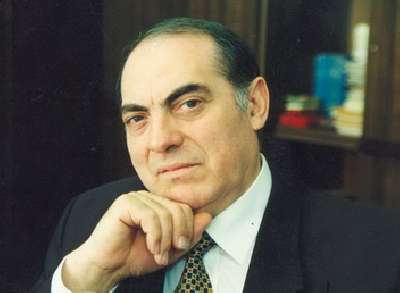
The Surrender of Shusha, by Former Head of Azerbaijan Yagub Mamedov
On the 21st anniversary of the occupation of Shusha former head of Azerbaijan, Yagub Mamedov commented in an interview with Turan on reasons why the city was surrendered to the enemy. In his view, there were political and military reasons for the capture of Shusha.
At that time, Azerbaijan virtually had no regular army or military equipment or weapons, even though there was a Ministry of Defense. Time was needed to prepare armed forces.
With this in mind, and given the severe war situation, Azerbaijan took Iran’s proposal to hold a meeting between the presidents of Azerbaijan and Armenia, in Tehran.
Different countries and the OSCE tried to deal with the situation by reaching temporary truces for short periods, but each truce was violated.
Mamedov did not agree with the opinion that Iran provided military assistance to Armenia.
“Brokered by Iran, we signed a memorandum of ceasefire with Armenia, addressing the issue by political and peaceful means. However, external forces who did not want Iran’s mediation and the opposing political forces of Azerbaijan and Armenia, undermined the agreement and the town was occupied,” said Mamedov.
Another reason for the occupation was the severe situation in Azerbaijan. “It was one of the hardest periods in the country’s history of the 20th century. Domestically, there were big controversies and struggle for power. The Soviet Union collapsed and the economy was destroyed. In such a situation, various forces were ready to do anything to come to power,” said Mamedov.
Did Mamedov face pressure from external and internal forces? Responding to this question, Mamedov said the day after the leadership’s arrival, he called on all the opposition forces to cooperate. At the talks, they discussed issues on joint activities to try to solve the Karabakh conflict and cease the power struggle. “They agreed on the words, and acted differently. Streets and squares were filled with protesters. In other areas, they overthrew the administration heads, appointing their own men. I even appointed two members of the opposition as ministers, Tahir Aliyev for the Interior and Rahim Gaziyev for the Defense. However, the situation with each passing day was getting worse,” said Mamedov.
Was there a role of Russia in the return to power of Ayaz Mutalibov in May 14, 1992? To this question Mamedov answered: “Certainly, Russia had its own interests. In the occupation of Shusha, it was a large part of Russia. In the occupation of Khojaly, the 366th Russian regiment was also involved,” he said, adding that representatives of the Russian Ministry of Foreign Affairs did not arrive in Tehran, where there were negotiations between Armenia and Azerbaijan. It was promised that the Ambassador of Russia would participate in the negotiations, but he did not come.
The situation worsened, with the return of Mutalibov to power on the one hand, and on the other, the struggle for power between different forces.
Self-defense units, most of which were created by the opposition, fought in the country. They did not obey the Ministry of Defense and did not want to operate under a single command.
What are the implications of these historical events, and who’s to blame? To this the then Head of State said, “I can not name specific perpetrators. Naming someone, one must provide evidence. Otherwise, they will say it is libel. However, then the political situation, the struggle for power, the actions of interested external forces did their business,” concluded Mamedov. -16/03B-
Elders’ elections of Yerevan. A criminal case initiated. Precinct N 03/19
In RA Police Division of Qanaqer-Zeytun adjunct to government a criminal case was initiated for attempting to vote instead of another person in the precinct N 03/19.
By the materials prepared in the police on the base of the report received from the secretary of the election commission of the precinct N 03/19 it was found out that 4 people who were not residents of the administrative districts Qanaqer-Zeytun and did not have the right to vote in the mentioned precinct had attempted to vote in that precinct.
At the agreement of the prosecutor who supervised over the legality of preparation of materials a criminal case was initiated on the case according to the Article 34-153 of the Criminal Code of the Republic of Armenia. A preliminary investigation is being carried out.
Three astronauts return to Earth after ISS mission
Canadian spaceman Chris Hadfield on Tuesday returned to Earth along with two other astronauts after a half year mission to the International Space Station that saw him become a global celebrity through his Twitter microblog.
Hadfield landed safely in the Kazakh steppe along with American Tom Marshburn and Russian Roman Romanenko aboard a Russian Soyuz-TMA capsule that had left the space station earlier Tuesday morning, mission control said.
The Soyuz touched down at 0231 GMT in the steppe south of the central Kazakh city of Karaganda, Russian mission control and NASA TV confirmed.
They were then placed in special chairs amid the long steppe grasses, covered in special thermal blankets and offered tea by the ground crews. All three appeared in good health.
Hadfield had captured the public imagination with regular updates on Twitter that gave an unprecedented insight into daily life in space and access to spectacular images taken from the ISS.
In a fitting climax to his mission, Hadfield posted a cover version of the David Bowie classic “Space Oddity” that showed him singing and even playing the guitar aboard the station. It became an immediate hit on YouTube.
Angelina Jolie undergoes double mastectomy
Editor’s note: Have you made the decision to have a preventative mastectomy? Send us your thoughts and experiences.
(CNN) — Actress Angelina Jolie announced in a New York Times op-ed article on Tuesday that she underwent a preventive double mastectomy after learning she carries a mutation of the BRCA1 gene, which sharply increases her risk of developing breast cancer and ovarian cancer.
“My doctors estimated that I had an 87 percent risk of breast cancer and a 50 percent risk of ovarian cancer, although the risk is different in the case of each woman,” Jolie wrote. “Once I knew that this was my reality, I decided to be proactive and to minimize the risk as much I could. I made a decision to have a preventive double mastectomy.”
Jolie’s mother, actress and producer Marcheline Bertrand, died of ovarian cancer in 2007 at the age of 56.
Jolie visits Syrian refugeesIn the Times op-ed, titled “My Medical Choice,” Jolie said she finished three months of medical procedures at thePink Lotus Breast Center in California on April 27 that included the mastectomies and reconstruction.
“I wanted to write this to tell other women that the decision to have a mastectomy was not easy. But it is one I am very happy that I made,” Jolie wrote. “My chances of developing breast cancer have dropped from 87 percent to under 5 percent.”
BRCA stands for breast cancer susceptibility genes — a class of genes known as tumor suppressors, according to the National Cancer Institute.
Mutation of the BRCA1 and BRCA2 genes has been linked to hereditary breast and ovarian cancer.
Oscar-winning film star
Jolie may be best known for title role in the “Laura Croft” series of films, but also won an Academy Award as best supporting actress in “Girl, Interrupted.” She also received a Golden Globe Award and SAG Award for the same role.
Jolie serves as a special enjoy for the United Nations High Commissioner for Refugees and has visited refugee camps around the world.
The actress has been in a relationship with actor Brad Pitt since the mid 2000s and they are engaged. The couple has three biological and three adopted children.
In telling her story, Jolie acknowledged that surgery might not be the right choice for every woman.
“For any woman reading this, I hope it helps you to know you have options,” Jolie wrote. “I want to encourage every woman, especially if you have a family history of breast or ovarian cancer, to seek out the information and medical experts who can help you through this aspect of your life, and to make your own informed choices.”
But for Jolie, the decision ultimately came down to her kids.
“I can tell my children that they don’t need to fear they will lose me to breast cancer,” she said.
It’s a pain Jolie knows all too well from losing her mother to the disease.
Muslim footballer Franck Ribery apoplectic after Bayern Munich team-mate drenches him in beer during title celebrations
Muslim footballer Franck Ribery has vowed never to speak to one of his team-mates again after he was drenched with beer during Bayern Munich’s title celebrations.
The Frenchman had told players to keep the alcohol away from him as they celebrated on the pitch after their 3-0 win over Augsburg.
But despite running away from the alcohol – which is forbidden by his religion – Ribery was eventually collared by team-mate Jerome Boateng, who poured a large glass of beer over his head.
It is not the first controversy involving Ribery – the 30-year-old is due in court in June after sleeping with an underage Moroccan prostitute, although he claims he did not know she was 17.
Although he looked like he had taken it well at the time, Ribery reaction’s afterwards was extremely cold, as he said: ‘I won’t talk to Boateng again, he knows that I’m Muslim. I’m p***** off.’
The footballer converted to Islam to marry Wahiba, his childhood sweetheart – the couple have two daughters.
Russia Scraps Visas for Foreign Athletes
President Vladimir Putin has waived visa requirements for athletes, coaches and other staff attending international sporting events in Russia.
Russia is hosting the Winter Olympics next year and the soccer World Cup in 2018. In August, the Athletics World Championships will be held in Moscow.
The decree Putin signed Tuesday said the visa waiver goes into effect immediately.
To qualify for visa-free status, athletes and others must have documents that confirm their identity and official accreditation from organizers of the sporting event.
Americans, Europeans and others normally have to apply for a Russian visa weeks ahead of their arrival in the country.
